Bird Watching
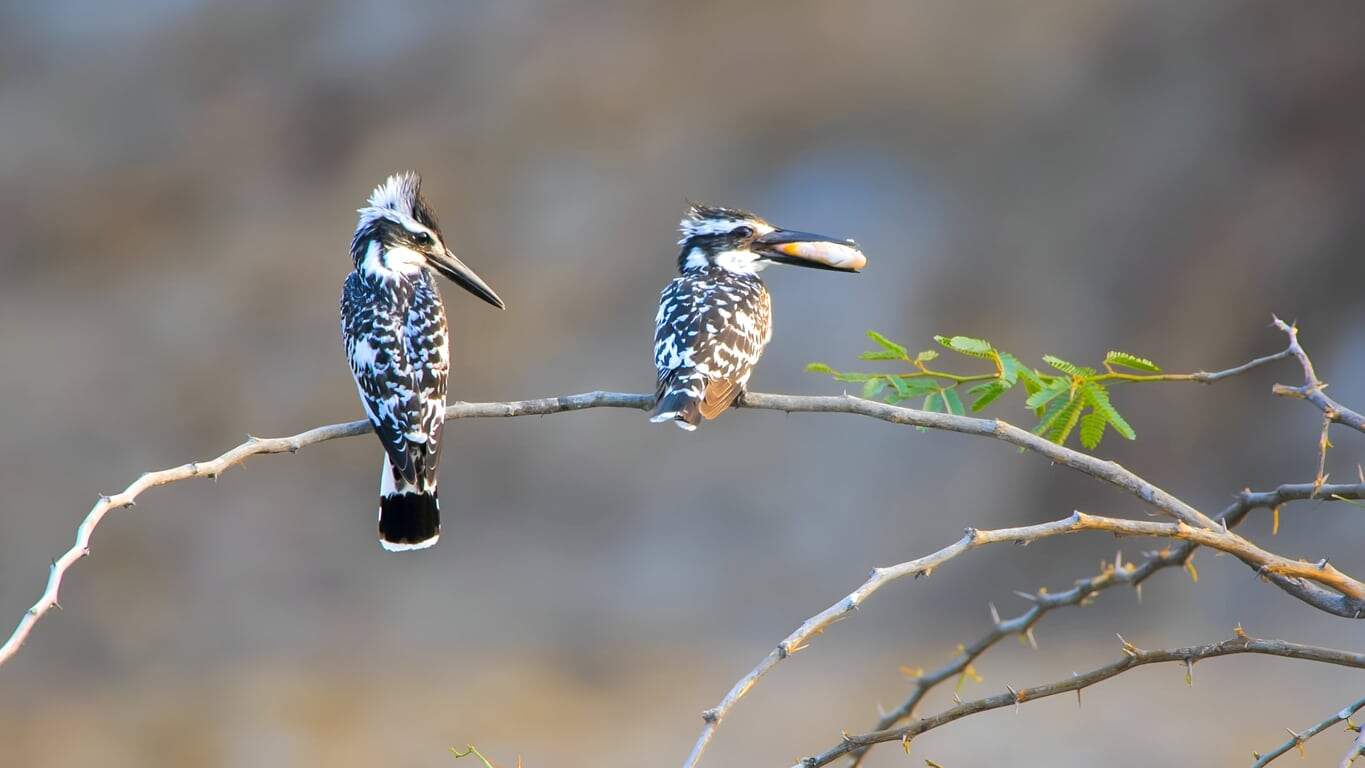
Western Zimbabwe is one of Southern Africa's premier birding destinations, with over 470 species recorded across habitats ranging from spray-fed rainforest and riverine woodland to Kalahari sandveld and miombo forest — including sought-after specials like Taita falcon, Pel's fishing owl, and Racket-tailed roller.
Activity Guide
A Birder's Paradise
Western Zimbabwe offers birding that rivals anywhere in Southern Africa. The region's extraordinary diversity of habitats — from the spray-drenched rainforest at Victoria Falls to the Kalahari sandveld of Hwange, the granite kopjes of the Matobo Hills to the teak forests of Lupane — creates a tapestry of avian habitats supporting over 470 recorded species.
Key Birding Areas
Victoria Falls Rainforest
The spray-fed rainforest along the falls provides a unique micro-habitat attracting species not found elsewhere in the region. Trumpeter hornbill, Schalow's turaco, and half-collared kingfisher are resident, while the garden habitats in Victoria Falls town support lilac-breasted roller, white-browed robin-chat, and a variety of sunbirds.
Zambezi National Park
The riverine woodland and Zambezi floodplains support an exceptional variety of waterbirds and raptors. Key species include African fish eagle, African skimmer, rock pratincole, white-crowned lapwing, and — the area's most sought-after species — the enormous and elusive Pel's fishing owl, one of Africa's rarest and most impressive raptors.
Hwange National Park
Hwange's diverse habitats support over 400 species. The Kalahari influence brings species like Kori bustard, secretary bird, bateleur, and martial eagle. The teak forests support Bradfield's hornbill, Arnot's chat, and racket-tailed roller. Seasonal pans attract flamingos, pelicans, and a variety of ducks and waders when they fill during the rains.
Matobo Hills
The granite kopjes of the Matobo Hills are a stronghold for Verreaux's (black) eagle — the area supports one of the world's highest densities of this magnificent raptor. Other highlights include Cape vulture, peregrine falcon, Lanner falcon, black stork, and the diminutive freckled nightjar, which roosts on bare granite during the day.
Batoka Gorge
The dramatic basalt gorge below Victoria Falls is home to one of birding's most prized species — the Taita falcon, a small, powerful falcon that nests on the gorge walls. Seeing a Taita falcon stooping after its prey against the backdrop of the gorge is a genuine once-in-a-lifetime birding experience. The gorge also supports black stork, peregrine falcon, and augur buzzard.
Seasonal Guide
- October to March — wet season and prime birding time. Palearctic and intra-African migrants swell the species count. Breeding plumage, song, and display behaviour make identification easier. Many species are nesting
- April to September — dry season. Resident species are easier to spot in the bare woodland. Waterbirds concentrate at remaining water sources. Raptors are particularly visible
What to Bring
- Good-quality binoculars (8x42 or 10x42 recommended)
- A field guide — Roberts Birds of Southern Africa or Sasol Birds of Southern Africa are the standard references
- Notebook and pen for recording sightings
- Comfortable walking shoes and neutral-coloured clothing
- Camera with a telephoto lens (300mm minimum for good bird photography)
Birding in western Zimbabwe is not just about ticking species — it is about the places where you find them. Watching a Verreaux's eagle soar above the ancient granite of the Matobo Hills, or catching the electric flash of a malachite kingfisher along the Zambezi, connects you to a landscape in a way that few other pursuits can match.