Hwange National Park
Realm of the Elephant
Best Time to Visit
July to October (dry season) is peak time when animals congregate at waterholes. November to April (wet season) is best for birdwatching and lush landscapes.
Getting There
Main entrance near Dete, accessible via A8 highway from Victoria Falls (2.5-3 hours) or Bulawayo (3-4 hours). Hwange Airport receives charter flights. The Elephant Express rail service operates for certain lodges.
Region
Matabeleland North
Africa's Elephant Capital
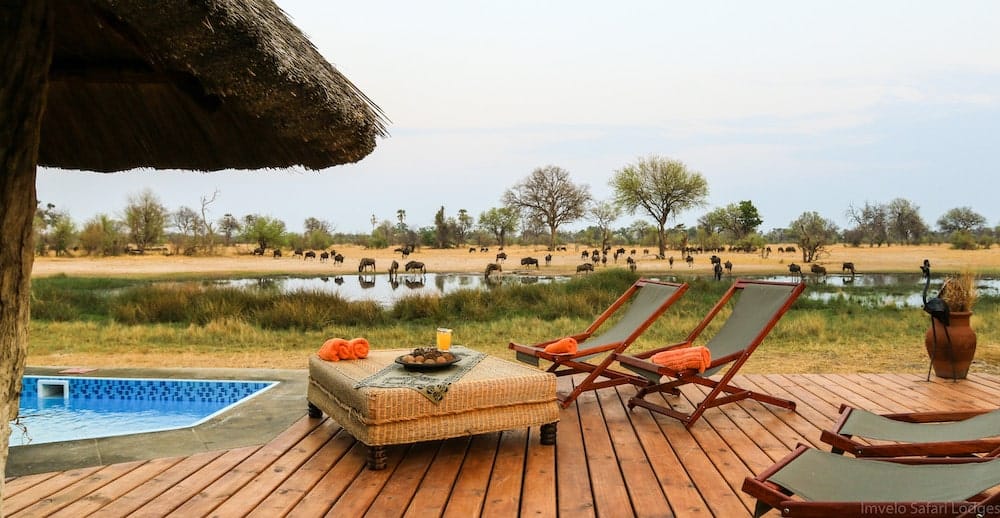
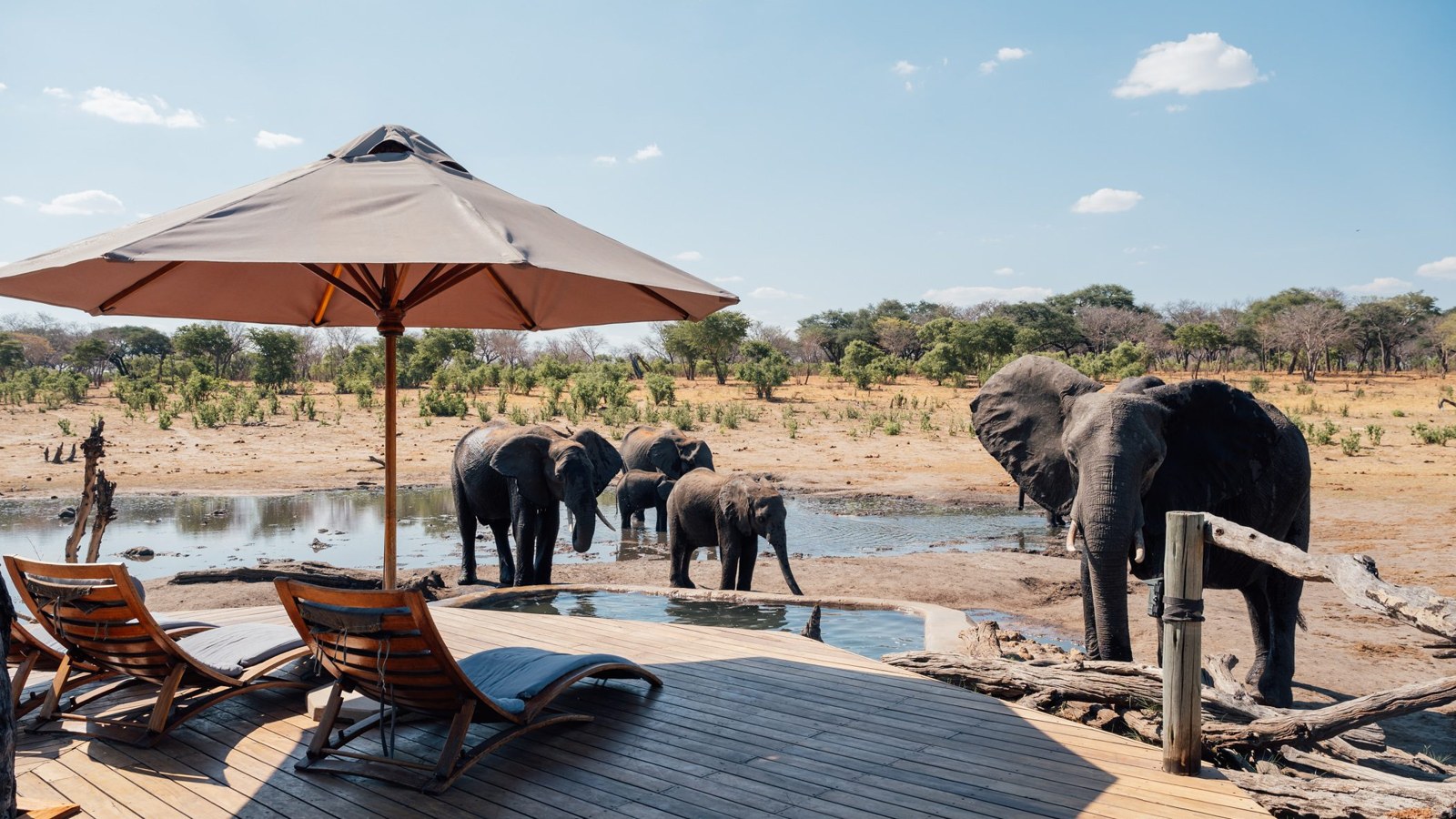
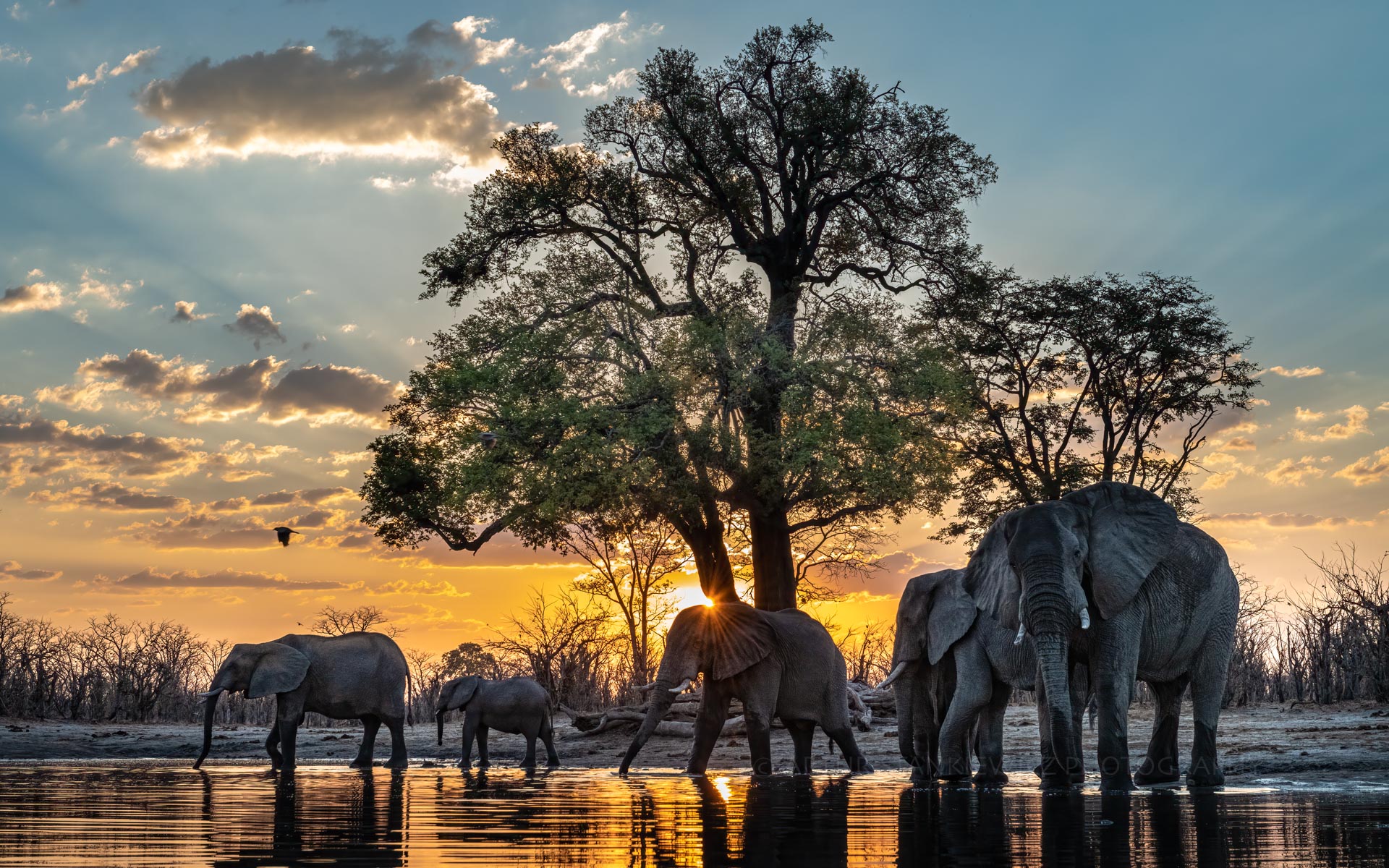
Hwange National Park is a place of superlatives. Zimbabwe's largest protected area covers 14,651 square kilometres of diverse terrain — roughly the size of Northern Ireland — and supports over 40,000 elephants, the largest population of any single national park in Africa. During the dry season, herds of several hundred elephants gather at the park's pumped waterholes, creating one of the continent's most spectacular wildlife congregations.
But Hwange is far more than an elephant park. The reserve supports 107 mammal species, including all of the Big Five (lion, leopard, elephant, buffalo, and black rhinoceros), along with some of Africa's most endangered species: African wild dog, cheetah, brown hyena, roan antelope, and sable antelope.
History and Conservation
Hwange's origins trace back to 1928 when warden Ted Davison began developing what was then the Wankie Game Reserve. Davison's most lasting contribution was the system of pumped waterholes that sustain wildlife through the punishing dry season. Over 60 solar-powered pumps now operate across the park, drawing water from boreholes up to 60 metres deep. Without these waterholes, Hwange could not support its current wildlife populations — the northern half of the park has no permanent natural water sources.
The park was renamed Hwange in 1981 following independence, taking its name from a local Nhanzwa chief. Today, it is managed by Zimbabwe Parks and Wildlife Management Authority (ZimParks) in partnership with conservation organisations and private safari operators.
The Landscape
Kalahari Sandveld
The southern and central sections of Hwange sit on deep Kalahari sand, supporting open grasslands, scrubby woodland, and seasonal pans that attract vast herds of zebra, wildebeest, and buffalo during the rains.
Teak Forests
The northern and eastern sections are dominated by magnificent Zambezi teak forests — tall, cathedral-like woodlands that filter golden light onto the forest floor. These forests support a different community of wildlife, including sable antelope, bushbuck, and a rich diversity of forest birds.
Vlei Lines and Pans
Seasonal drainage lines called vleis cut through the landscape, creating linear grasslands that attract grazing herds and their predators. The pans — shallow depressions that fill during the rains — provide critical temporary water sources and are excellent locations for game viewing.
Wildlife Highlights
Elephants
Hwange's elephants are the park's signature attraction. Between July and November, as natural water sources dry up, elephants concentrate around the pumped waterholes in extraordinary numbers. Watching 200 or more elephants drink, splash, and socialise at a single waterhole at sunset is one of Africa's great wildlife experiences.
Predators
Hwange supports a healthy population of lion prides, including some of the park's most studied and photographed individuals. Leopards are present throughout the park, particularly in the teak forests, though they require patience and a keen eye to spot. Spotted hyenas are common, and the park's population of African wild dogs — one of the most endangered large carnivores on Earth — is one of the most significant in Southern Africa.
Rare Antelope
The park is one of the best places in Africa to see sable antelope, roan antelope, and tsessebe — three striking species that are uncommon elsewhere. Gemsbok (oryx) occur in the drier southern sections, a reflection of the park's Kalahari affinities.
Birds
Over 400 bird species have been recorded in Hwange, making it a premier birding destination. Highlights include martial eagle, bateleur, Kori bustard, southern ground hornbill, racket-tailed roller, and Bradfield's hornbill. The seasonal pans attract significant numbers of waterbirds when they fill during the rains.
Safari Experiences
Game Drives
Morning and afternoon game drives are the primary way to explore Hwange. Most lodges and camps offer drives in open 4x4 vehicles with experienced guides. The quality of guiding in Hwange is exceptional — many of the park's guides have decades of experience and an encyclopaedic knowledge of the bush.
Walking Safaris
Hwange offers some of Zimbabwe's best walking safari experiences. Guided walks, ranging from short morning walks to multi-day wilderness trails, provide an intimate, ground-level perspective on the bush. Walking with an armed professional guide, you'll learn to track, identify birdsong, and understand the smaller dramas of the ecosystem that you'd miss from a vehicle.
Night Drives
Several private concessions within Hwange offer night drives, using spotlights to reveal the nocturnal world. Expect to see genet, civet, aardvark, porcupine, and — with luck — leopard, honey badger, or aardwolf.
Hide Sessions
Many camps maintain sunken hides at waterholes, allowing photographers and wildlife enthusiasts to observe animals at eye level from just metres away. The experience of watching elephants approach and drink from ground level, so close you can hear them breathing, is unforgettable.
When to Visit
- May to August — cooler, dry season. Vegetation thins, making wildlife easier to spot. Elephants begin concentrating at waterholes. Morning game drives can be cold — bring warm layers
- September to November — hot, dry season. The best game viewing as animals concentrate around water. Temperatures can exceed 40°C. The teak forests are bare and stark but beautiful
- December to April — wet season. The bush is green and lush, baby animals abound, and birding is at its best. Some roads become impassable. Accommodation rates are lowest
Hwange doesn't try to be the Serengeti or the Masai Mara. It offers something different — vast, uncrowded spaces where you can spend an entire afternoon at a waterhole watching the drama of the bush unfold, often without another vehicle in sight.