Victoria Falls
The Smoke That Thunders
Best Time to Visit
February-May for peak water flow; August-December for adventure activities and Devil's Pool; June-July for a balance of both.
Getting There
Victoria Falls International Airport (VFA) receives flights from Johannesburg, Cape Town, Nairobi, and Addis Ababa. By road via A8 highway from Bulawayo (440km). Cross-border access from Zambia via Victoria Falls Bridge.
Region
Matabeleland North
The Smoke That Thunders
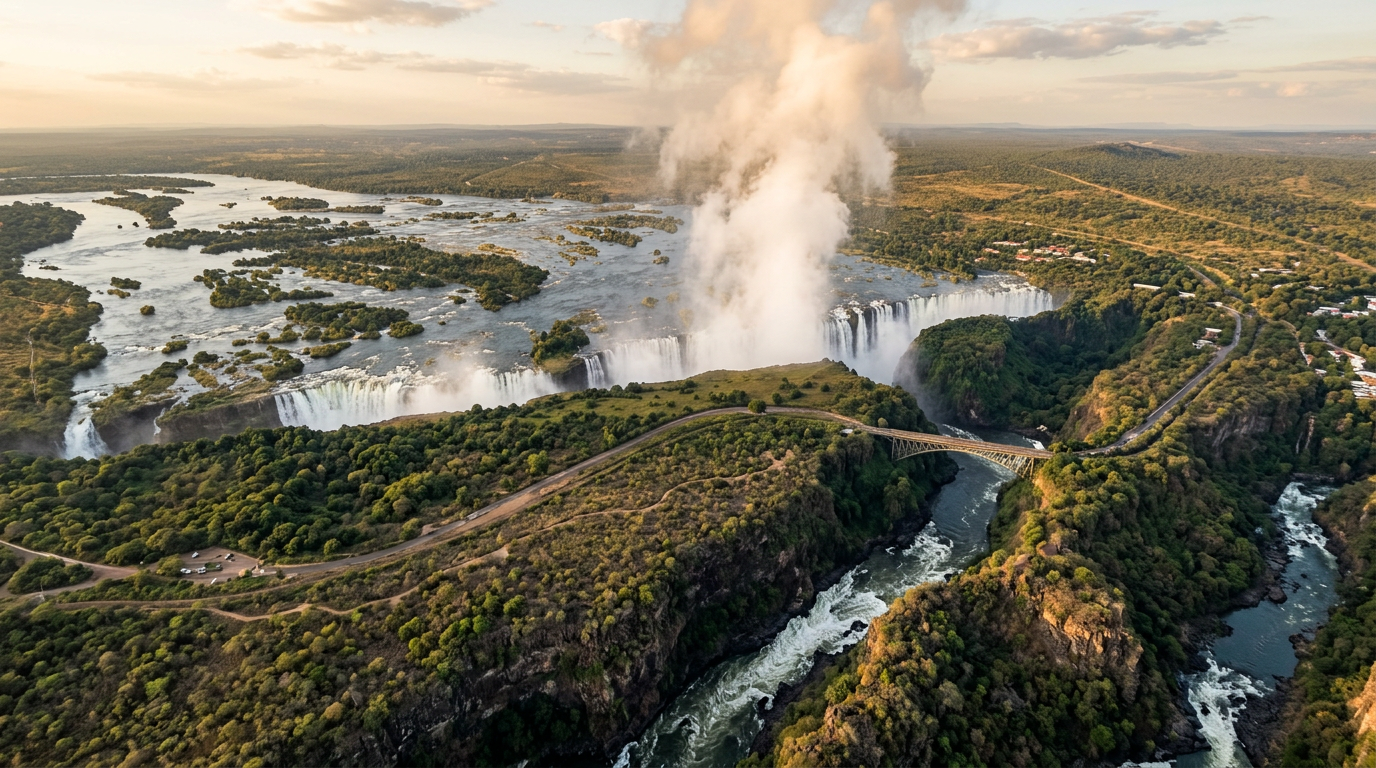
Few places on Earth match the sheer drama of Victoria Falls. Standing at the gorge's edge, you feel the ground vibrate beneath your feet as five hundred million litres of water per minute crash into the chasm below during peak flow. The resulting spray column rises over 400 metres into the sky, visible from more than 50 kilometres away — the reason the Kololo people named it Mosi-oa-Tunya, "The Smoke That Thunders."
Scottish explorer David Livingstone became the first European to witness the falls in November 1855, arriving by canoe on what is now Livingstone Island. He named them after Queen Victoria, though the local Tonga and Lozi peoples had known and revered these falls for centuries before any European set foot in the region.
What Makes Victoria Falls Unique
Victoria Falls is neither the tallest nor the widest waterfall in the world — but it is the largest single sheet of falling water, measured by combined width (1,708 metres) and height (108 metres). During the annual flood season from February to May, the Zambezi River discharges at rates exceeding 500 million litres per minute, making the falls virtually impossible to see through the dense curtain of spray.
The falls are divided into five distinct sections from west to east:
- Devil's Cataract — the narrowest and most powerful section, closest to the Zimbabwean bank
- Main Falls — the tallest section, plunging the full 108 metres into the gorge
- Horseshoe Falls — a dramatic horseshoe-shaped cascade
- Rainbow Falls — named for the permanent rainbows created by its mist, and the tallest point at 108 metres
- Eastern Cataract — the section closest to the Zambian bank, with the best views from the Knife Edge Bridge
The Rainforest
One of Victoria Falls' most extraordinary features is the spray-fed rainforest that grows along the gorge rim directly opposite the falls. This strip of dense tropical vegetation exists solely because of the constant mist generated by the falls — a micro-climate completely unlike the surrounding dry savanna woodland.
Walking through the rainforest trail, you'll encounter towering ebony trees, wild date palms, ferns, creepers, and rare orchids. The trail runs along the gorge rim with sixteen viewpoints, each offering a different perspective on the falls. During peak flow, expect to get absolutely drenched — waterproof jackets and dry bags for electronics are essential between February and June.
Adventure Capital of Africa
The town of Victoria Falls has earned its reputation as Africa's undisputed adventure capital. The dramatic landscape of the Batoka Gorge provides the perfect natural amphitheatre for an extraordinary range of adrenaline activities.
White-Water Rafting
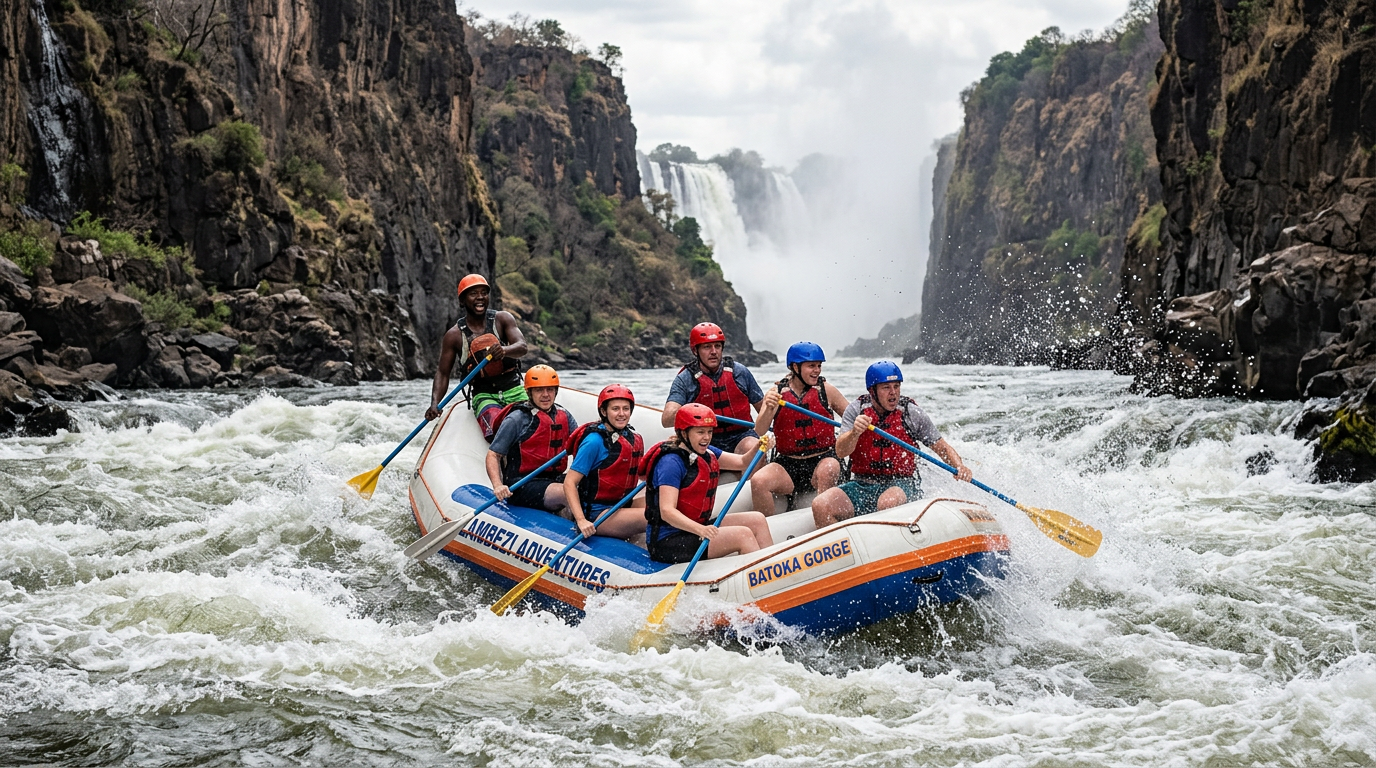
The Zambezi below the falls is considered one of the best one-day white-water rafting rivers in the world. The rapids are graded Class IV to V, with evocative names like "Oblivion," "The Devil's Toilet Bowl," and "Commercial Suicide." Half-day and full-day trips are available, and no previous experience is necessary — although a reasonable level of fitness and the ability to swim are required.
Bungee Jumping and Gorge Swing
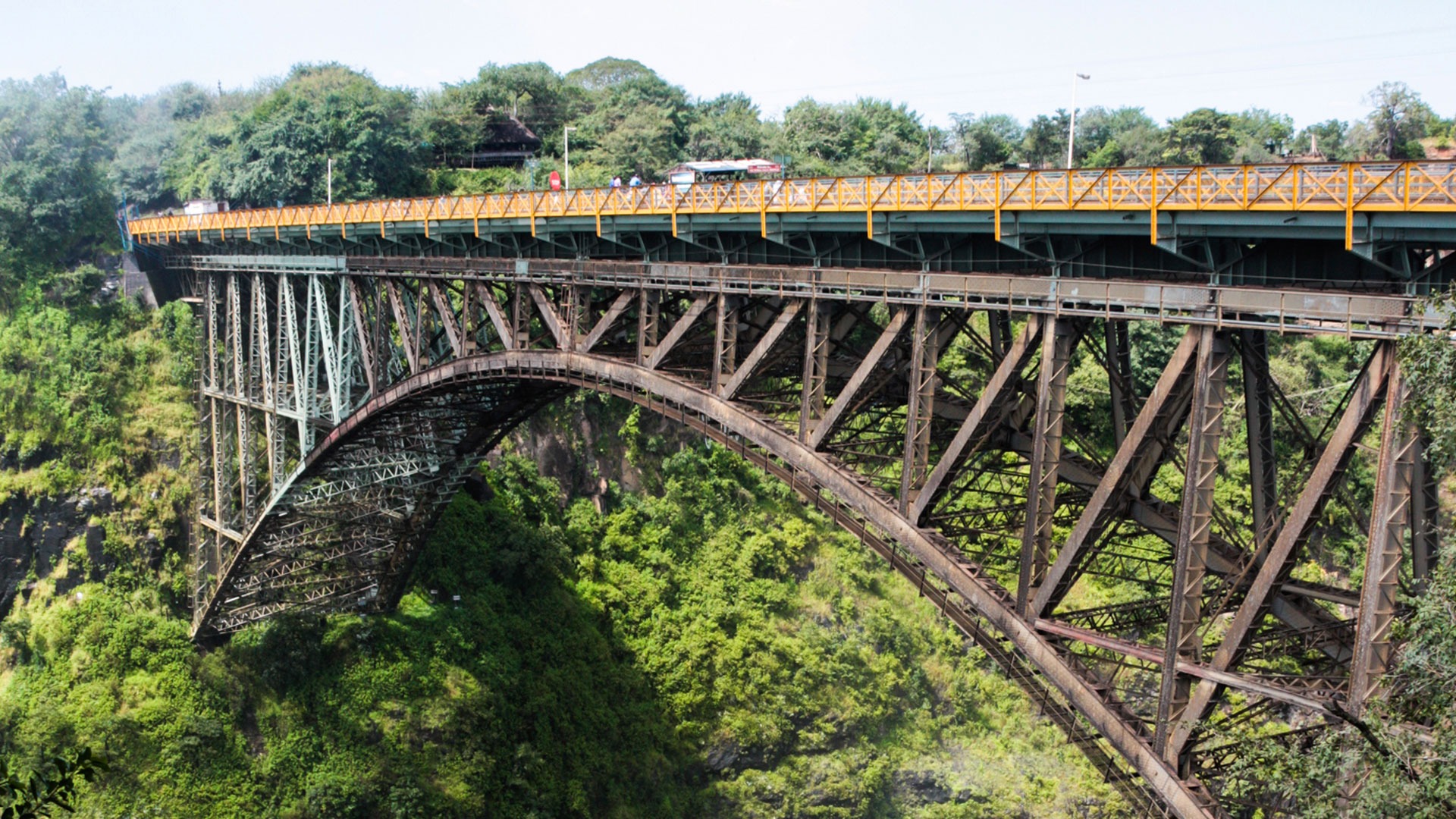
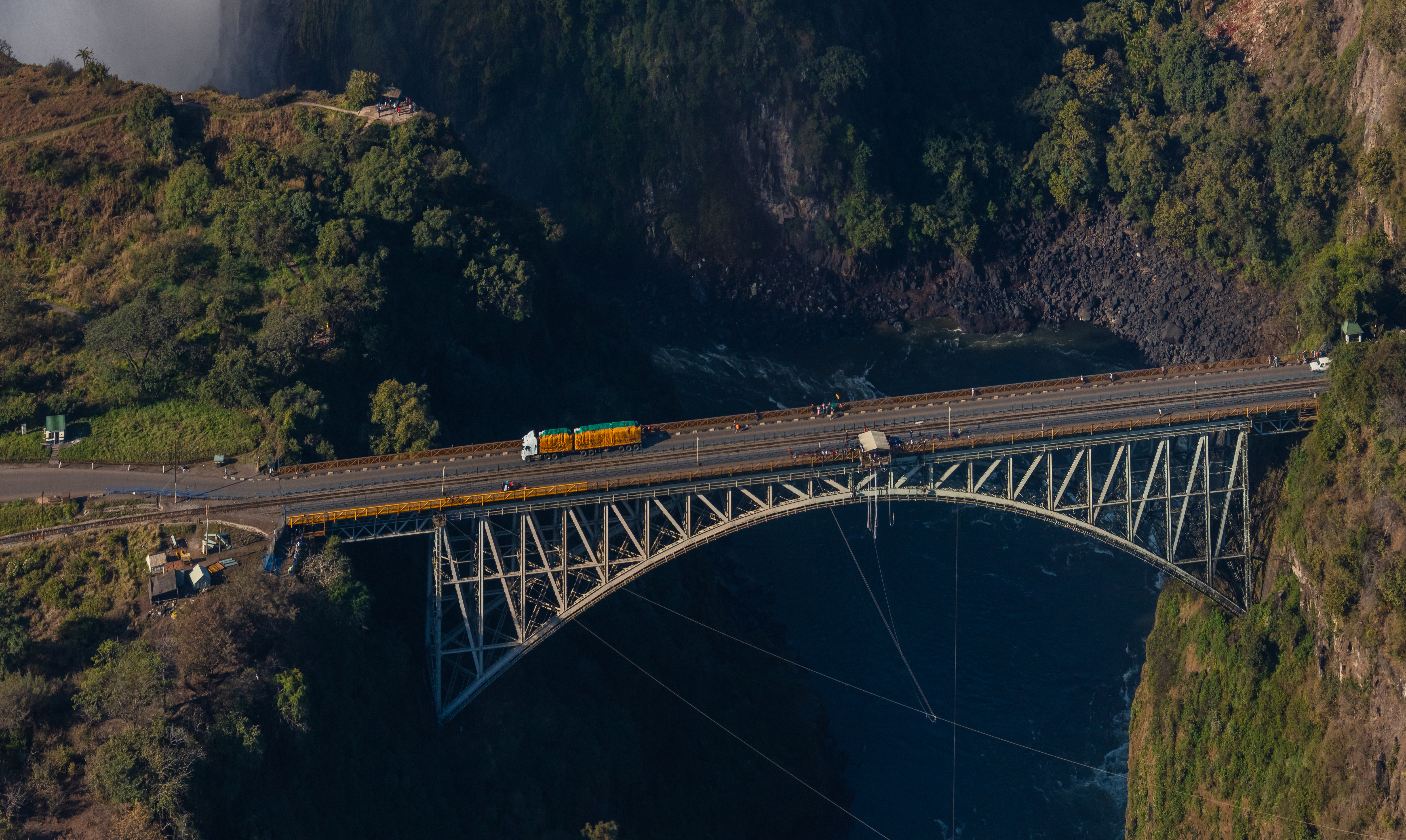
The Victoria Falls Bridge, a 198-metre steel arch spanning the gorge between Zimbabwe and Zambia, is home to one of the world's most spectacular bungee jumps. At 111 metres, the freefall takes approximately four seconds, with the Zambezi River churning far below. The gorge swing and zip-line offer alternative thrills for those who prefer a different angle on the gorge.
Scenic Flights
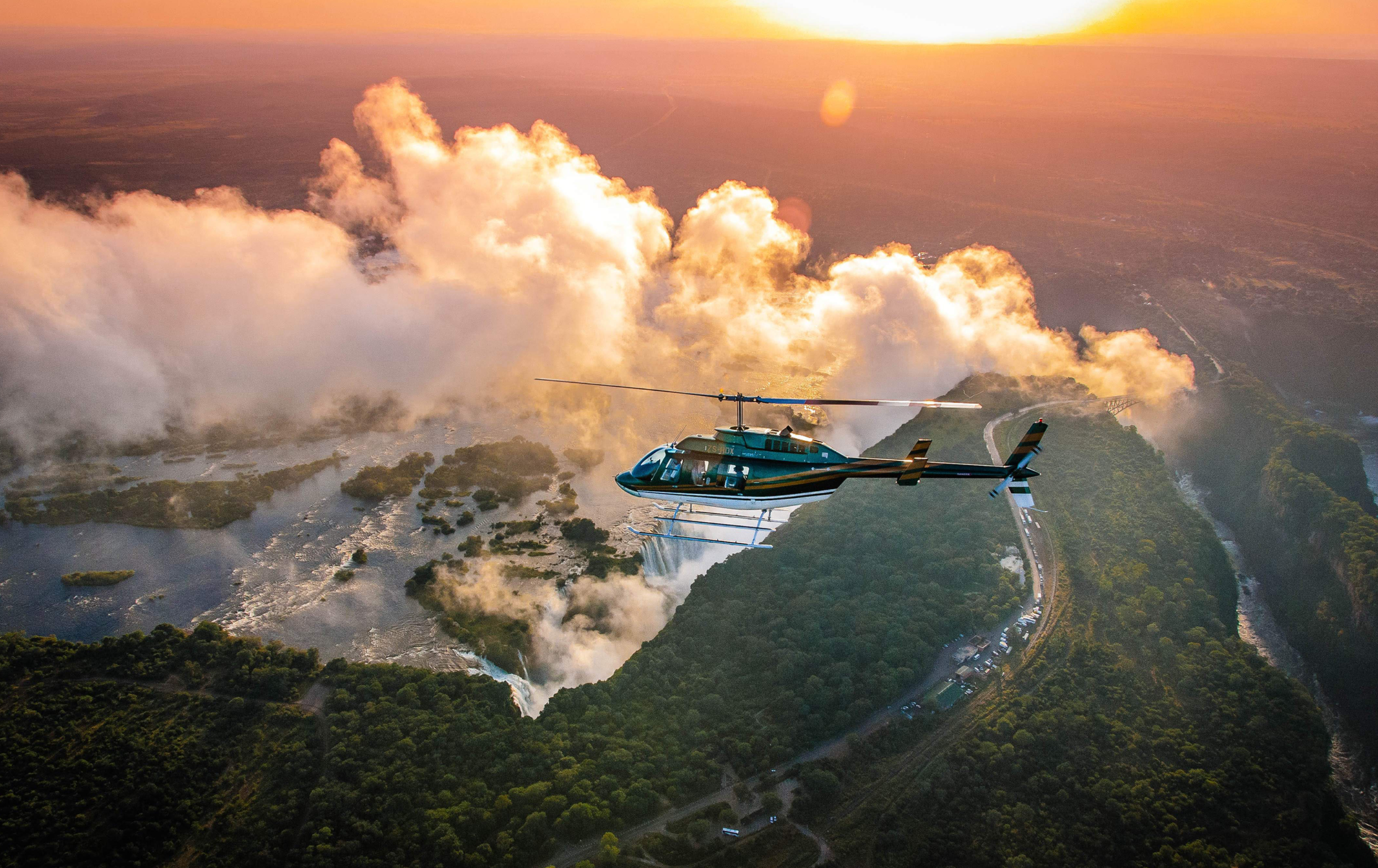
Helicopter and microlight flights provide breathtaking aerial views of the falls, the gorge system, and the upper Zambezi. The classic "Flight of Angels" helicopter tour lasts approximately 15 minutes and offers unobstructed views that put the full scale of the falls into perspective. Microlight flights offer a more intimate, open-air experience.
Zambezi River Experiences
The upper Zambezi above the falls provides a completely different experience — calm, wildlife-rich waters perfect for sunset cruises, canoeing, and fishing.
Sunset Cruises
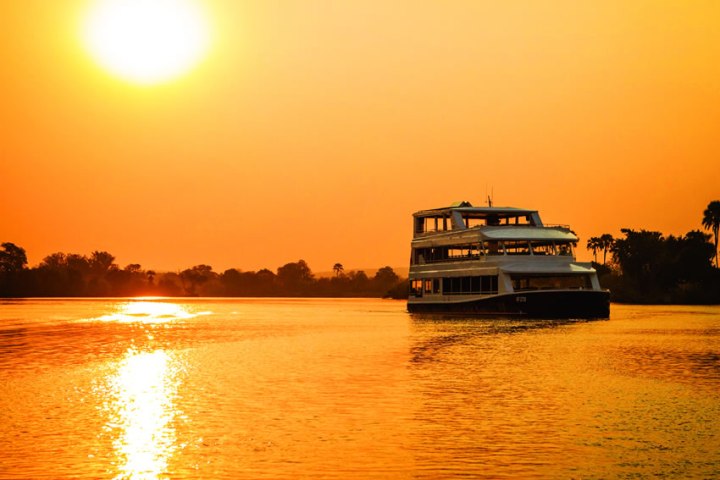
A sunset cruise on the Zambezi is one of Victoria Falls' most beloved experiences. As the African sun drops towards the horizon, you'll drift past hippos, crocodiles, and elephants drinking at the water's edge. Most cruises include drinks and snacks, and the photographic opportunities are exceptional.
Canoeing and Kayaking
Guided canoe trips on the upper Zambezi offer a peaceful way to experience the river's wildlife. Paddling past islands and channels, you'll see elephants, buffalo, waterbuck, and a remarkable variety of birdlife. Half-day and full-day options are available.
Wildlife and National Parks
Zambezi National Park
Stretching along 40 kilometres of the upper Zambezi, this underrated national park offers game drives, walking safaris, and fishing within minutes of Victoria Falls town. You'll find elephants, buffalo, sable antelope, zebra, giraffe, and lion, often with the spray of the falls visible on the horizon.
Mosi-oa-Tunya National Park (Zambian Side)
On the Zambian bank, this compact park protects a population of white rhinoceros, one of only a handful of rhino populations in the region. Walking safaris with armed rangers provide close encounters with these magnificent animals.
When to Visit
The Victoria Falls experience changes dramatically with the seasons:
- February to May (High Water) — the falls are at their most powerful and dramatic, with spray rising hundreds of metres. Views can be obscured by mist, but the thundering power is awe-inspiring
- June to August (Receding Water) — perhaps the best overall time to visit. Water levels are still impressive but clear enough to see the full rock face. Comfortable temperatures and dry weather
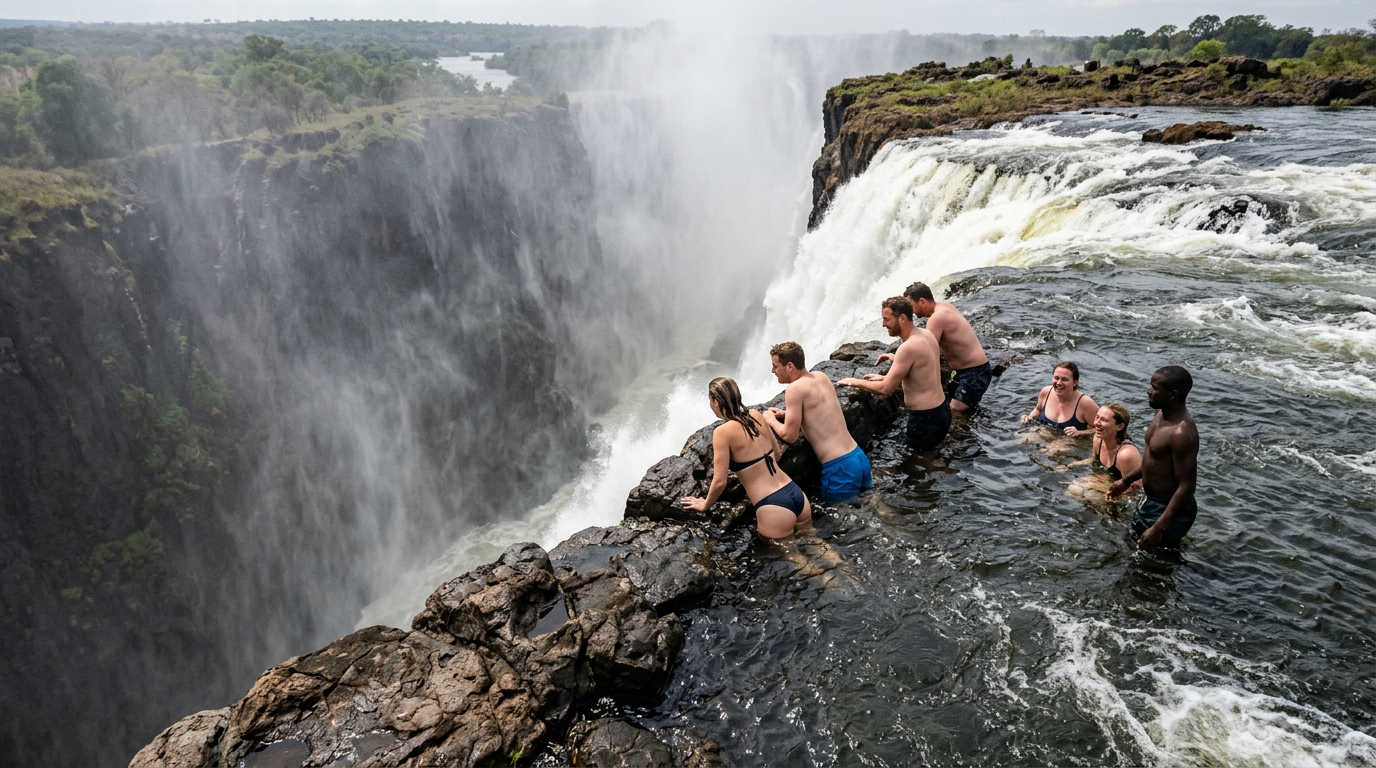
- September to December (Low Water) — the rock face is exposed in sections, and Devil's Pool (a natural infinity pool on the Zambian lip) becomes accessible. Rafting conditions are at their best, with more rapids exposed
- January (Early Rains) — water levels begin rising, temperatures are warm, and the bush is green and lush
Getting There
Victoria Falls Airport (VFA) receives direct flights from Johannesburg, Cape Town, Nairobi, and Addis Ababa, as well as connections through regional hubs. The town is also accessible by road from Kasane, Botswana (90 km), Livingstone, Zambia (11 km), and by long-distance coaches from Bulawayo and Harare.
Victoria Falls is one of those rare places that genuinely exceeds expectations. No photograph, no video, no description can prepare you for the scale, the sound, and the raw power of standing at the gorge's edge for the first time.