Tsholotsho
Wild Frontier of Hwange
Best Time to Visit
May to October for dry season wildlife viewing and comfortable temperatures.
Getting There
Accessible by road from Bulawayo (approximately 100km northwest). The road is paved but deteriorates towards the more remote western areas. 4x4 recommended for accessing the park boundary areas.
Region
Matabeleland North
Zimbabwe's Hidden Cultural Heartland
Tsholotsho is one of those places that rewards the traveller who ventures beyond the guidebook. This sprawling rural district in Matabeleland North Province borders the eastern boundary of Hwange National Park, placing it at the interface between human community and wild Africa — a dynamic, sometimes challenging, always fascinating frontier.
The name Tsholotsho comes from the Ndebele word meaning "to make straight" or "to correct," and the district is home to a predominantly Ndebele community whose cultural traditions remain remarkably intact. Traditional homesteads dot the landscape, cattle are the measure of wealth, and the rhythms of life follow the seasons in a way that has barely changed in generations.
Cultural Experiences
Village Life
Spending time in a Tsholotsho village offers insights into Ndebele culture that no museum or heritage centre can replicate. Visitors who arrange community-based visits can experience traditional food preparation — grinding maize for sadza on a stone grindstone, cooking on an open fire, and sharing a meal with a family. The hospitality is genuine and warm, and the conversations that flow over a shared meal are often the most memorable part of any trip to Zimbabwe.
Traditional Crafts
The women of Tsholotsho are renowned for their beadwork, basketry, and textile weaving. These crafts are not merely decorative — each pattern and colour carries meaning within Ndebele cultural tradition. Community craft centres offer the opportunity to watch artisans at work and purchase directly, ensuring that the economic benefits stay within the community.
Music and Dance
Ndebele music and dance are integral to community life in Tsholotsho. Traditional drumming, call-and-response singing, and vigorous dance performances accompany celebrations, ceremonies, and social gatherings. Visitors who are fortunate enough to witness a performance will experience a cultural tradition of extraordinary power and beauty.
Wildlife and Conservation
Hwange Interface
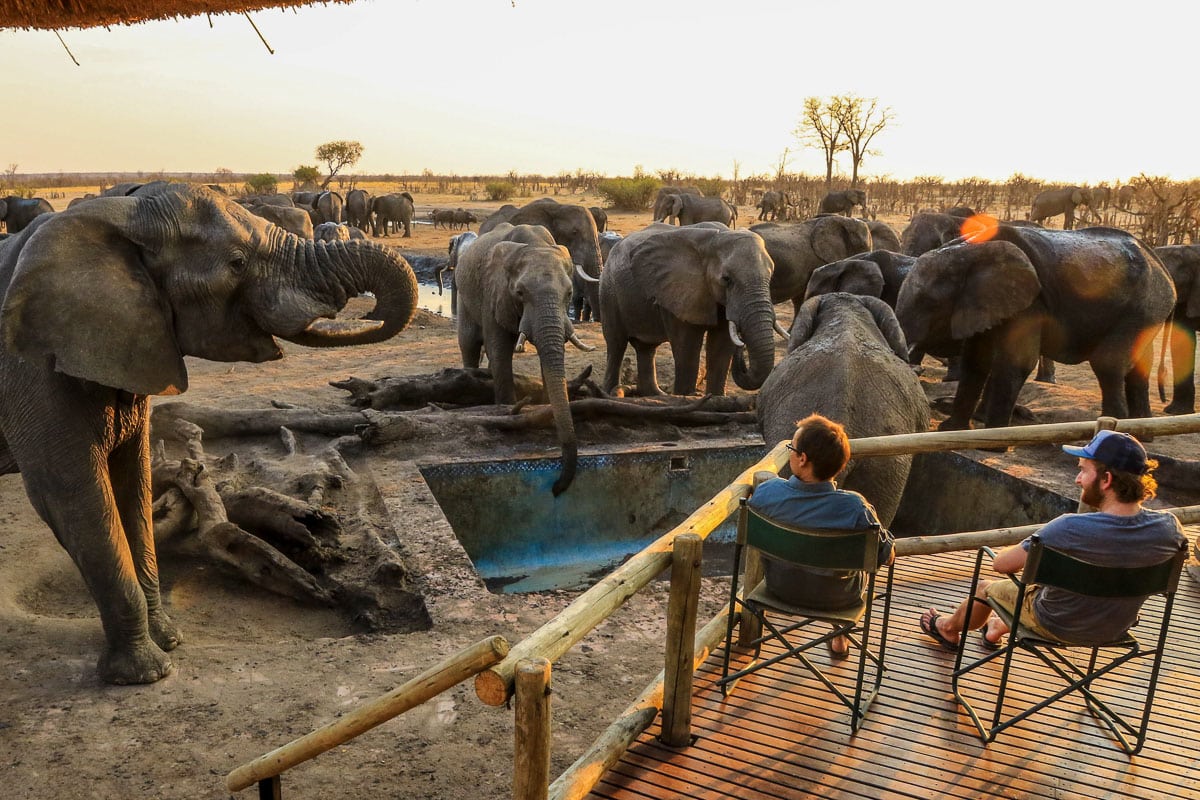
Tsholotsho District shares a long boundary with Hwange National Park, and wildlife frequently moves between the park and surrounding community lands. Elephants, in particular, are regular visitors — a reality that creates both wonder and conflict for local communities. Community-based conservation programmes work to manage human-wildlife conflict while ensuring that local people benefit from the presence of wildlife through tourism revenue and employment.
Community Conservancies
Several community conservancies in the Tsholotsho area are pioneering a model of conservation that places local communities at the centre of wildlife management. These initiatives recognise that wildlife will only survive in the long term if the people who live alongside it benefit from its presence. Visitors who choose to stay at community-run camps and participate in community-guided activities contribute directly to this model.
Getting There
Tsholotsho is accessible from Bulawayo via a tarred road (approximately 100 km). The road from Tsholotsho into the eastern sections of Hwange National Park requires a 4x4 vehicle, particularly during the wet season.
Tsholotsho offers no luxury lodges, no infinity pools, no spa treatments. What it offers instead is something increasingly rare in the modern travel world — genuine human connection, cultural authenticity, and the privilege of witnessing a community's relationship with its landscape, unmediated by tourism infrastructure.