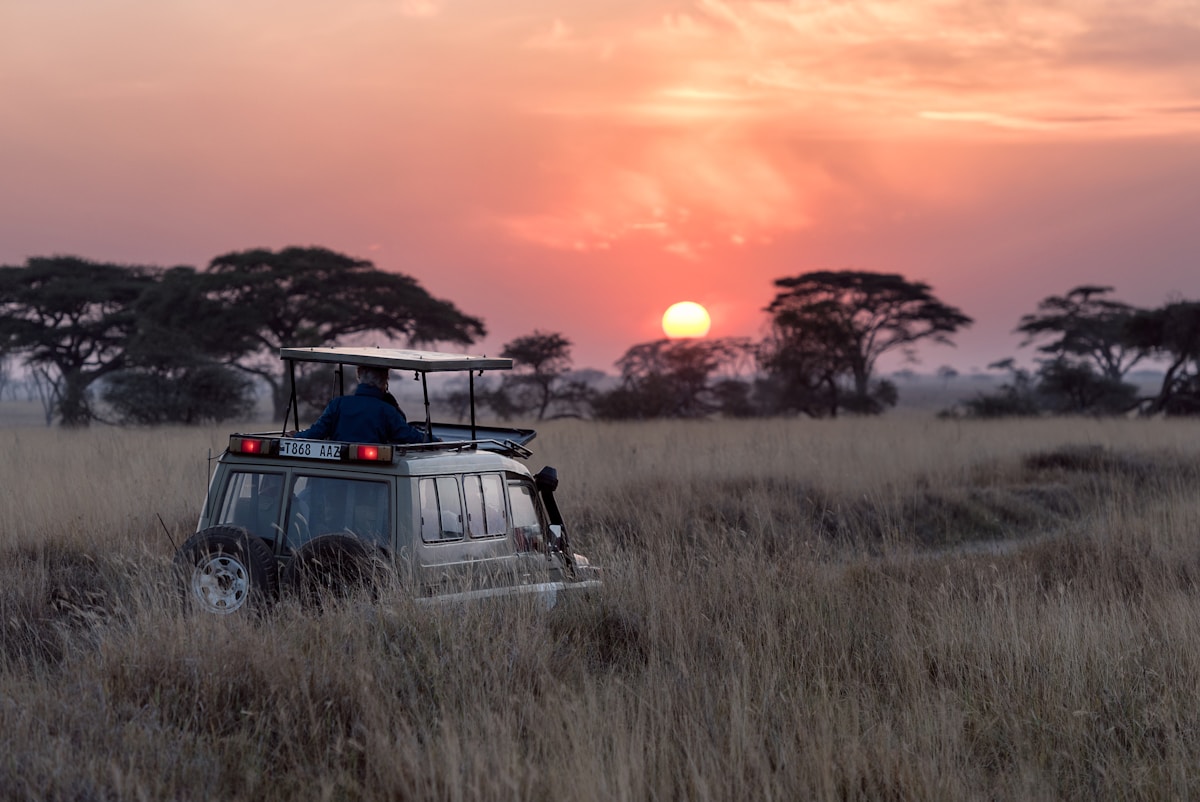
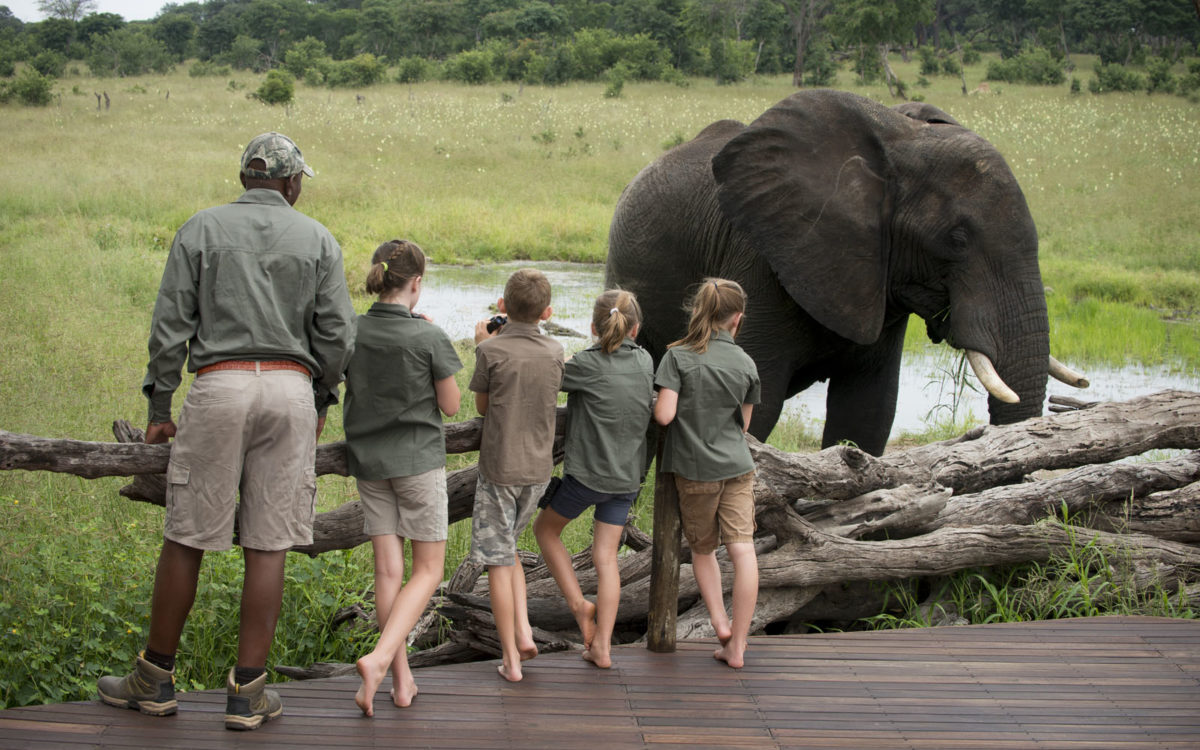
Few wildlife destinations in Africa can match the sheer, overwhelming abundance of Hwange National Park. Zimbabwe's largest game reserve stretches across 14,651 square kilometres of Kalahari sandveld, mopane woodland, and ancient teak forest , a landscape so vast it dwarfs entire countries. Yet it remains one of the continent's best-kept secrets, offering encounters with enormous elephant herds, prides of lion, and packs of endangered African wild dog without the convoy of minibuses that crowds out the experience in East Africa. Whether you're a first-time safari-goer or a seasoned wildlife traveller, Hwange delivers something increasingly rare in modern Africa: a genuinely wild, genuinely uncrowded encounter with nature at its most spectacular. This guide covers everything you need to plan the perfect Hwange safari , from the best seasons and game-viewing areas to accommodation options, practical logistics, and the wildlife you can realistically expect to see.
Hwange at a Glance: Key Facts and Figures
Hwange National Park was established in 1929 and formally gazetted as a national park in 1950. It sits in the north-west corner of Zimbabwe, bordering Botswana's Chobe National Park to the south-west , a shared ecosystem that creates one of the largest unfenced wildlife corridors in southern Africa. The park's position atop the Kalahari basin means rainfall is low and seasonal, which concentrates wildlife around permanent waterholes during the dry season in a way that few other parks in Africa can replicate.
The numbers alone are staggering. Hwange is home to an estimated 40,000 elephants , the largest elephant population of any national park on the continent. More than 100 mammal species and 400 bird species have been recorded here, alongside a growing population of reintroduced rhinoceros. For context, the park is larger than Montenegro and roughly the size of Belgium's Wallonia region.
| Detail | Information |
|---|---|
| Total area | 14,651 km² |
| Established | 1929 (gazetted 1950) |
| Elephant population | ~40,000+ (largest in Africa) |
| Mammal species | 100+ |
| Bird species | 400+ |
| Waterhole count | ~60 pumped waterholes |
| Entry fee (international visitors) | ~USD $20 per day |
| Distance from Victoria Falls | ~110 km (approx. 1.5-hour drive) |
| Distance from Bulawayo | ~270 km (approx. 3-hour drive) |
| Best season | July–October (dry season) |
| Main gate | Main Camp, near Hwange town |
Planning your wider Zimbabwe itinerary? Hwange sits perfectly between two of the country's headline attractions. Read our Complete Guide to Victoria Falls and our Great Western Zimbabwe Road Trip guide to see how Hwange fits into a longer journey through this remarkable region.
Why Choose Hwange Over East Africa?
The Serengeti and Masai Mara dominate global safari marketing for good reason , the annual wildebeest migration is one of nature's great spectacles. But for many travellers, those parks now suffer from their own success. During peak season, popular crossing points attract dozens of vehicles simultaneously, and lodges at the top end command prices that exceed USD $2,000 per person per night. Hwange offers a compelling alternative.
Uncrowded game viewing is Hwange's defining advantage. It is entirely possible , even common , to spend an entire morning at a busy waterhole watching hundreds of elephants drink without another vehicle in sight. The park receives a fraction of the visitors that Kenya's major reserves attract, yet the wildlife density is comparable or superior for many species.
- Fewer vehicles: No vehicle caps at most waterholes; genuine wilderness atmosphere
- Lower cost: Mid-range safari packages from USD $250–$450 per person per night, compared to USD $800–$2,000+ in peak East Africa
- African wild dog capital: One of the continent's most reliable locations for sightings of this critically endangered species
- Big Five in one park: Lion, leopard, elephant, buffalo, and reintroduced rhino all present
- Proximity to Victoria Falls: Just 110 km from Victoria Falls, making a combined trip straightforward
- Authentic Zimbabwe experience: Local guides with deep, generational knowledge of the bush
"I've guided in Kenya, Tanzania, and Botswana. Hwange's elephant herds at a waterhole in September are simply unmatched anywhere on the continent. You'll have a hundred elephants in front of you and silence behind you , that doesn't happen anywhere else." , Senior safari guide, Hwange, 18 years' experience
Hwange also pairs brilliantly with a broader western Zimbabwe itinerary. Many visitors combine it with Victoria Falls and the ancient granite landscape of Matobo Hills , read our Matobo Hills UNESCO World Heritage guide for everything you need to know about that remarkable destination.
The Big Five: What You'll See and When
The term "Big Five" was originally coined by big-game hunters to describe the five most dangerous animals to hunt on foot. Today it's used by safari operators as a shorthand for Africa's most iconic species: lion, leopard, elephant, rhinoceros, and Cape buffalo. Hwange offers realistic sightings of all five, though , as with any wild destination , some require more patience and luck than others.
| Animal | Estimated Population | Best Sighting Conditions | Likelihood (3-night stay) |
|---|---|---|---|
| 🐘 African Elephant | ~40,000 | Waterholes, dry season (Aug–Oct) | Almost certain |
| 🦁 Lion | ~500 | Near waterholes at dawn and dusk | Very likely |
| 🐆 Leopard | Present throughout | Thick riverine bush, early morning | Possible (luck required) |
| 🦏 Rhinoceros | Small reintroduced population | Private concessions, guided walks | Possible with specialist guide |
| 🐃 Cape Buffalo | ~10,000 | Grasslands and waterholes | Very likely |
| 🐕 African Wild Dog | Several resident packs | Open woodland, following pack movements | Good (ask lodge daily) |
Elephants are Hwange's signature animal and the species you are virtually guaranteed to encounter. The park's network of around 60 pumped waterholes , many maintained artificially during the dry season , acts as a magnet, drawing herds of hundreds to drink and socialise. Watching a breeding herd of 200 elephants at a waterhole at sunset, with calves splashing and matriarchs drinking in the foreground, is one of the defining wildlife experiences in Africa. Book an elephant experience through a reputable operator if you'd like a more intimate encounter in an ethical, non-riding context.
Lions are regularly sighted near the major waterholes, particularly at Nyamandhlovu Pan and Dom Pan in the Main Camp area. With a population of around 500, Hwange holds one of Zimbabwe's strongest lion populations. Early morning and late afternoon game drives give the best odds. Leopards are present throughout the park but remain elusive , thick mopane and riverine bush provide excellent cover. Patient, slow driving in the right areas with an experienced guide significantly improves your chances.
🐕 Wild dog tip: Hwange is one of Africa's most reliable locations for African wild dog sightings. Several resident packs are tracked daily by guides at the leading camps. Always ask your lodge for the latest pack location the evening before your morning drive , positions change quickly. The dogs are most active in the cooler hours of early morning.
Rhinoceros sightings require more planning. Both black and white rhino have been reintroduced to Hwange, but the population remains small and is concentrated in specific areas, often within private concessions. Your best chance is to book a specialist guided walking safari or enquire with lodges in the Sinamatella area, where rhino tracking on foot is sometimes offered.
Seasonal Guide: The Best Time to Visit Hwange
Hwange has two distinct seasons that dramatically affect the safari experience: a dry season running roughly from May to October, and a wet season from November to April. Understanding the difference is essential for planning your visit around your priorities , whether that's maximum game viewing, birdwatching, or simply avoiding the crowds.
Dry Season (May–October) ⭐ Best for Game Viewing
This is Hwange's prime safari season, and the period most operators and guides recommend without hesitation. As surface water dries up across the park, wildlife concentrates around the pumped waterholes in extraordinary numbers. By August and September, scenes at the major pans can be breathtaking , hundreds of elephants, zebra, wildebeest, giraffe, and predators all sharing the same water source within a single afternoon. Temperatures are warm and dry, vegetation is low (improving visibility), and the risk of malaria is at its lowest.
- May–June: Cooler temperatures (nights can drop to 5°C), vegetation still relatively thick from rains. Excellent game viewing begins.
- July–August: Peak season begins. Waterholes busy, wildlife concentrated. Comfortable daytime temperatures of 20–25°C.
- September–October: The very best game viewing. Waterholes at maximum activity. Hot days (30–38°C) but spectacular wildlife density. Book well in advance.
Wet Season (November–April) , Birding and Green Season
The wet season transforms Hwange into a lush, green landscape with wildflowers and abundant grass. Game viewing becomes harder as wildlife disperses across the park with access to widespread surface water, but the rewards are different rather than lesser. Birdwatching reaches its peak as migratory species arrive from Europe and Central Africa, swelling the bird count significantly beyond the resident 400+ species. Many lodges offer substantial green-season discounts of 20–40%, making this an attractive option for budget-conscious travellers or dedicated birders.
⚠️ Malaria awareness: Hwange is a malaria area. Risk is highest during and immediately after the wet season (November–April). Consult your GP or a travel health clinic well before departure for the latest advice on prophylaxis. Read our Travel Advice page for general health and safety guidance for Zimbabwe.
If you're combining Hwange with Victoria Falls , which most visitors do , bear in mind that the falls themselves are most dramatic from February to May when the Zambezi runs at full flood. Balancing the two attractions may mean choosing between peak game viewing and peak falls viewing. Many travellers compromise with a June or July visit, when the falls are still impressive and the dry season game viewing is already excellent. Our Planning Your Trip to Western Zimbabwe guide covers this timing question in detail.
, Part 2 continues with game-viewing areas, accommodation options, getting there, practical tips, and sample itineraries.
Where to Stay in and Around Hwange: From Budget Camps to Luxury Lodges
Accommodation in and around Hwange National Park spans an enormous range, from basic national parks campsites costing as little as USD $15 per night to ultra-luxury private concession lodges charging upwards of USD $1,500 per person per night. The right choice depends entirely on your budget, travel style, and how deeply you want to immerse yourself in the wilderness.
Within the national park itself, Zimbabwe Parks and Wildlife Management Authority (ZimParks) operates several rest camps, including Main Camp, Robins Camp, and Sinamatella. These offer self-catering chalets, camping pitches, and basic facilities. They're affordable and authentic, though you'll need to bring most of your own supplies. Booking is done through the ZimParks website or their Harare office, and it's advisable to reserve well in advance during peak season (June to October).
On the private concession side, lodges such as Linkwasha, Little Makalolo, and Somalisa Acacia offer all-inclusive packages where every game drive, meal, and guided walk is included. These properties sit on exclusive wildlife areas with significantly lower vehicle and visitor density than the main park roads, dramatically improving your sightings. Many operate on a fly-in basis from Victoria Falls, with light aircraft transfers adding roughly USD $200–$400 return per person.
| Type | Example Properties | Approx. Cost (Per Person/Night) | Best For |
|---|---|---|---|
| ZimParks Campsite | Main Camp, Robins Camp | USD $15–$25 | Budget travellers, self-drivers |
| ZimParks Chalet | Sinamatella, Main Camp | USD $50–$90 | Budget/mid-range, self-catering |
| Mid-Range Lodge | Hwange Safari Lodge, Ivory Lodge | USD $200–$450 | Comfortable, guided activities |
| Luxury Private Lodge | Linkwasha, Little Makalolo | USD $800–$1,500+ | Premium experience, exclusive game areas |
For those combining Hwange with a broader western Zimbabwe itinerary, the Great Western Zimbabwe Road Trip from Victoria Falls to Bulawayo via Hwange and Matobo is an excellent framework, allowing you to mix accommodation styles and spread costs across the journey.
Practical Planning: Visas, Getting There, and What to Pack
Getting to Hwange requires a little more planning than simply booking a flight, but it's far more straightforward than many travellers expect. The most common entry point is Victoria Falls, which has an international airport served by direct flights from Johannesburg, Nairobi, Addis Ababa, and Lusaka. From Victoria Falls town, Hwange's Main Camp is approximately 100 kilometres southeast along the A8 highway , roughly a 90-minute drive on a good tar road.
Most visitors enter Zimbabwe on a KAZA UniVisa (USD $50), which also covers Zambia and is ideal if you're combining both countries. Single-entry Zimbabwe visas cost USD $30 for most nationalities. Always verify current visa requirements before travel via the Travel Advice section of this site, as regulations can change. For detailed pre-trip logistics, the guide to Planning Your Trip to Western Zimbabwe covers visas, flights, and budgeting comprehensively.
What to pack for a Hwange safari:
- Neutral-coloured clothing (khaki, olive, beige , avoid bright colours and white)
- Warm fleece or jacket for early morning game drives (temperatures drop sharply in the dry season)
- Wide-brimmed hat and high-factor sunscreen (SPF 50+)
- Binoculars , essential for spotting wildlife at distance
- Camera with a telephoto lens (200mm minimum recommended)
- Insect repellent containing DEET, especially during summer months
- Malaria prophylaxis , Hwange is a malaria area; consult your GP before travel
- Sufficient US dollars in cash , ATMs are unreliable outside major towns
Combining Hwange with the Rest of Western Zimbabwe
Hwange is rarely visited in isolation , and rightly so. Western Zimbabwe packs an extraordinary concentration of natural and cultural attractions into a relatively compact region, making it one of Africa's most rewarding multi-destination itineraries. Most travellers pair Hwange with Victoria Falls, and the combination alone justifies the journey from almost anywhere in the world.
Victoria Falls offers an entirely different kind of drama. Beyond the famous waterfall itself, activities range from White Water Rafting on the Zambezi to Helicopter Flights over the gorge, Devil's Pool swims on Livingstone Island, and Sunset Cruises on the upper river. For those seeking an adrenaline fix, Bungee Jumping and the Bridge Swing from Victoria Falls Bridge are iconic experiences. Our Complete Guide to Victoria Falls covers every activity and viewpoint in detail.
Heading south from Hwange towards Bulawayo, the Matobo Hills present a completely different landscape , ancient granite boulders, San rock art, and one of the highest densities of leopard and white rhino in Africa. It's a UNESCO World Heritage Site and a profoundly moving place. Read more in our guide to Matobo Hills: Exploring Zimbabwe's UNESCO World Heritage Wilderness.
| Duration | Suggested Route | Highlights |
|---|---|---|
| 5 Days | Victoria Falls (2 nights) + Hwange (3 nights) | Falls, game drives, elephant herds |
| 8 Days | Victoria Falls (2) + Hwange (3) + Matobo/Bulawayo (3) | Big Five, rhino tracking, rock art |
| 10–12 Days | Above + Zambezi/Chobe extension via Kazungula | Four-country border, river safaris |
For accommodation and dining recommendations once you're in Victoria Falls town, see our guide to Where to Stay and Eat in Victoria Falls Town. To explore the cultural dimension of the region, Discovering Ndebele Culture and Heritage in Western Zimbabwe is essential reading, and Village Tours from several lodges offer meaningful community engagement. You can also use our Trip Planner to build a custom itinerary across the region.
Responsible Safari Tourism: How to Visit Hwange Ethically
Hwange's wildlife exists in a delicate balance, and the choices you make as a visitor have real consequences. Responsible safari tourism isn't merely a buzzword here , it directly affects the long-term survival of the ecosystems you've come to experience.
Start by choosing operators and lodges that demonstrate genuine conservation commitment. Look for properties that employ local staff, contribute to community development projects, and actively support anti-poaching initiatives. Many of the better lodges around Hwange work closely with organisations such as Painted Dog Conservation, which runs a world-class rehabilitation and research centre near the park boundary , well worth a visit in its own right.
In the field, observe the fundamental rules: never encourage your guide to approach animals too closely, never leave litter, and stay inside the vehicle unless specifically instructed otherwise by a qualified guide. Feeding wildlife , even seemingly harmless species , disrupts natural behaviours and can cause lasting harm. Hwange's elephants in particular have become habituated to human presence, which is manageable only as long as boundaries are consistently respected.
Consider also the economic dimension of responsible travel. Using local guides, purchasing crafts directly from artisans, eating at locally owned establishments, and booking through Zimbabwe-based operators listed in our Business Directory keeps tourism revenue within the communities that live alongside the wildlife. When local people benefit economically from conservation, they become its most effective long-term guardians.
For broader travel ethics and safety considerations across the region, visit our Travel Advice pages or Contact Us directly with specific questions about responsible travel in Zimbabwe.
Final Thoughts
Hwange National Park is, without exaggeration, one of Africa's great wildlife destinations. It lacks the global fame of the Serengeti or Kruger, and that relative anonymity is precisely part of its appeal. Here, you can sit beside a waterhole watching a hundred elephants drink at sunset without another vehicle in sight. You can track lions on foot through mopane woodland with a guide who has spent decades reading this landscape. You can witness the raw, unhurried rhythms of the African bush in a way that feels genuinely untouched.
Whether you arrive on a shoestring, camping at Main Camp and self-driving the park's dusty tracks, or fly in to a luxury private concession where every detail is arranged for you, Hwange delivers. The Big Five are present. The bird life is extraordinary. The landscapes shift beautifully across the seasons. And the people , guides, camp staff, local communities , bring a warmth and knowledge that elevates every experience.
Pair it with Victoria Falls, extend it towards Matobo Hills, or use it as the centrepiece of a longer western Zimbabwe road trip. However you approach it, Hwange will stay with you long after the dust of the game tracks has settled. Start planning with our Trip Planner, and don't hesitate to get in touch if you need personalised advice.
Frequently Asked Questions
When is the best time to visit Hwange National Park for wildlife viewing?
The dry season between June and October is widely considered the best time to visit. Water sources shrink to a handful of artificial pumped waterholes, concentrating animals in predictable locations and making sightings far more reliable. July and August offer cooler temperatures ideal for game drives, while September and October deliver the most dramatic elephant gatherings as the dry season reaches its peak.
How much does a safari in Hwange cost?
Costs vary enormously. Budget travellers can camp at ZimParks sites for USD $15–$25 per night and pay park entry fees of around USD $20 per person per day. Mid-range lodges cost USD $200–$450 per person per night including game drives. All-inclusive luxury lodges on private concessions range from USD $800 to over USD $1,500 per person per night, covering all activities, meals, and transfers.
Is it safe to self-drive in Hwange National Park?
Self-driving is permitted and entirely feasible, particularly during the dry season on the main tracks around Main Camp. A 4x4 vehicle is strongly recommended, especially if venturing beyond the primary routes. Always inform the camp office of your planned route, carry sufficient water and fuel, and never exit your vehicle in unfenced areas. During the wet season, some tracks become impassable even for 4x4 vehicles.
Do I need malaria prophylaxis for Hwange?
Yes. Hwange falls within a malaria transmission zone, and prophylaxis is strongly recommended for all visitors. The risk is highest during the wet season (November to April) but present year-round. Consult your GP or a travel health clinic at least four to six weeks before departure to discuss suitable medication options. Additionally, use DEET-based insect repellent and sleep under a mosquito net where possible.
Can I see all of the Big Five in Hwange?
Yes, all five , lion, leopard, elephant, buffalo, and rhino , are present in Hwange. Elephants and buffalo are seen with great regularity, and lion sightings are reliable with an experienced guide. Leopard are present but naturally elusive. White rhino were