Western Zimbabwe is a birder's paradise. With habitats ranging from Zambezi riverine forest to Kalahari sandveld, mopane woodland to granite kopjes, the region supports over 500 species , many of them Southern African specialities. Here are the top spots and the species you shouldn't miss.
1. Victoria Falls Rainforest
The perpetual spray from the falls has created a tiny pocket of tropical rainforest , unique in Southern Africa. This microhabitat attracts species rarely found elsewhere in the region.
Must-see species: Schalow's Turaco, Trumpeter Hornbill, Collared Palm Thrush, Red-winged Starling, African Finfoot (Zambezi upstream)
2. Hwange National Park
Zimbabwe's largest park offers exceptional diversity across its 14,650 km² of teak woodland, scrubland, and grassland. The waterholes are birding hotspots, especially during the dry season.
Must-see species: Kori Bustard (world's heaviest flying bird), Southern Ground Hornbill, Bradfield's Hornbill, Crimson-breasted Shrike, Racket-tailed Roller
3. Matobo National Park
The granite kopjes of Matobo support the world's highest density of nesting Verreaux's Eagles (Black Eagles). The park is also one of the best places in Zimbabwe for raptors generally.
Must-see species: Verreaux's Eagle, Cape Eagle-Owl, Freckled Nightjar, Boulder Chat, Mocking Cliff Chat
4. Kazungula / Zambezi River
The Zambezi upstream and downstream of Victoria Falls is rich with waterbirds and riparian specialists.
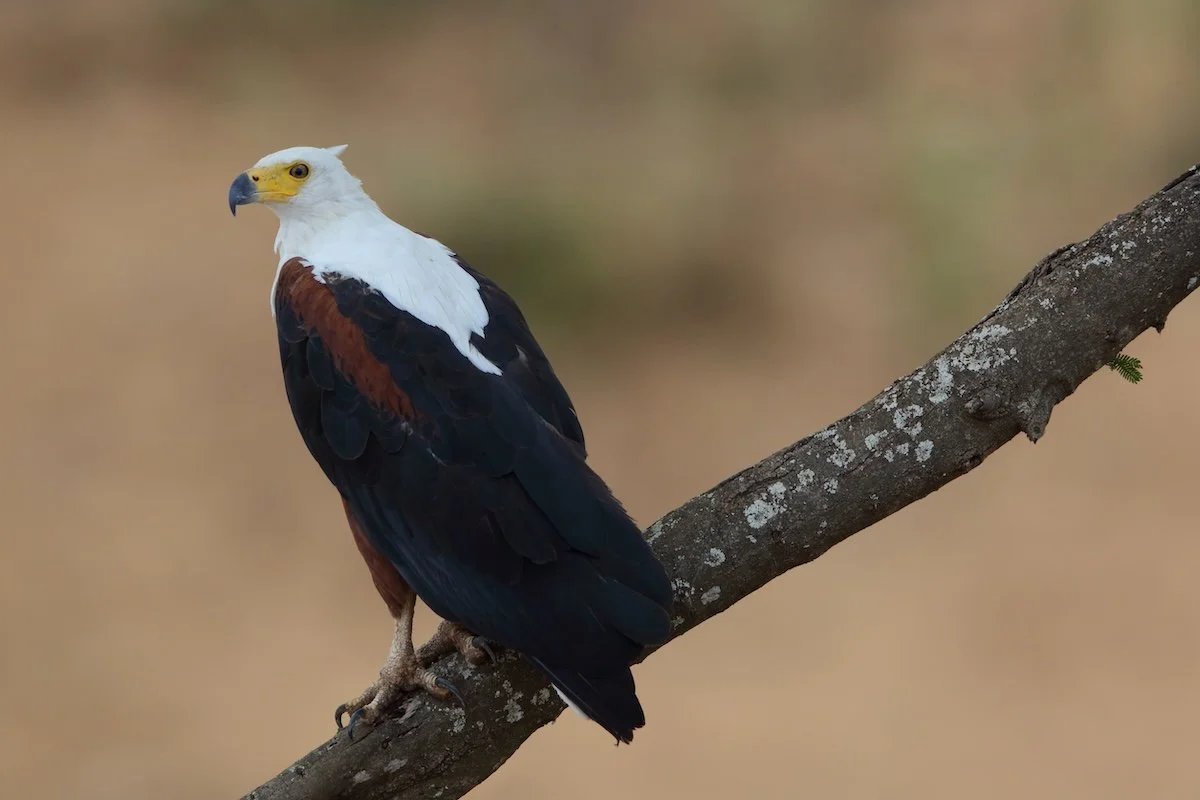
Must-see species: African Fish Eagle, Rock Pratincole, African Skimmer, Half-collared Kingfisher, White-crowned Lapwing
5. Chobe (Day Trip from Victoria Falls)
The Chobe River in Botswana, accessible as a day trip, is exceptional for waterbirds , particularly during the summer months when migrants arrive.
Must-see species: Carmine Bee-eater (Sep–Mar), Pel's Fishing Owl, Slaty Egret, African Openbill, Wattled Crane
6. Hwange Pans (Sinamatella Area)
The northern section of Hwange around Sinamatella and Mandavu Dam is quieter but excellent for raptors and grassland species.
Must-see species: Bateleur, Secretary Bird, Temminck's Courser, Yellow-billed Oxpecker
7. Lake Kariba / Binga
The drowned forests of Lake Kariba support large breeding colonies of herons, cormorants, and darters. The escarpment forests add montane species to the mix.
Must-see species: Böhm's Spinetail, Mottled Spinetail, African Broadbill (Chizarira), Livingstone's Flycatcher
8. Bulawayo Surrounds
The Hillside Dams Conservancy and suburban gardens of Bulawayo support surprisingly rich birdlife, making it easy to build up a species list without leaving the city.
Must-see species: Red-billed Oxpecker, Spotted Thick-knee, African Green Pigeon, Miombo Tit
Seasonal Tips
| Season | Best For |
|---|---|
| Nov – Mar (summer) | Palearctic and intra-African migrants arrive. Breeding plumage. Carmine bee-eaters at Chobe. |
| Apr – Jun (autumn) | Mixed flocks in woodlands. Pleasant weather for long walks. |
| Jul – Sep (winter) | Dry season concentrates birds at water. Leafless trees make spotting easier. |
| Oct – Nov (spring) | Early migrants return. Raptors displaying. First rains trigger breeding. |
Practical Tips
- Bring binoculars (8x42 or 10x42) and a field guide , Roberts Bird Guide or Newman's Birds of Southern Africa
- Early mornings (5:30–9:00 AM) are best for activity and calls
- Use bird apps like Merlin for audio ID , many species are more easily heard than seen
- Hwange waterholes with hides (like Nyamandhlovu) are exceptional for patient observation