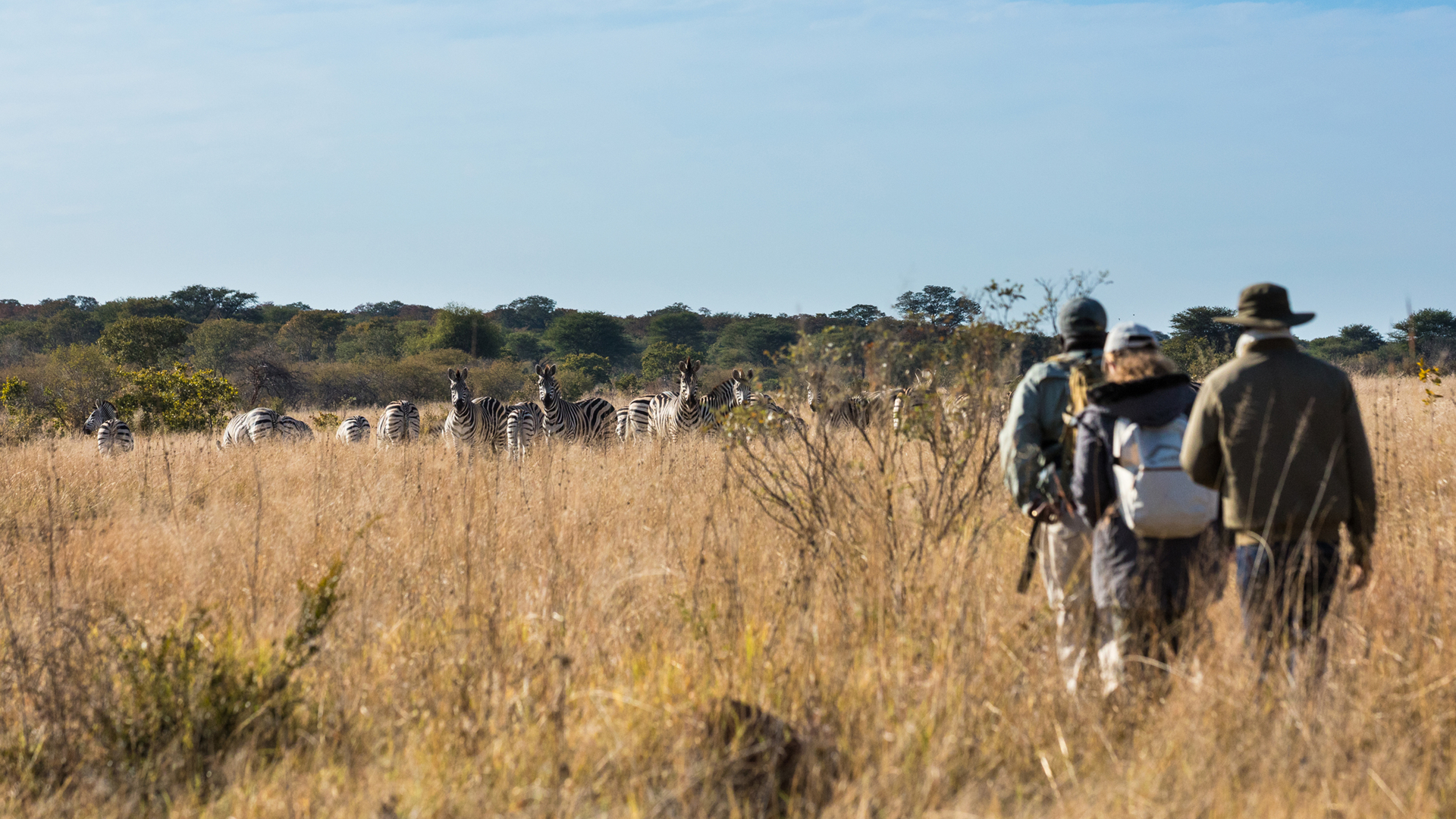
A walking safari strips away the barrier of the vehicle and places you directly in the African bush , on foot, at ground level, reading the landscape the way our ancestors did. It's quieter, slower, and incomparably more intimate than any game drive. Zimbabwe, with its experienced professional guides and diverse terrain, is one of the best places in Africa to experience it.
Why Walk?
On a game drive, you're an observer. On a walking safari, you become a participant. Your senses sharpen , you hear the snap of a twig, smell the musky scent of elephant, feel the tension of approaching a waterhole where buffalo are drinking. You learn to read tracks, identify dung, understand wind direction, and interpret alarm calls.
Walking safaris aren't about getting close to dangerous animals (though it happens). They're about understanding the ecosystem at a deeper level , the small things that vehicle safaris bypass: dung beetles, termite mounds, medicinal plants, and the interconnectedness of the bush.
Where to Walk in Western Zimbabwe
Hwange National Park
Several concessions and private areas on the border of Hwange offer guided walks ranging from 2-hour morning walks to multi-day walking trails. The main camp area also offers shorter walks. The diverse terrain , from teak forests to open vleis , provides varied walking environments.
Walking in Hwange gives you the chance to track elephants (the park has over 40,000), encounter smaller species that vehicles miss, and experience the vastness of the park in a way that sitting in a vehicle simply cannot convey.
Matobo National Park
Walking in the Matopos is a unique experience. The dramatic granite kopjes create a landscape that feels prehistoric. Guided walks here often combine wildlife tracking (particularly rhino) with visits to San rock art sites dating back 3,000 years. The walks are generally moderate in difficulty, with some scrambling over boulders.
Matobo is one of the few places in Zimbabwe where you can track both black and white rhinos on foot , an unforgettable, adrenaline-charged experience led by armed rangers who know every individual animal.
Zambezi Region
The riverine forests and island channels upstream of Victoria Falls offer gentle walking experiences focused on birdlife, vegetation, and smaller mammals. These are typically shorter walks suitable for all fitness levels.
What to Expect
- Group size: Typically 4–8 guests, led by a professional guide and an armed backup ranger
- Duration: Morning walks last 2–4 hours; multi-day trails involve walking 10–15 km per day
- Pace: Slow and deliberate, with frequent stops to examine tracks, plants, and animal signs
- Fitness: Moderate fitness is sufficient for most walks. You don't need to be an athlete, but you should be comfortable walking on uneven terrain for a few hours
- Age: Most operators require a minimum age of 12–16 for walking safaris
Safety
Walking safaris in Zimbabwe are conducted by highly trained professional guides , many with decades of bush experience. Your guide carries a rifle but uses it only as a last resort. The emphasis is on reading animal behaviour and maintaining a safe distance.
Key safety protocols:
- Walk in single file behind the guide
- Never make sudden movements or loud noises
- Follow the guide's instructions instantly and without question
- Wear neutral colours and avoid perfume or strong scents
- Listen to the safety briefing , it's not a formality