Tucked into the southwestern corner of Zimbabwe, Bulawayo and the surrounding Matobo Hills represent one of southern Africa's most rewarding , and most underrated , travel combinations. Where Victoria Falls delivers spectacle, Bulawayo delivers soul: wide colonial boulevards, world-class museums, a thriving arts scene, and a proud Ndebele heritage that shapes everything from the food to the festivals. Venture just 35 kilometres south into the Matobo Hills and you enter a UNESCO World Heritage landscape of balancing granite boulders, ancient San rock art, and one of Africa's finest rhino sanctuaries. This guide covers everything you need to plan an unforgettable visit , from the best city restaurants and heritage museums to three-day itineraries, accommodation comparisons, and practical transport links from Victoria Falls and Harare.
Why Visit Bulawayo? Zimbabwe's City of Kings Explained
Bulawayo is Zimbabwe's second-largest city and its cultural capital, home to approximately 700,000 people and a history stretching back to the 1870s when King Lobengula established his royal kraal here. The name itself translates from Ndebele as "the place of slaughter" , a reference to the fierce power struggles that shaped the kingdom , yet today it is one of the most welcoming and walkable cities in southern Africa.
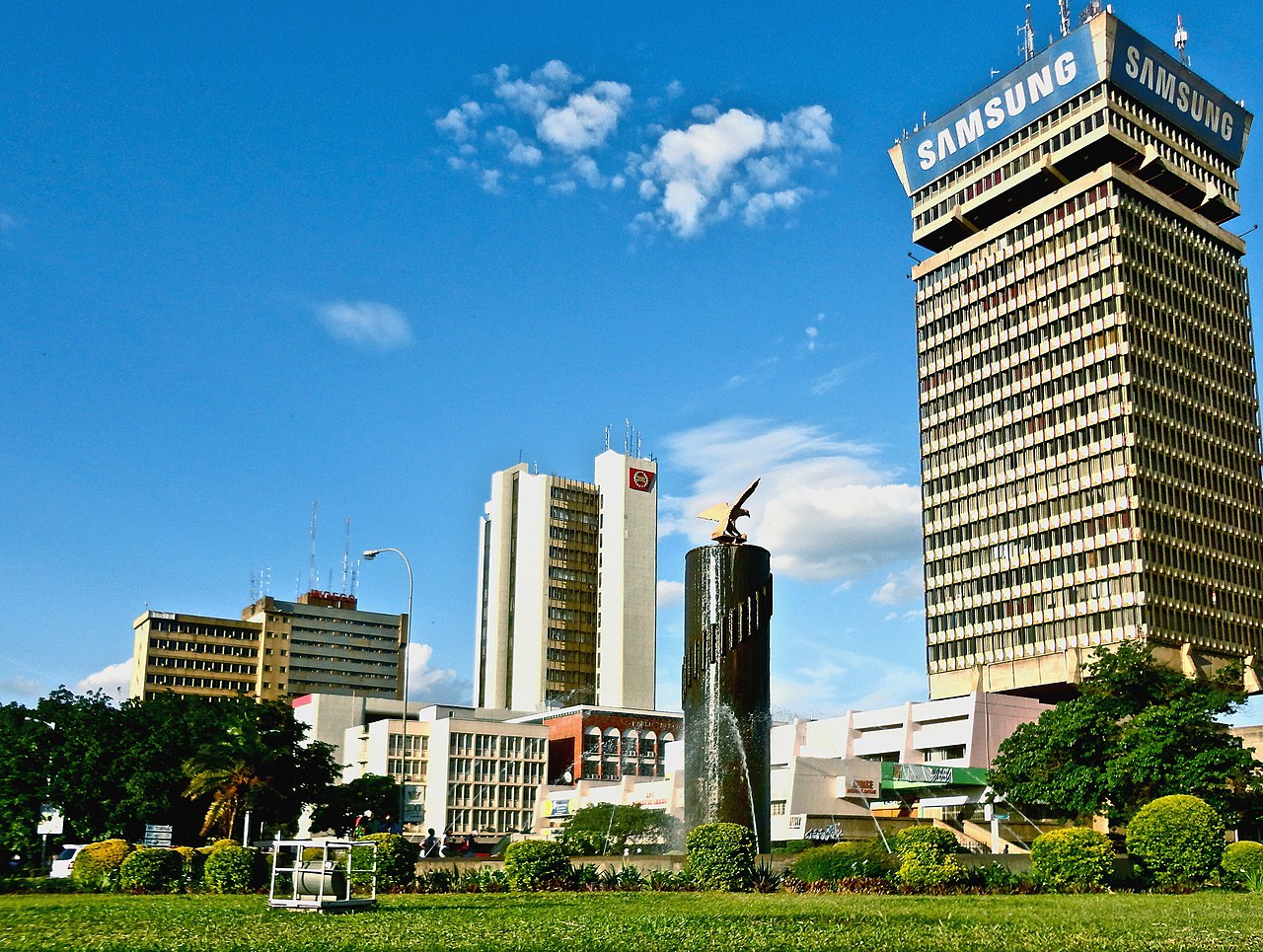
Unlike Harare, which can feel frenetic and sprawling, Bulawayo moves at a more measured pace. Its streets were laid out wide enough to turn an ox wagon, a practical colonial-era decision that now gives the city centre a spacious, almost elegant feel. Victorian-era buildings sit alongside Ndebele cultural institutions, and the city's strong sense of local identity is palpable , Bulawayo residents are famously proud of their home.
For travellers, the city punches well above its weight. The Natural History Museum of Zimbabwe houses one of Africa's finest natural history collections. The Bulawayo Railway Museum preserves a remarkable fleet of steam locomotives. The Mzilikazi Art & Craft Centre is among the best places in Zimbabwe to buy authentic, locally made art. And the surrounding region , including Matobo Hills, Khami Ruins, and Chipangali Wildlife Orphanage , adds days of meaningful exploration.
"I expected a stopover city. I ended up staying five days and still felt I hadn't scratched the surface. Bulawayo has a depth that most travellers completely miss."
, Sarah T., travel writer, UK
Bulawayo also serves as the logical base for exploring western Zimbabwe more broadly. It sits roughly 440 kilometres southeast of Victoria Falls along the A8 highway , a scenic drive of approximately five hours , and 440 kilometres southwest of Harare on the A5. If you're planning a broader western Zimbabwe road trip, our guide to the best road trips in Western Zimbabwe maps out exactly how Bulawayo fits into a longer itinerary.
Fast Facts , Bulawayo: Population ~700,000 · Altitude 1,343 m above sea level · Average annual temperature 19°C · Currency USD · Time zone CAT (UTC+2) · Nearest international airport: Joshua Mqabuko Nkomo International (BUQ), 24 km from city centre
Bulawayo City Highlights: Museums, Art & Colonial Heritage
The Natural History Museum of Zimbabwe is the single best museum in the country, and arguably one of the finest natural history collections in sub-Saharan Africa. Located on Leopold Takawira Avenue, the museum holds over 75,000 specimens across zoology, geology, archaeology, and ethnography. The wildlife dioramas , featuring every mammal found in Zimbabwe, mounted in lifelike habitat scenes , are extraordinary, and the geological hall contains specimens spanning 3.5 billion years of the region's history. Entry costs approximately $5 USD for adults and the museum is open Tuesday to Sunday, 9am–5pm.
A short walk away, the Bulawayo Railway Museum on Lobengula Street is a treasure for anyone with even a passing interest in history. The open-air museum preserves over 20 historic locomotives, including Garratts, Pacifics, and the famous Zambezi , the first locomotive to arrive in Bulawayo in 1897. Entry is around $3 USD and a knowledgeable guide is usually on hand to explain the significance of each engine. The museum connects directly to Zimbabwe's colonial railway history, when Cecil Rhodes' Cape-to-Cairo railway dream pushed the tracks northward through Bulawayo.
For arts and crafts, the Mzilikazi Art & Craft Centre in the suburb of the same name is essential. Established in 1963, it remains one of Zimbabwe's most important craft training institutions, producing ceramics, tapestries, tie-dye textiles, and sculpture. Prices are fair, quality is high, and purchases directly support local artists. The centre is open weekdays and Saturday mornings.
The Bulawayo Club on Fife Street is a living piece of colonial history , founded in 1895, just two years after the town was established. Non-members can visit the bar and restaurant, and the building's original Victorian interior is remarkably well preserved. It's worth stopping for a sundowner simply to absorb the atmosphere. For a deeper dive into the city's attractions, our dedicated Bulawayo City Guide: 15 Things to Do in Zimbabwe's City of Kings covers additional sites including Centenary Park, the Khami Ruins, and Chipangali Wildlife Orphanage.
Tip: The city centre is compact and very walkable. Most major attractions , the Natural History Museum, Railway Museum, City Hall, and Bulawayo Club , can be covered in a single morning on foot. Hire a local guide through the Business Directory for context that brings the architecture and history to life.
Getting to Bulawayo: From Victoria Falls, Harare & Beyond
Bulawayo is well connected by road, rail, and air, making it accessible from all major entry points into Zimbabwe. Here is a practical breakdown of each option:
From Victoria Falls by road: The A8 highway links Victoria Falls to Bulawayo in approximately 5–6 hours (440 km). The road is tar-sealed throughout and in reasonable condition, though potholes and livestock on the road demand careful driving. Self-drivers should allow extra time and avoid driving after dark. This route passes through Hwange National Park territory and the town of Lupane, making it easy to combine with a Hwange safari stop. See our self-drive safari guide to Hwange for route planning details.
From Victoria Falls by air: Fastjet and Zimbabwe Airways operate scheduled flights between Victoria Falls (VFA) and Bulawayo (BUQ). Flight time is approximately 1 hour, and fares typically range from $80–$180 USD one way depending on availability and booking lead time. Flying is the most comfortable option and worth considering if time is short.
From Harare by road: The A5 connects Harare to Bulawayo in approximately 5–6 hours (440 km). This is a well-maintained highway and one of Zimbabwe's busiest intercity routes. Intercape and Pathfinder coaches run daily services between the two cities, with fares around $15–$25 USD.
By train: The overnight train between Harare and Bulawayo is a classic African rail experience. Departures are typically at 9pm, arriving around 6am. First-class sleeper compartments cost approximately $25–$40 USD. The journey is slow but atmospheric , this is the same railway line that Cecil Rhodes extended toward the Zambezi in the 1890s.
| Origin | Transport Mode | Distance | Journey Time | Approx. Cost (USD) |
|---|---|---|---|---|
| Victoria Falls | Self-drive / road transfer | 440 km | 5–6 hours | $0 (own vehicle) / $80–$150 transfer |
| Victoria Falls | Scheduled flight | , | ~1 hour | $80–$180 |
| Harare | Intercity coach | 440 km | 5–6 hours | $15–$25 |
| Harare | Overnight train | 440 km | ~9 hours | $25–$40 (1st class sleeper) |
| Johannesburg, SA | Road (via Beitbridge) | ~580 km | 7–8 hours | $0 (own vehicle) |
| Johannesburg, SA | Scheduled flight | , | ~1.5 hours | $100–$250 |
Border note: Travellers entering Zimbabwe via road from South Africa cross at Beitbridge, one of Africa's busiest land border crossings. Allow 2–4 hours for border formalities, particularly on weekends and public holidays. Ensure your visa is arranged in advance if required , check current requirements on our Travel Advice page.
Matobo Hills UNESCO World Heritage Site: The Essential Guide
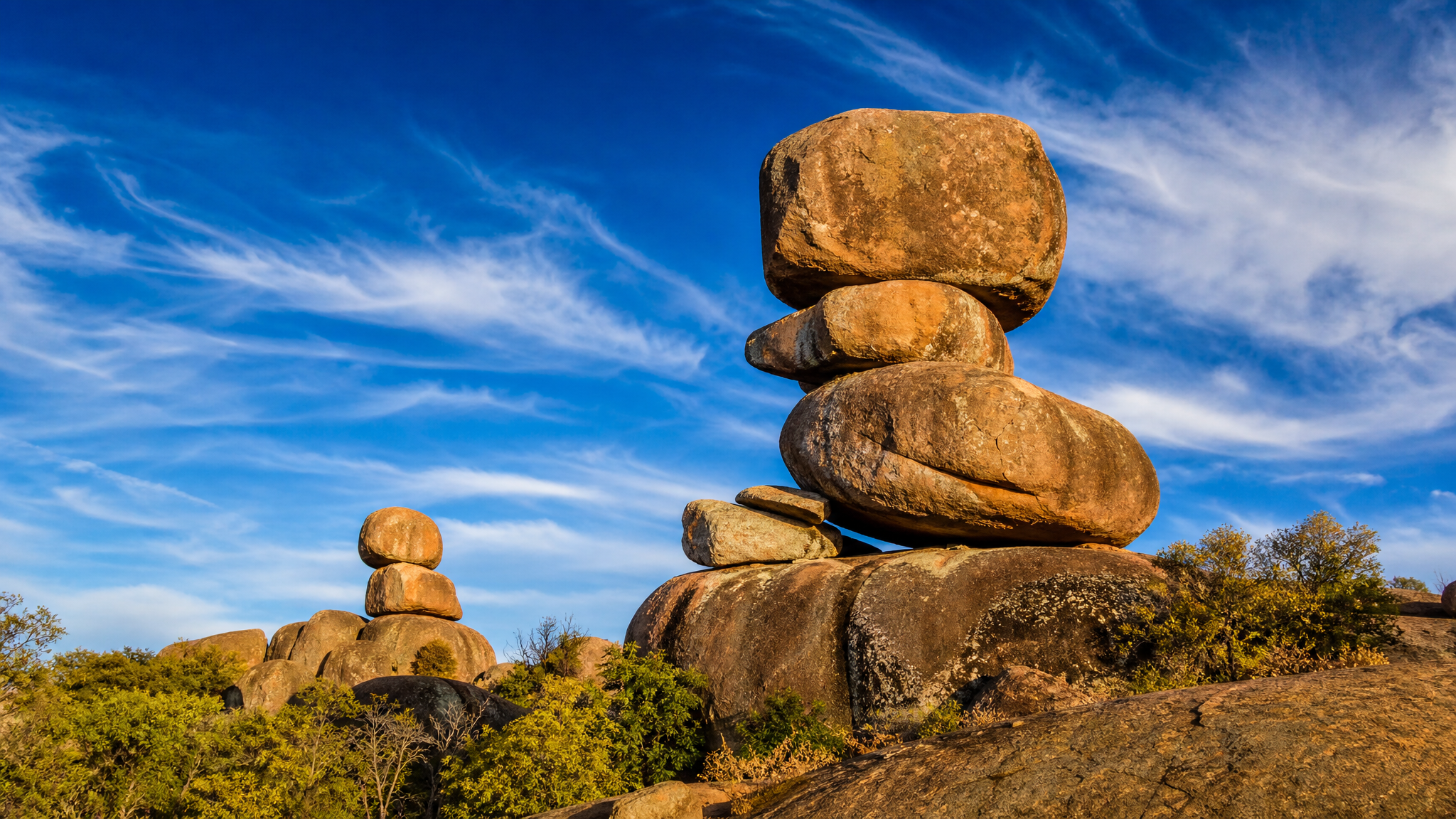
The Matobo Hills , also spelled Matopos , are one of Africa's most extraordinary landscapes, and a UNESCO World Heritage Site since 2003. Located approximately 35 kilometres south of Bulawayo, the hills cover an area of around 3,100 square kilometres and are defined by their dramatic kopjes: ancient granite boulders, some billions of years old, stacked in seemingly impossible formations that tower above the surrounding savannah.
The landscape is not merely scenic , it is sacred. The Ndebele people regard the hills as the dwelling place of Mwali, the supreme deity in the Kalanga-Shona religious tradition, and the area is dotted with shrines where spirit mediums still conduct ceremonies. Long before the Ndebele, the San (Bushmen) people lived among these rocks for tens of thousands of years, leaving behind one of the highest concentrations of San rock art in the world , over 3,000 documented sites within the Matobo Hills alone.
The Matobo Hills are divided into several zones. Matobo National Park covers the core protected area and is where you'll find the rhino sanctuary, Cecil Rhodes' grave at World's View, and the most accessible rock art sites. Entry to the national park costs $15 USD per person per day for international visitors. The surrounding communal lands and private conservancies offer additional activities and accommodation options.
Wildlife in Matobo is exceptional for the landscape type. The park supports over 175 bird species, including one of the world's highest densities of black eagles (Verreaux's eagles), which nest on the granite cliffs. Leopard, zebra, giraffe, wildebeest, and sable antelope are all present, and the rhino sanctuary , managed jointly with the Zimbabwean Parks Authority , protects both white and black rhino populations. For dedicated wildlife photographers, our guide to wildlife photography on a Zimbabwe safari has specific advice on capturing the Matobo's unique rocky terrain and raptors.
"There is nowhere in Africa quite like Matobo. The scale of the boulders, the silence, the sense of deep time , it does something to you that's hard to explain."
, Dr. Pathisa Nyathi, Zimbabwean historian and author
| Detail | Information |
|---|---|
| UNESCO designation | World Heritage Site (2003) , Cultural landscape |
| Distance from Bulawayo | 35 km south (approx. 40 minutes by road) |
| Total area | ~3,100 km² |
| National Park entry fee | $15 USD per person per day (international visitors) |
| Rock art sites | 3,000+ documented sites |
| Key wildlife | White & black rhino, leopard, sable antelope, Verreaux's eagle |
| Best time to visit | May–October (dry season; wildlife concentrated, clear skies) |
| Recommended minimum stay | 2 full days |
| Guided rhino tracking | $30–$60 USD per person (park fee additional) |
| Closest accommodation | Big Cave Camp, Amalinda Lodge, Matobo Hills Lodge (all within park) |
San Rock Art & Cecil Rhodes' Grave: History Written in Stone
The San rock art of Matobo Hills is among the oldest and most extensive in the world, with some paintings estimated to be over 13,000 years old. The San people , the original hunter-gatherer inhabitants of southern Africa , created these images not merely as decoration but as a record of spiritual experience, depicting trance dances, rain-making ceremonies, and encounters with the spirit world. The paintings are rendered in ochre, white, and black pigments derived from iron oxide, clay, and charcoal, and many remain remarkably vivid despite their age.
The two most accessible and impressive sites within Matobo National Park are Nswatugi Cave and Pomongwe Cave. Nswatugi contains some of the finest giraffe and kudu paintings in Zimbabwe, while Pomongwe , the largest rock shelter in Matobo , features a dense panel of human and animal figures alongside a small on-site museum explaining the paintings' cultural context. Both sites are reached via short walks from designated car parks and are included within the national park entry fee.
A third site, White Rhino Shelter, is particularly significant , it contains some of the earliest known depictions of rhinoceros in African rock art, a poignant detail given that Matobo remains one of the few places in Zimbabwe where you can still encounter rhino in the wild today.
At the northern edge of the national park, World's View is one of Matobo's most visited , and most debated , sites. This broad granite dome offers a sweeping panorama across the boulder-strewn landscape, and it is here that Cecil John Rhodes, the British mining magnate and colonial architect, chose to be buried in 1902. His grave, carved into the rock, is marked simply with the words "Here lie the remains of Cecil John Rhodes." Alongside him are buried Leander Starr Jameson and a number of Ndebele chiefs who died in the 1896 uprising , an uncomfortable historical juxtaposition that is worth reflecting on during your visit. Entry to World's View is included in the national park fee.
Rock Art Etiquette: Never touch the paintings , even clean hands transfer oils that accelerate deterioration. Do not use flash photography directly on the pigments. Stay on marked paths around shelters. Many sites are still considered sacred by local communities; behave with appropriate respect.
For travellers interested in the broader cultural landscape of western Zimbabwe, our guide to conservation and community tourism in Western Zimbabwe explains how entrance fees and guided visits directly fund both heritage preservation and local community development programmes around Matobo.
Continue reading in Part 2: Rhino Tracking, Accommodation Comparison, Bulawayo's Best Restaurants, the 3-Day Itinerary, Khami Ruins, and more...
Day Trip Itineraries from Bulawayo
Bulawayo's greatest strength as a base is its proximity to an extraordinary range of historical, cultural, and natural attractions. Most major sites sit within a 45-minute to two-hour drive, making it perfectly suited to day tripping , whether you're travelling independently or joining an organised tour. For deeper planning, our guide to the best road trips in Western Zimbabwe covers distances, road conditions, and hidden stops worth factoring into your schedule.
Below is a recommended three-day framework that balances Bulawayo's urban highlights with Matobo's wilderness and the ancient Khami Ruins.
| Day | Morning | Afternoon | Evening |
|---|---|---|---|
| Day 1 – City Immersion | Natural History Museum (2 hrs); Railway Museum (1 hr) | Mzilikazi Art & Craft Centre; Bulawayo Club lunch; city walking tour | Dinner at Cattleman Restaurant; drinks at The Criterion |
| Day 2 – Matobo Hills | Early start to Matobo; rhino tracking on foot (3–4 hrs) | Nswatugi Cave rock art; Cecil Rhodes grave at World's View | Sundowners at Amalinda Lodge or return to Bulawayo |
| Day 3 – Khami Ruins & Surrounds | Khami Ruins UNESCO site (22 km from city); guided tour (2 hrs) | Chipangali Wildlife Orphanage; afternoon at leisure | Farewell dinner at Indaba Book Café; depart or overnight |
Travellers combining Bulawayo with a wider western Zimbabwe circuit often continue onward to Hwange National Park or loop back via Victoria Falls. If you're travelling with children, our Victoria Falls family adventure guide has practical advice on combining both destinations into a seamless family itinerary.
Khami Ruins: Zimbabwe's Overlooked UNESCO Treasure
Just 22 kilometres west of central Bulawayo, the Khami Ruins represent one of Zimbabwe's most undervisited UNESCO World Heritage Sites. Built between the 15th and 17th centuries as the capital of the Torwa dynasty , successors to the Great Zimbabwe civilisation , Khami once housed a population of thousands and served as a major centre of trade and political power. Today, the site receives only a fraction of the visitors that flock to Great Zimbabwe near Masvingo, which means you'll often have this extraordinary place almost entirely to yourself.
The ruins are characterised by their distinctive decorated stone walls, featuring geometric chevron and chequered patterns that distinguish Khami's architectural style from other stone enclosures in the region. The Hill Complex, the largest structure on site, offers sweeping views across the surrounding landscape and a tangible sense of the civilisation that once thrived here. A small on-site museum provides context on the Torwa and later Rozvi kingdoms, along with artefacts recovered during excavations, including Portuguese trade goods that confirm Khami's role in the Indian Ocean trade network.
Entry fee: USD $5 for international visitors
Opening hours: 08:00–17:00 daily
Getting there: 22 km west of Bulawayo via Old Khami Road; accessible by private vehicle or taxi (approx. USD $15–20 return)
Time needed: 1.5–2.5 hours
Guided tours: Available on-site for a small additional fee; highly recommended for historical context
The site is most atmospheric in the early morning when light rakes across the stonework and birdsong fills the surrounding bush. Birdwatchers should bring binoculars , the area around Khami is excellent for woodland species. For a comprehensive list of what to spot across the region, our bird watching guide to Western Zimbabwe covers top sites and 50 must-see species. Combine Khami with a morning at the Chipangali Wildlife Orphanage (8 km further along the same road) for a rewarding half-day excursion that requires no guide or advance booking.
Where to Stay & Eat: Practical Comparison
Accommodation in the Bulawayo–Matobo corridor spans a wide range of budgets and styles, from colonial-era city hotels to intimate bush lodges perched among granite boulders. The choice largely depends on your priorities: staying in Bulawayo gives you flexibility and access to restaurants and transport links, whilst basing yourself in Matobo Hills delivers immersion in the landscape and easier access to early-morning activities.
| Category | Option | Location | Price (per night) | Best For |
|---|---|---|---|---|
| Budget | Bulawayo Backpackers / Guesthouses | City centre | USD $15–35 | Solo travellers, long stays |
| Mid-range | Cresta Churchill Hotel | Bulawayo suburbs | USD $80–120 | Business travellers, couples |
| Mid-range | Matobo Hills Lodge | Matobo National Park | USD $100–160 | Nature lovers, families |
| Luxury | Amalinda Lodge | Matobo Hills | USD $350–500 (all-inclusive) | Honeymoons, special occasions |
| Luxury | Big Cave Camp | Matobo Hills | USD $300–450 (all-inclusive) | Couples, small groups |
| Budget camping | ZPWMA Campsites (Matobo) | Inside national park | USD $10–15 per person | Self-sufficient campers |
For dining in Bulawayo, the city punches well above its weight. Cattleman Restaurant on Robert Mugabe Way is the go-to for flame-grilled Zimbabwean beef. Indaba Book Café in the city centre combines excellent coffee, light meals, and a curated selection of African literature , a perfect spot for a leisurely breakfast. The Fusion Restaurant offers a more contemporary menu with Asian-influenced dishes, whilst La Gondola has served reliable Italian cuisine to Bulawayo's residents for decades. Most main courses range from USD $8–18, making eating out in Bulawayo considerably more affordable than Victoria Falls.
Getting to Bulawayo: From Victoria Falls & Harare
Bulawayo is well connected to Zimbabwe's two main visitor hubs, and the journey itself , particularly from Victoria Falls , passes through some of the country's most evocative landscapes. Understanding your transport options will help you plan realistic timings and avoid the common mistake of underestimating road journey durations.
From Victoria Falls (440 km): The drive south along the A8 highway takes approximately four to five hours in good conditions. The road passes through Lupane and skirts the eastern edge of Hwange National Park, where elephant crossings are common , particularly at dusk. This is one of Zimbabwe's most scenic drives, and self-drivers should allow extra time for wildlife sightings and photo stops. Our self-drive safari guide to Hwange covers road conditions and what to expect along this corridor. Scheduled coach services (Pathfinder, City Link) operate daily between Victoria Falls and Bulawayo, with tickets costing approximately USD $15–25. The overnight train , a colonial-era institution , departs Victoria Falls at 19:00 and arrives in Bulawayo around 06:00, offering a memorable if unhurried journey for around USD $10–20 in second class.
From Harare (440 km): The A5 highway connects Harare to Bulawayo in roughly five hours by road. Both Fastjet and Air Zimbabwe operate daily flights (approximately 1 hour), with fares ranging from USD $80–180 depending on how far in advance you book. Coach services are frequent and comfortable, typically costing USD $12–20.
Travellers arriving from Botswana via Kazungula can pick up the A8 south of Victoria Falls and follow the same route into Bulawayo. Those coming from South Africa via Beitbridge will travel north along the A4 , a journey of approximately four hours from the border. If you're building a broader southern Africa itinerary, a Chobe day trip from Victoria Falls makes an excellent addition before heading south to Bulawayo.
Once in the city, getting around is straightforward. Taxis are metered and widely available (USD $3–8 for most city journeys). For Matobo Hills, day-trip transfers can be arranged through your accommodation or via operators listed in our Business Directory. If you prefer to plan your entire western Zimbabwe circuit in advance, our Trip Planner tool helps you build a customised itinerary with distance calculations and suggested overnight stops.
Final Thoughts
Bulawayo and the Matobo Hills represent Zimbabwe at its most layered , a place where ancient San rock art, Ndebele royal history, colonial railway architecture, and white rhino conservation exist within a few kilometres of each other. This is not a destination that announces itself loudly. It rewards the curious, the unhurried, and those willing to look beyond the obvious headline attractions of Victoria Falls or the Serengeti-style plains of Hwange.
What makes this region genuinely special is the intimacy of the experience. Tracking white rhino on foot through boulder-strewn grassland with a ranger who knows each animal by name. Standing at a San rock art panel that has remained unchanged for 2,000 years. Eating a flame-grilled steak in a dining room where the colonial ceiling fans still turn slowly overhead. These are not manufactured moments , they are the natural texture of a place that has been quietly extraordinary for a very long time.
Whether you spend two days or two weeks in the region, the combination of Bulawayo's urban character and Matobo Hills' raw wilderness will leave a more lasting impression than almost anywhere else in southern Africa. For those building a broader Zimbabwe itinerary, this region pairs beautifully with Hwange National Park to the north and the thundering spectacle of Victoria Falls , creating a circuit that covers wildlife, culture, history, and adventure in a single, coherent journey. Use our Trip Planner to start mapping your route, or Contact Us if you'd like personalised recommendations from our team on the ground.
Frequently Asked Questions
How long do I need in Bulawayo and Matobo Hills?
A minimum of three days allows you to cover Bulawayo's main city highlights and spend a full day in Matobo Hills. Five days gives you time to add Khami Ruins, Chipangali Wildlife Orphanage, and a more relaxed pace in the national park. If you're basing yourself in a Matobo lodge, two nights there plus one night in the city works well for most itineraries.
Is it safe to visit Bulawayo as a tourist?
Bulawayo is considered one of Zimbabwe's safer cities for tourists. Petty theft can occur in busy markets and around the bus station, so standard precautions apply , keep valuables out of sight and avoid walking alone after dark in unfamiliar areas. The national parks and lodges in Matobo Hills are extremely safe. Always check current conditions via our Travel Advice page before travelling.
When is the best time to visit Matobo Hills?
The dry season from May to October is generally considered optimal , vegetation is lower, wildlife concentrates around water sources, and rhino tracking conditions are excellent. June to August brings cool, clear days ideal for walking. November to April is the green season; the landscape is lush and dramatic, but some tracks become muddy and wildlife is harder to spot through dense vegetation.
Can I visit Cecil Rhodes' grave and the San rock art sites without a guide?
Cecil Rhodes' grave at World's View is accessible independently within Matobo National Park , simply pay your park entry fee (USD $15 for international visitors) and follow the signposted road. However, San rock art sites such as Nswatugi Cave are best visited with a knowledgeable guide who can explain the symbolism and historical context. Many lodges include guided rock art walks as part of their activity programme.
How do I get from Victoria Falls to Bulawayo?
The most popular options are self-driving (approximately 4–5 hours along the A8 highway), taking a scheduled coach service with Pathfinder or City Link (USD $15–25, roughly 5–6 hours), or the overnight train departing Victoria Falls at 19:00 and arriving in Bulawayo around 06:00. Flying is also possible via connecting flights through Harare, though this adds significant time and cost compared to the road journey.
What currency is used in Bulawayo and do I need cash?
US dollars are the primary currency used by tourists throughout Bulawayo and Matobo Hills. Most lodges, restaurants, and tour operators accept card payments, but smaller vendors, market stalls, park entry kiosks, and taxis typically require cash. Bring a supply of small USD notes (USD $1, $5, and $10 bills are most useful). ATMs exist in Bulawayo city centre but can be unreliable , withdraw cash before leaving a major hub.