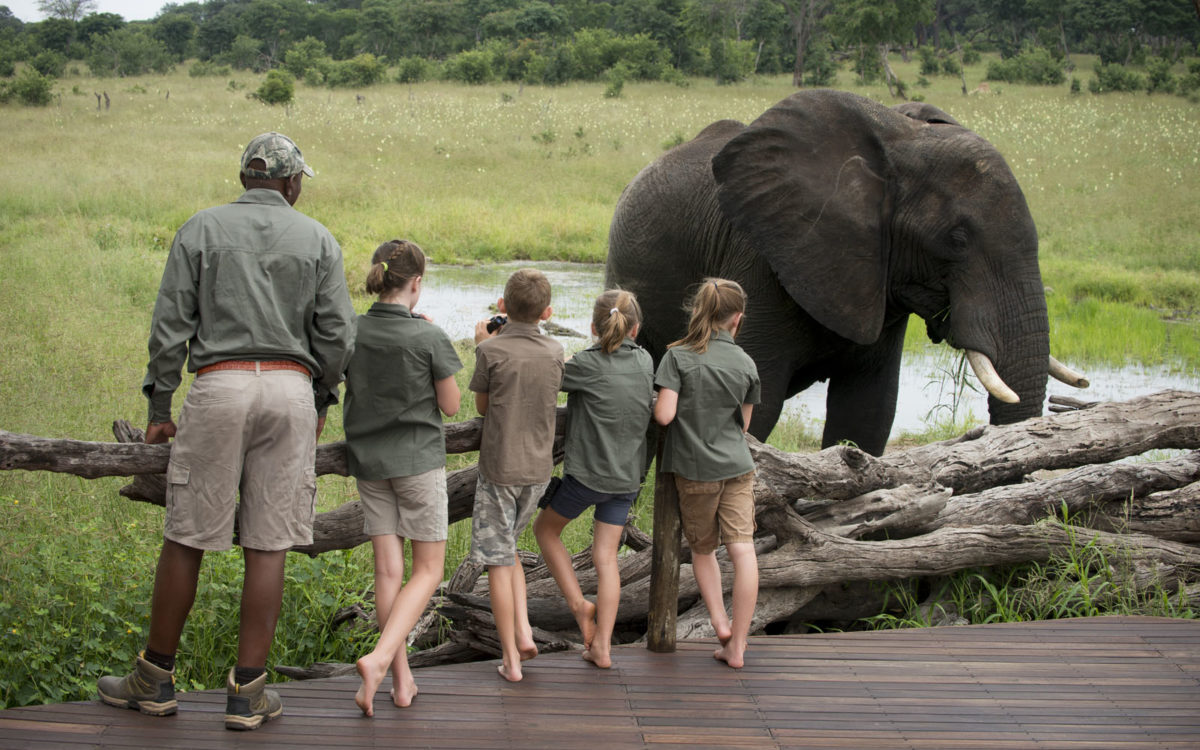
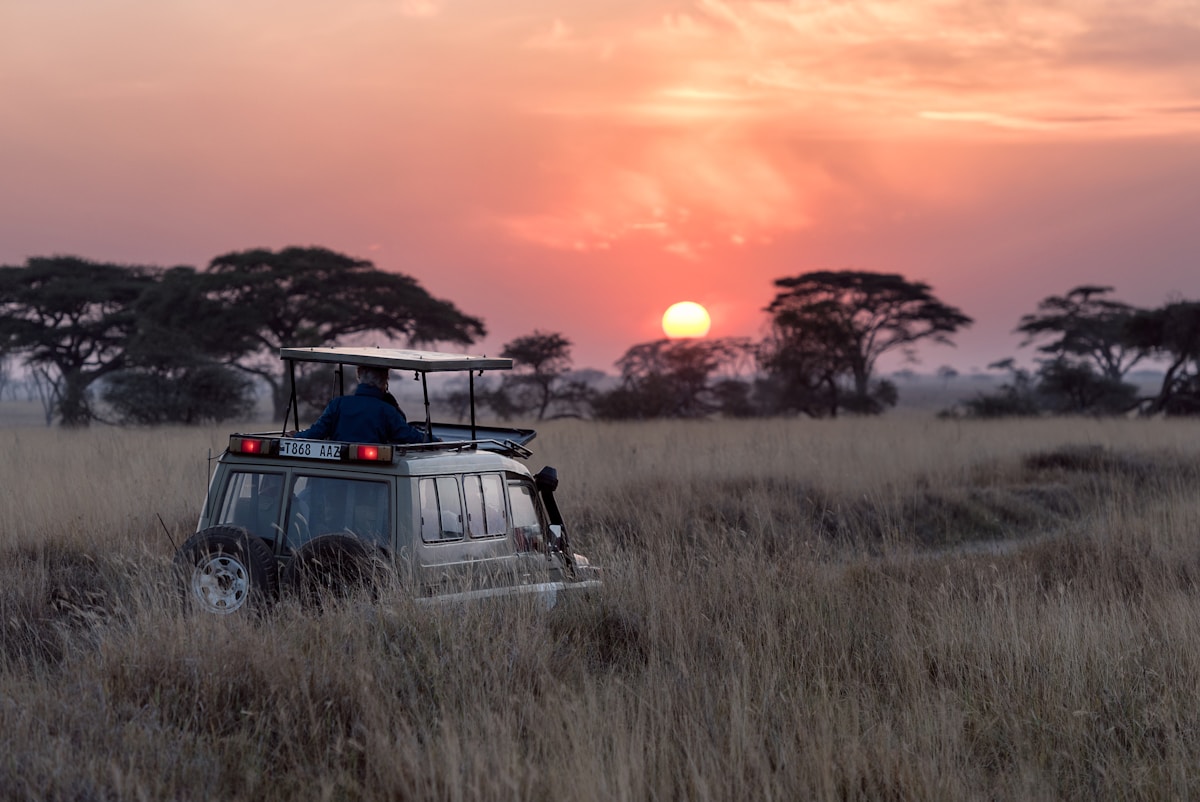
Planning a self-drive safari in Hwange National Park is one of the most rewarding , and genuinely adventurous , ways to experience Zimbabwe's largest game reserve. Covering over 14,651 square kilometres of mopane woodland, Kalahari sandveld, and open grassland, Hwange National Park offers a network of self-drive routes that put you in direct control of your wildlife encounter. No fixed itineraries, no rushing between sightings, no other vehicles crowding your view of a lion pride at dawn. Just you, the bush, and the remarkable biodiversity that makes Hwange home to one of Africa's largest elephant populations , estimated at over 45,000 individuals. That said, self-driving here demands proper preparation. Road conditions range from well-graded gravel to deep sand tracks that will swallow an unprepared vehicle whole. This guide covers everything you need: vehicle requirements by route, distances and drive times, fuel logistics, gate hours, camping versus lodge options, GPS waypoints for key waterholes, and what to do when , not if , things go sideways. For the full picture on wildlife, seasons, and accommodation across the park, start with our Ultimate Safari Guide to Hwange National Park, then return here for the practical self-drive detail.
Vehicle Requirements: 2WD vs 4WD by Route
The single most important decision before entering Hwange on a self-drive is choosing , or hiring , the right vehicle. The answer depends entirely on which routes you intend to drive and when you plan to visit.
Can you self-drive Hwange in a 2WD vehicle? Yes, but only on a limited selection of routes and ideally during the dry season (May to October). The main access road from Hwange Main Camp to the Nyamandhlovu Pan area is graded gravel and manageable in a standard sedan or 2WD SUV when conditions are dry. Similarly, the road between Main Camp and Sinamatella Camp , approximately 48 km , is generally passable in a high-clearance 2WD during the dry months.
However, the moment you venture onto secondary loop tracks, head towards Robins Camp or Sinamatella's northern loops, or attempt any driving between November and April, a 4x4 vehicle with high clearance becomes essential. The Kalahari sand in Hwange's western sections is notoriously deep and soft , it has defeated many confident drivers in standard SUVs. During the wet season, clay pans become impassable, and even 4x4 vehicles can become seriously bogged.
Important: Attempting deep sand tracks in a 2WD vehicle , even a crossover SUV , risks becoming stranded in a remote area with no mobile signal and potentially dangerous wildlife in the vicinity. Zimbabwe National Parks (ZimParks) rangers have been called to assist stranded self-drivers multiple times each season. Do not underestimate the terrain.
If you're hiring a vehicle, budget for a 4x4 double-cab with a rooftop tent if you plan to camp. Reputable hire companies operate out of Victoria Falls and Bulawayo. Expect to pay between USD $120–$200 per day for a fully equipped 4x4 with camping kit. Always confirm that your hire agreement permits driving inside national parks , some budget operators restrict this.
Tyres deserve special attention. Carry at least two spare tyres (not just one), a high-lift jack, a compressor, and tyre repair plugs. Acacia thorns along bush tracks cause punctures with frustrating regularity. A recovery kit including a snatch strap, D-shackles, and a folding shovel is strongly recommended for anyone venturing beyond the main camps.
| Route / Area | Dry Season (May–Oct) | Wet Season (Nov–Apr) | Minimum Vehicle |
|---|---|---|---|
| Main Camp – Nyamandhlovu Pan loop | 2WD passable | 4x4 recommended | High-clearance 2WD (dry only) |
| Main Camp – Sinamatella (48 km) | 2WD passable | 4x4 required | High-clearance 2WD (dry only) |
| Sinamatella northern loops | 4x4 required | 4x4 required | 4x4 with diff-lock |
| Robins Camp access & loops | 4x4 required | 4x4 required | 4x4 with diff-lock |
| Lukosi / Deteema Dam tracks | 4x4 required | Not recommended | 4x4 with high clearance |
| Kennedy Vleis / Ngweshla Pan | 4x4 required | Not recommended | 4x4 with diff-lock |
Routes, Distances & Drive Times
Hwange's self-drive network is organised around three main camp hubs , Main Camp, Sinamatella Camp, and Robins Camp , each with its own surrounding loop tracks and access to distinct ecosystems. Understanding the distances and realistic drive times between these hubs is critical for planning, as driving inside the park after dark is strictly prohibited.
The park's road network covers approximately 480 km of designated self-drive tracks, though not all are open simultaneously. ZimParks periodically closes tracks after heavy rain or for maintenance. Always check current road conditions at the gate on arrival, and consider calling ahead to ZimParks Main Camp on +263 83 284 4562 before your trip.
Rule of thumb for Hwange driving speeds: Plan for an average of 20–30 km/h on main access roads and as little as 10–15 km/h on sandy loop tracks. Wildlife sightings, river crossings, and soft sand will always slow you down , and that's exactly the point.
The most popular self-drive circuit for first-time visitors combines the Nyamandhlovu Pan loop (departing from Main Camp) with a drive to Dom Pan and Guvalala Pan. This full loop covers roughly 65 km and takes between four and six hours with stops , a genuinely satisfying half-day drive that consistently delivers elephant, buffalo, and predator sightings near the waterholes.
For those based at Sinamatella, the Mandavu Dam loop is outstanding, particularly in September and October when water is scarce and wildlife concentrates around the reservoir. The track from Sinamatella Camp to Mandavu Dam is approximately 18 km one-way and requires a 4x4 for the final section.
"We spent three days driving the Sinamatella loops in a hired Land Cruiser and didn't see another vehicle for entire mornings at a time. The wildlife density around Mandavu Dam in October was extraordinary , elephant herds of 80 or 90 individuals coming to drink at sunset. It's the kind of experience that makes you realise why people return to Hwange year after year."
, Traveller review, self-drive safari, October 2023
| Route | Start / End Point | Distance | Est. Drive Time (with stops) | Difficulty |
|---|---|---|---|---|
| Nyamandhlovu Pan Loop | Main Camp | ~35 km loop | 2–3 hours | Easy (2WD dry) |
| Dom Pan / Guvalala Circuit | Main Camp | ~65 km loop | 4–6 hours | Moderate (4x4 advised) |
| Main Camp to Sinamatella | Main Camp → Sinamatella | 48 km one-way | 2–3 hours | Moderate (2WD dry) |
| Sinamatella – Mandavu Dam Loop | Sinamatella Camp | ~40 km loop | 3–4 hours | Moderate–Hard (4x4) |
| Sinamatella to Robins Camp | Sinamatella → Robins | ~100 km one-way | 4–6 hours | Hard (4x4 essential) |
| Ngweshla Pan / Kennedy Vleis | Robins Camp | ~55 km loop | 4–5 hours | Hard (4x4 with diff-lock) |
| Lukosi River Track | Main Camp area | ~30 km one-way | 2–3 hours | Hard (4x4, dry season only) |
The drive between Sinamatella and Robins Camp is the most challenging route in the park and should not be attempted without a well-equipped 4x4, a full fuel load, and ideally a second vehicle travelling with you. The 100 km stretch passes through remote mopane woodland with deep sand sections and no assistance for long stretches. Allow a full day and depart no later than 8:00 am to ensure you arrive before gate closing time.
Fuel Availability & Gate Opening Times
Fuel availability inside Hwange National Park is extremely limited. This is one of the most common oversights made by self-drivers, and running out of fuel in a remote section of the park is a serious situation. The only reliable fuel source within the park is at Hwange Main Camp, where diesel and petrol are usually available , but supply can be inconsistent. Do not rely on this as your only source.
The practical approach is to fill up completely before entering the park. The nearest reliable fuel stations outside the park are in Hwange town (approximately 10 km from the Main Camp entrance gate) and at Dete on the main Bulawayo–Victoria Falls road. If you're approaching from Victoria Falls (approximately 180 km to the north), fill up in Victoria Falls town before departure. If approaching from Bulawayo (~340 km to the south-east), fill up there and carry a jerry can.
Fuel calculation tip: For a three-day self-drive covering the Main Camp and Sinamatella areas, budget for approximately 150–200 litres of diesel in a standard 4x4. Carry a minimum of 20 litres in a jerry can as emergency reserve. Sand driving significantly increases fuel consumption , expect up to 30% higher usage compared to normal road driving.
Gate opening times are strictly enforced by ZimParks rangers, and being caught inside the park after closing time results in a fine. Times vary slightly by season to align with sunrise and sunset:
- Summer (October–March): Gates open 06:00, close 18:30
- Winter (April–September): Gates open 06:00, close 18:00
Entry fees as of 2024–2025 are charged in USD. Foreign nationals pay USD $20 per person per day plus USD $5 per vehicle per day. SADC nationals receive a reduced rate of approximately USD $10 per person per day. Children under 6 enter free; ages 6–12 are charged at half the adult rate. Fees are payable at the gate by cash (USD preferred) or by Ecocash for Zimbabwean residents. Credit card facilities at gates are unreliable , always carry cash.
For the latest ZimParks fee schedules, gate contact numbers, and booking procedures for national park camps, visit our Travel Advice page or check the official ZimParks website. Fees are subject to change and should be confirmed before travel.
If you're combining your Hwange visit with a broader western Zimbabwe road trip , perhaps linking Victoria Falls, Hwange, and Bulawayo , our guide to The Great Western Zimbabwe Road Trip: Victoria Falls to Bulawayo via Hwange and Matobo covers the full route with fuel stops, overnight options, and driving distances in detail.
Camping vs Lodge: Costs, Comfort & What to Expect
One of the defining choices for any self-drive safari in Hwange is where you sleep. The park offers a spectrum from ZimParks-run national park camps at the budget end to private luxury lodges on the park boundary , and the experience differs enormously between the two.
ZimParks camping is the authentic self-drive experience. Main Camp, Sinamatella, and Robins Camp all offer designated campsites with basic ablution facilities (cold showers, flush toilets), braai stands, and electricity points at some sites. Costs are very reasonable: USD $15–$20 per person per night for foreign nationals at national park campsites. Bookings can be made through the ZimParks online portal or in person at the gate, though advance booking is strongly recommended for peak season (July–October).
The trade-off is comfort and reliability. Water supply at remote camps can be intermittent, braai wood availability varies, and facilities are maintained to a basic standard. That said, waking up inside the park , hearing lions call at 3 am, watching elephants walk through camp at dawn , is an experience no lodge can fully replicate.
"Camping at Sinamatella was genuinely one of the best nights of our lives. We sat at the edge of the escarpment watching a storm roll in over the plains below, with elephants silhouetted against the lightning. No lodge experience could match that."
, Self-drive traveller, Sinamatella Camp, August 2024
Private lodges on the Hwange boundary , such as those in the Hwange Estate and around Dete , offer guided game drives, professional rangers, and all-inclusive packages. Rates typically range from USD $250–$600 per person per night for mid-range properties, rising to USD $800+ at premium camps. Most include scheduled game drives with experienced guides, which can significantly enhance wildlife sightings , particularly for tracking predators. You can explore options through our Game Drives – Hwange activity page.
| Feature | ZimParks Camping | Mid-Range Lodge | Premium Lodge |
|---|---|---|---|
| Cost per person per night (USD) | $15–$20 | $250–$450 | $600–$1,200+ |
| Location | Inside park | Park boundary / concession | Private concession |
| Guided game drives included | No | Usually yes | Yes (multiple daily) |
| Meals included | Self-catering | Full board | All-inclusive |
| Electricity | Limited / solar | Yes | Yes |
| Hot water | Cold showers only | Yes | Yes (luxury en-suite) |
| Wildlife immersion | Very high (inside park) | High | High |
| Advance booking required | Recommended | Essential (peak season) | Essential (months ahead) |
For self-drivers on a tighter budget, a hybrid approach works well: spend two or three nights camping inside the park at Main Camp or Sinamatella, then treat yourself to one night at a boundary lodge for a guided night drive and a hot shower. This combination delivers both the raw authenticity of bush camping and the expertise of a professional guide. If you're planning your wider budget across Zimbabwe, our guide to Victoria Falls on a Budget offers useful context for managing costs across the region.
Those considering a longer western Zimbabwe itinerary , perhaps extending beyond Hwange to the shores of Lake Kariba , will find useful accommodation and planning information in our guide to Binga & Lake Kariba: Western Zimbabwe's Hidden Gem on the Water. The journey from Hwange to Binga via Lupane is a rewarding off-the-beaten-track extension for adventurous self-drivers.
Camping vs Lodges: Where to Sleep in Hwange
One of the most consequential decisions for any self-drive visitor is where to spend the night. Hwange offers a genuine spectrum of accommodation , from bare-bones bush camping to luxurious tented lodges , and your choice will shape the entire rhythm of your trip. The good news is that self-drivers are well catered for at both ends of the scale.
National Parks camping is managed by Zimbabwe Parks and Wildlife Management Authority (ZimParks) and represents extraordinary value. Main Camp, Sinamatella, and Robins Camp all have designated camping areas with basic ablution blocks, braai stands, and , crucially , perimeter fencing that keeps the wildlife at a respectful distance during the night. Nightly fees run to approximately $15–$20 USD per person for foreign visitors, with an additional vehicle entry fee of around $5. Book in advance through the ZimParks online portal, particularly for the dry season months of June through October when sites fill up weeks ahead.
For those who prefer a bed and a hot shower, several privately run lodges along the park boundary welcome self-drive guests without requiring a full package booking. Sable Sands, The Hide, and Ivory Lodge all offer walk-in or advance room bookings, with rates typically starting around $180–$350 USD per person per night including dinner and breakfast. These lodges also offer guided game drives as optional add-ons, which can be a smart way to supplement your self-drive experience with a tracker's expert knowledge.
If you're planning a longer itinerary that combines Hwange with a road trip through the region, our The Great Western Zimbabwe Road Trip: Victoria Falls to Bulawayo via Hwange and Matobo covers accommodation options along the full corridor, including some excellent bush stops between the park and Bulawayo.
| Type | Example | Approx. Cost (per person/night) | Facilities | Best For |
|---|---|---|---|---|
| National Parks Campsite | Main Camp, Sinamatella | $15–$20 USD | Ablutions, braai, water | Budget travellers, overlanders |
| Private Bush Camp | Nehimba, Linkwasha | $80–$150 USD | En-suite, meals, generator | Mid-range couples, small groups |
| Luxury Tented Lodge | The Hide, Ivory Lodge | $180–$350+ USD | Full board, pool, guided drives | Comfort seekers, special occasions |
| Park Rest Camp Chalet | Robins Camp | $40–$70 USD | Self-catering, basic kitchen | Families, longer stays |
Insider Tip: Booking ZimParks accommodation directly through the official portal is always cheaper than through third-party agents. If the online system is giving you trouble , which it occasionally does , a direct email to the reservations office in Harare often resolves availability queries within 24 hours. Keep your confirmation number on you; rangers at the gate will ask for it.
What to Do If You Get Stuck or Break Down
Even experienced bush drivers occasionally find themselves axle-deep in sand or nursing a puncture 40 kilometres from the nearest camp. In Hwange, being prepared for this eventuality is not pessimism , it's basic competence. The park's internal roads, particularly in the Sinamatella and Robins sectors, can see very little traffic on weekdays, meaning a breakdown in the wrong spot could mean a long wait if you haven't planned ahead.
Your first priority is always safety. If your vehicle becomes immobilised, do not leave it to walk for help unless you are absolutely certain the route is safe and short. Stay with the vehicle, keep windows partially open for ventilation, and use your horn in short bursts if you hear approaching vehicles. Carry a whistle and a mirror for signalling.
For sand bogging, which is the most common self-drive mishap, the standard recovery sequence is: deflate tyres to around 1.0–1.2 bar, engage low-range 4WD if not already done, clear sand from around the tyres with a shovel, place sand ladders or traction boards under the drive wheels, and reverse out slowly. Rocking the vehicle gently , alternating between forward and reverse , can help break the suction. Never spin the wheels at high revs; this digs you in deeper.
For mechanical breakdowns, your best resource is the nearest ZimParks camp. Rangers are accustomed to assisting distressed self-drivers and can often radio for help or arrange a tow to the nearest gate. Keep the camp telephone numbers saved on your phone , network coverage is patchy but does exist near the main camps. The Main Camp workshop can assist with minor repairs and tyre changes.
Critical: Always inform the camp ranger of your intended route and expected return time before heading out. This creates a basic safety net , if you haven't returned by a specified time, rangers know to investigate. It's an informal system, but it has saved lives.
Travel insurance that covers emergency vehicle recovery and medical evacuation is non-negotiable for self-drive safaris. For broader pre-trip preparation advice, visit our Travel Advice section, which covers insurance, emergency contacts, and medical considerations for Zimbabwe travel.
Wildlife Spotting Tips for Self-Drivers
Guided safari vehicles have a significant advantage: experienced trackers who read the bush like a text. As a self-driver, you need to compensate with patience, preparation, and a working knowledge of animal behaviour. The good news is that Hwange's waterholes do much of the work for you , particularly during the dry season when animals have no choice but to visit predictable water sources.
Timing is everything. The golden windows for wildlife activity are the two hours after sunrise (roughly 6:00–8:00am) and the two hours before sunset (4:30–6:30pm). Midday driving is largely unproductive , animals shelter in shade and are difficult to spot. Use the middle of the day to rest at camp, eat, and plan your afternoon route. The park gates open at 6:00am and close at 6:30pm , you must be back at camp by closing time without exception.
Waterhole strategy is the self-driver's greatest tool. Rather than driving constantly, park quietly at a productive waterhole and wait. Switch off your engine, stay inside the vehicle (which acts as a mobile hide), and give the waterhole 30–45 minutes. Hwange's elephant population , one of Africa's largest, estimated at over 45,000 individuals , means elephant sightings are almost guaranteed at the right waterhole in the dry season. Key waterholes worth prioritising include Dom, Nyamandhlovu Pan, Masuma Dam, and Mandavu Dam.
For detailed waterhole GPS coordinates and a breakdown of which species favour which water sources by season, our comprehensive The Ultimate Safari Guide to Hwange National Park: Camps, Routes, Wildlife & Seasons is an essential companion resource. You can also book supplementary guided activities through our Game Drives , Hwange page if you want expert-led sessions alongside your self-drive days.
GPS Waypoints for Key Waterholes (approximate):
• Nyamandhlovu Pan: 18°54'12"S, 26°30'44"E
• Dom Waterhole: 18°58'33"S, 26°38'17"E
• Masuma Dam: 18°35'42"S, 26°12'09"E
• Mandavu Dam: 18°34'11"S, 26°08'55"E
Always cross-reference with a current park map from the Main Camp office, as track access can change seasonally.
Keep binoculars within easy reach, carry a quality field guide to southern African mammals and birds, and invest in a local SIM card loaded with the offline Maps.me app pre-loaded with Zimbabwe data. For lions specifically, listen for alarm calls from impala and baboons , they are often more reliable indicators of predator presence than your own eyes.
Budget Breakdown: Planning Your Self-Drive Safari Costs
One of the most compelling arguments for a self-drive safari in Hwange is the cost saving compared to fully guided packages, which can run to $500–$800 USD per person per day at premium camps. Done sensibly, a self-drive trip can deliver a genuinely world-class wildlife experience for a fraction of that figure. Below is a realistic daily budget breakdown for two people sharing a 4x4 vehicle.
| Expense Category | Budget Option | Mid-Range Option | Notes |
|---|---|---|---|
| Park Entry Fees (per person) | $20 USD | $20 USD | Fixed ZimParks rate for foreign visitors |
| Vehicle Entry Fee | $5 USD | $5 USD | Per vehicle per day |
| Accommodation (per person) | $15–$20 USD (camping) | $60–$120 USD (chalet/lodge) | Book ZimParks directly to save |
| Fuel (estimated 150km/day) | ~$25–$35 USD shared | Based on ~12L/100km, $1.50/L diesel | |
| Food & Supplies | $10–$15 USD (self-catering) | $25–$40 USD (lodge meals) | Stock up in Hwange Town or Victoria Falls |
| Vehicle Hire (if renting) | $80–$150 USD/day total | 4x4 with camping kit; split between travellers | |
| Approximate Daily Total (per person) | $60–$80 USD | $140–$200 USD | Excluding vehicle hire if using own car |
These figures assume you are self-catering for most meals, which is both economical and practical given that many campsites have braai facilities. Stock your cooler box thoroughly before entering the park , there are no shops inside Hwange's boundaries. Hwange Town has a reasonable supermarket, and Victoria Falls offers the widest pre-trip shopping options.
If you're combining this trip with a broader western Zimbabwe itinerary , perhaps heading south towards Matobo Hills or west towards Binga on Lake Kariba , our guide to Binga & Lake Kariba: Western Zimbabwe's Hidden Gem on the Water includes additional budget planning tips for that leg of the journey. For those adding Victoria Falls to the itinerary, Victoria Falls on a Budget shows how to keep costs manageable at one of Africa's most visited destinations.
Money-Saving Tip: Zimbabwe's national parks operate entirely in US dollars, and cash is strongly preferred. ATMs in Hwange Town are unreliable, and card facilities inside the park do not exist. Arrive with sufficient USD in small denominations , $1, $5, and $20 notes are most useful. Trying to pay a $20 park fee with a $100 bill in a remote camp office is an experience best avoided.
It's also worth remembering that your spending contributes meaningfully to local conservation efforts. For a deeper look at how tourism dollars are used in the region, read our piece on How Your Visit Helps: Conservation and Community in Western Zimbabwe. You can also support local operators and guides through our Business Directory, which lists vetted local services across the region.
Finally, if you're still in the planning stages and weighing up the full logistics of a Zimbabwe trip , visas, flights, vaccinations, and border crossings , our Planning Your Trip to Western Zimbabwe guide covers everything you need to know before you book. Our Trip Planner tool can also help you piece together a custom itinerary that balances Hwange with other highlights like tracking the Big Five or exploring the Matobo Hills UNESCO World Heritage wilderness.
Final Thoughts
A self-drive safari in Hwange is one of southern Africa's great undiscovered travel experiences , undiscovered, at least, by the mass-market safari circuit that tends to funnel visitors into guided packages at premium camps. For independent travellers with the right vehicle, a reasonable level of bush sense, and a willingness to slow down and wait, Hwange rewards patience with moments of wildlife intimacy that no amount of money can guarantee.
The practical barriers are lower than many people assume. Yes, you need a capable vehicle , ideally a 4x4 for the full network , and yes, you need to plan your fuel, water, and food carefully. But the park infrastructure is functional, the rangers are helpful, and the wildlife density in the dry season is genuinely extraordinary. Watching a hundred elephants descend on Masuma Dam at dusk, with no other vehicle in sight, is the kind of experience that reframes your understanding of what African wilderness can be.
Use this guide as your foundation, but supplement it with current local knowledge. Road conditions change with each rainy season, new tracks open and old ones close, and waterhole productivity shifts with the rains. The ZimParks staff at Main Camp are an invaluable resource , speak to them on arrival, tell them your planned routes, and ask what's been active in the past 48 hours. That five-minute conversation may well lead you directly to a lion pride.
Hwange deserves more visitors who engage with it on its own terms , slowly, quietly, and with genuine curiosity. If this guide helps even a handful of travellers make that journey, it has done its job. Now go and enjoy one of Africa's finest parks, on your own schedule, at your own pace.
Frequently Asked Questions
Do I need a 4x4 vehicle for a self-drive safari in Hwange National Park?
It depends on your planned routes. The main roads between Main Camp, Sinamatella, and Robins Camp are manageable in a high-clearance 2WD during the dry season (May–October). However, many of the best waterhole tracks and the majority of roads in the wet season require a 4x4 with low-range capability. A 4x4 is strongly recommended for any visitor wanting full access to the park's road network.
What are the gate opening and closing times at Hwange National Park?
Hwange's park gates generally open at 6:00am and close at 6:30pm, though these times can vary slightly by season as they are tied to sunrise and sunset. You must be back at your designated camp before closing time , rangers take this seriously and late returns may result in fines. Always confirm current gate times with ZimParks staff on arrival, as they are updated seasonally.
Where can I buy fuel near Hwange National Park?
There is no fuel available inside the park itself. The nearest reliable fuel stations are in Hwange Town (approximately 30km from Main Camp) and in Victoria Falls (around 100km north). Diesel is more consistently available than petrol. Always fill your tank completely before entering the park and carry at least 20 litres of spare fuel in approved jerry cans, particularly if you plan to drive the more remote Sinamatella or Robins sectors.
What is the best time of year for a self-drive safari in Hwange?
The dry season from June to October is widely considered the best period for self-drive safaris in Hwange. Vegetation is sparse, making wildlife easier to spot, and animals concentrate around the park's waterholes in predictable patterns. August to October offers the most dramatic game viewing as water sources diminish. The wet season (November–April) brings lush scenery and newborn animals but significantly more challenging road conditions.
How do I book campsites inside Hwange National Park?
Campsites at ZimParks-managed camps , including Main Camp, Sinamatella, and Robins Camp , can be booked through the Zimbabwe Parks and Wildlife Management Authority's official online reservations portal. Booking well in advance is essential for the peak dry season months of July to October. If you experience difficulties with the online system, a direct email to the ZimParks reservations office in Harare is usually effective. Payment is required in US dollars.
Is it safe to self-drive in Hwange National Park?
Self-driving in Hwange is generally safe provided you follow the fundamental rules: remain inside your vehicle at all times unless in a designated area, never approach wildlife on foot, inform camp rangers of your route before departing, carry sufficient water and emergency supplies, and return to camp before gate closing time. The primary risks are vehicle-related , sand bogging, punctures, and getting lost , rather than direct wildlife danger, which is low if basic protocols are observed.