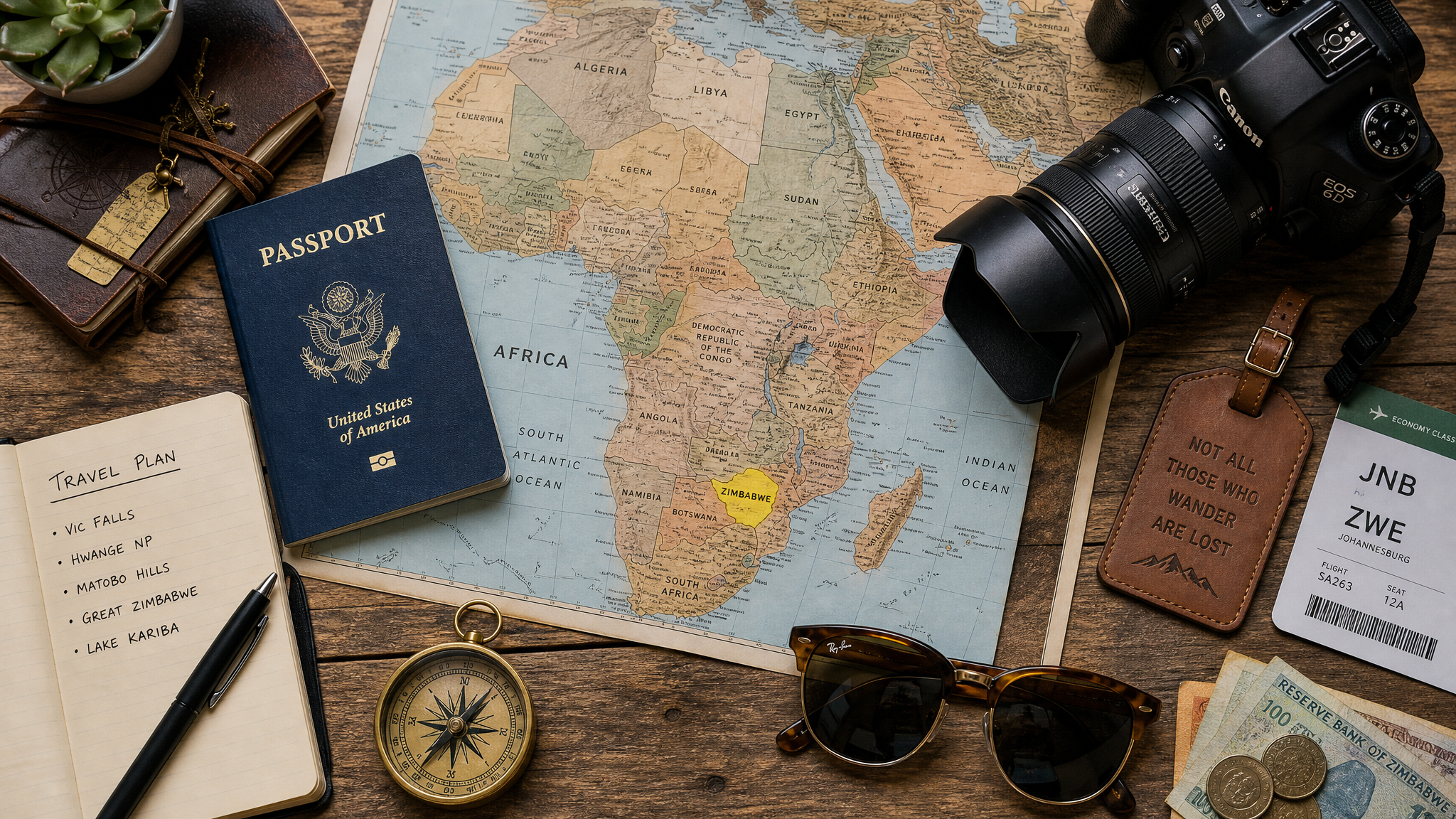
Western Zimbabwe is one of southern Africa's most rewarding destinations , and, refreshingly, one of its most manageable to plan. From the thundering curtain of Victoria Falls to the ancient granite kopjes of Matobo Hills and the vast elephant-filled plains of Hwange National Park, the western circuit packs extraordinary variety into a compact, well-connected region. Whether you're a first-time Africa traveller or a seasoned safari-goer adding Zimbabwe to your list, this guide covers everything you need: visas, flights, getting around, budgeting, health precautions, and the practical details that make the difference between a stressful trip and a seamless one.
Visa Requirements for Zimbabwe
The good news for most travellers is that Zimbabwe operates a straightforward visa on arrival system at all major ports of entry, including Victoria Falls International Airport, Harare, and the Beitbridge land border crossing into South Africa. You do not need to apply in advance through an embassy in most cases, though checking the current rules for your specific nationality before departure is always wise , regulations do occasionally change.
There are four main visa categories to understand:
| Visa Type | Cost (USD) | Validity | Best For |
|---|---|---|---|
| Single-entry (most nationalities) | $30 | 30 days | Zimbabwe-only visits |
| Single-entry (UK, Ireland, Canada) | $55 | 30 days | Zimbabwe-only visits |
| KAZA UniVisa ⭐ | $50 | 30 days | Crossing between Zimbabwe and Zambia |
| Double-entry | $45 | 30 days | Day trips to Zambia and returning |
🛂 KAZA UniVisa tip: If you're planning to cross the border at Victoria Falls , even just for a day trip to the Zambian side to view the falls from a different angle or experience Devil's Pool , the KAZA UniVisa at USD $50 is the smart choice. It covers unlimited crossings between Zimbabwe and Zambia within its 30-day validity, saving you both money and queuing time at the border. It's available on arrival at Victoria Falls Airport and the main land border posts.
Before You Travel: Document Checklist
- Passport valid for at least 6 months beyond your travel dates
- Minimum 2 blank pages in your passport for entry and exit stamps
- Return or onward flight confirmation , immigration officers may ask
- Proof of accommodation booking (a hotel confirmation email is sufficient)
- USD cash in small bills for the visa fee , exact change is preferred, and card payment is not reliably accepted at all entry points
- Yellow fever vaccination certificate if arriving from a yellow fever endemic country
"I was surprised how quick the visa process was at Victoria Falls Airport , it took about 15 minutes from landing to collecting my bag. Just have your USD cash ready and the queue moves fast."
, Sarah M., traveller from Edinburgh
For the most current and nationality-specific requirements, visit our Travel Advice page or consult your country's foreign office before departure.
Getting There: Flight Routes and Entry Points
Western Zimbabwe is served by two main airports: Victoria Falls International Airport (VFA) and Joshua Mqabuko Nkomo International Airport in Bulawayo (BUQ). For most visitors heading directly to the falls or Hwange, Victoria Falls Airport is the obvious choice. Travellers combining the region with Bulawayo and the Matobo Hills may prefer to fly into one airport and out of the other , a strategy that eliminates backtracking and forms the backbone of the classic Great Western Zimbabwe Road Trip.
Flights to Victoria Falls (VFA)
| Departure City | Airlines | Approx. Flight Time | Frequency |
|---|---|---|---|
| Johannesburg (JNB) | SAA, Fastjet, Airlink | ~2 hours | Multiple daily |
| Addis Ababa (ADD) | Ethiopian Airlines | ~4 hours | 3–4x weekly |
| Nairobi (NBO) | Kenya Airways | ~3.5 hours | 3x weekly |
| Cape Town (CPT) | Airlink | ~2.5 hours | Seasonal |
| Harare (HRE) | Fastjet, Air Zimbabwe | ~1.5 hours | Daily |
Travellers from Europe, North America, or Asia will typically connect through Johannesburg (O.R. Tambo International), which offers the most reliable and frequent onward connections to Victoria Falls. Johannesburg to Victoria Falls is a straightforward two-hour hop, and Airlink in particular runs a well-regarded service with good punctuality. Ethiopian Airlines' direct routing from Addis Ababa is an excellent option for those already routing through East Africa.
✈️ Multi-city routing tip: Book a fly-in, fly-out itinerary , arriving into Victoria Falls and departing from Bulawayo (or vice versa) , to cover the full western circuit without retracing your route. This open-jaw ticket structure typically costs no more than a return flight and dramatically improves your itinerary flow. Use our Trip Planner to map out your route before booking.
Land Border Entry Points
Several land borders serve western Zimbabwe. The Victoria Falls border post connects directly with Livingstone, Zambia, and is the most tourist-friendly crossing in the country. Kazungula offers a ferry crossing into Botswana , useful if you're combining Zimbabwe with a Chobe National Park safari. For those driving up from South Africa, Beitbridge is the main crossing point, though it can be congested during peak holiday periods and requires patience.
Best Time to Visit Western Zimbabwe
Western Zimbabwe has a subtropical climate with two distinct seasons: a dry season (May to October) and a wet season (November to April). The best time to visit depends entirely on what you want to experience , and the honest answer is that every season has genuine merit.
The dry season (May–October) is peak safari season. Vegetation thins out, animals concentrate around water sources, and game viewing in Hwange National Park reaches its spectacular best. Our Safari Guide to Hwange National Park goes into detail on precisely where and when to find the Big Five during these months. Temperatures are mild from May to August (dropping to around 10°C at night in June and July), then build to hot and dry conditions through September and October.
The wet season (November–April) transforms the landscape into lush, vivid green. Victoria Falls reaches its most dramatic peak flow between February and May, when the spray can drench you from 500 metres away , an extraordinary sensory experience covered in depth in The Complete Guide to Victoria Falls. Birdlife explodes across the region during the wet months, making it a paradise for ornithologists. The trade-off is that national park tracks can become impassable without a 4x4, and some camps close for the season.
| Month | Season | Victoria Falls | Safari Quality | Crowds | Prices |
|---|---|---|---|---|---|
| Jan–Feb | Wet | Building flow | Moderate | Low | Lower |
| Mar–Apr | Wet/Transition | Peak flow ⭐ | Moderate | Low–Medium | Lower |
| May–Jun | Dry (early) | High flow, clearing | Very good | Medium | Mid–High |
| Jul–Aug | Dry (peak) | Good views, less spray | Excellent ⭐ | High | Peak |
| Sep–Oct | Dry (late) | Lower flow, clear views | Outstanding ⭐⭐ | High | Peak |
| Nov–Dec | Wet (early) | Rising flow | Good | Medium | Mid |
🗓️ Sweet spot months: May, June, and early July offer the best all-round combination , Victoria Falls is still impressively full, game viewing is excellent, temperatures are comfortable, and prices haven't yet reached the July–August peak. If your priority is white water rafting on the Zambezi, note that the rapids are at their best between August and December when water levels allow the full Grade 5 experience.
Getting Around: Transport Options in Western Zimbabwe
How you move between destinations in western Zimbabwe significantly shapes your experience , and your budget. The region's main attractions are spread across roughly 500 kilometres of road between Victoria Falls in the north and the Matobo Hills south of Bulawayo, with Hwange National Park sitting between them. Fortunately, you have several practical options.
Self-Drive
Self-driving is the most flexible way to explore the region, and the main highway between Victoria Falls and Bulawayo (the A8) is well-maintained tarmac in good condition. The 440-kilometre journey takes approximately 5 to 6 hours without stops , though you'll almost certainly want to stop. A standard saloon car is adequate for the main road, but a 4x4 is strongly recommended if you plan to enter Hwange National Park's internal roads, particularly during or after the rainy season. Car hire is available at both Victoria Falls and Bulawayo airports, with international operators including Avis and Europcar alongside reliable local firms listed in our Business Directory.
Drive on the left side of the road in Zimbabwe. Fuel is available in Victoria Falls, Hwange town, and Bulawayo, but carry extra if venturing deep into the park. Petrol and diesel are priced in USD and typically cost between $1.40 and $1.60 per litre. Speed limits are 120 km/h on open roads and 60 km/h in towns , and speed traps do operate.
Organised Transfers and Safari Vehicles
Most lodges and camps in Hwange offer road transfers from Victoria Falls as part of their packages, typically in comfortable safari vehicles with a guide who'll point out wildlife en route. This is the most popular option for visitors staying at a single lodge. For those combining multiple properties, specialist transfer operators run scheduled shuttles along the Victoria Falls–Hwange–Bulawayo corridor.
Scheduled Flights Between Destinations
Charter flights connect Victoria Falls directly to several Hwange airstrips , notably Hwange National Park Airport and Ngamo , in around 30 minutes, cutting out the road journey entirely. This is the preferred option for high-end lodge guests and those short on time. Scenic Air and other charter operators offer both scheduled and private charters; some can be combined with helicopter flights over the falls for an unforgettable arrival experience.
"We drove the A8 from Victoria Falls to
Health, Safety, and Travel Insurance
Staying healthy in western Zimbabwe requires some advance preparation, but with the right precautions in place, the region is perfectly safe to explore. Most visitors encounter no serious health issues whatsoever , a little planning goes a long way.
Vaccinations and Malaria Prevention
Consult your GP or a travel health clinic at least six to eight weeks before departure. Recommended vaccinations typically include hepatitis A, typhoid, and tetanus. Yellow fever vaccination is required if you are arriving from a country where yellow fever is endemic, so check the current requirements carefully before you travel.
Malaria is present throughout western Zimbabwe, particularly around Victoria Falls, Hwange National Park, and the Zambezi Valley. The risk is highest between November and April during the wet season. Speak to your doctor about antimalarial medication , common options include doxycycline and Malarone , and take the full course as prescribed. Use DEET-based insect repellent, sleep under a mosquito net where possible, and wear long sleeves and trousers at dusk and dawn.
⚠ Malaria Warning: Do not skip antimalarial medication to save money. Treatment for malaria abroad is expensive and the illness can be life-threatening. Prevention is always the better option.Food, Water, and General Safety
Drink bottled or filtered water throughout your trip , tap water in Zimbabwe is not reliably safe. Most reputable hotels and lodges provide filtered water or complimentary bottled water. Avoid ice in drinks at smaller establishments and be cautious with street food if you have a sensitive stomach.
Western Zimbabwe is generally safe for tourists. Petty theft can occur in busy areas around Victoria Falls town, so keep valuables secured and avoid displaying expensive cameras or jewellery unnecessarily. At night, stick to well-lit areas and use recommended taxi services rather than unmarked vehicles.
Travel Insurance
Comprehensive travel insurance is absolutely non-negotiable for Zimbabwe. Ensure your policy covers emergency medical evacuation, as serious medical cases are often flown to South Africa for treatment. Activity cover is equally important , if you plan to try White Water Rafting, Bungee Jumping, or the Bridge Swing, confirm these are explicitly included in your policy. Check our Travel Advice page for further guidance on insurance recommendations.
💡 Insider Tip: World Nomads and True Traveller are popular choices among adventure travellers visiting Zimbabwe, offering solid activity cover at competitive prices for UK residents.Budget Breakdown: What to Expect to Spend
Zimbabwe can be done on a range of budgets, but it is worth being realistic , this is not the cheapest destination in Africa. The US dollar is the primary currency in use, and most prices are quoted in USD. Credit cards are accepted at larger establishments, but always carry cash for smaller operators, national park fees, and rural areas.
Typical Daily Costs by Budget Level
Budget Level Accommodation (per night) Food (per day) Activities (per day) Estimated Daily Total Budget $20–$50 (hostel/guesthouse) $15–$25 $20–$40 $55–$115 Mid-Range $80–$180 (lodge/hotel) $30–$60 $60–$120 $170–$360 Luxury $300–$800+ (safari lodge) $80–$150+ $150–$400+ $530–$1,350+ Key Activity Costs at a Glance
Activity Approximate Cost (USD) Duration White Water Rafting $130–$160 Full day Helicopter Flight (15 min) $165–$185 15–30 minutes Devil's Pool $90–$110 Half day Sunset Cruise $45–$75 2 hours Game Drive – Hwange $60–$120 Half/full day Walking with Lions $85–$110 2–3 hours Elephant Experience $120–$180 Half day Victoria Falls National Park Entry $30 (SADC) / $50 (international) All day Hwange National Park Entry $15 per person per day Per day 💡 Money-Saving Tip: Book a combination of activities through a single operator and ask about package discounts , many Victoria Falls operators offer 10–15% off when you bundle two or more activities together. Use our Trip Planner to compare options and build your ideal itinerary.For a comprehensive look at where to sleep and eat without breaking the bank, read our guide on Where to Stay and Eat in Victoria Falls Town: Hotels, Lodges, and the Best Local Food.
Suggested Itineraries and Trip Planning Tips
Western Zimbabwe rewards those who plan thoughtfully. Whether you have five days or three weeks, structuring your trip around the region's key destinations will help you make the most of every moment.
Five Days: Victoria Falls Focus
Spend your first two days exploring Victoria Falls itself , the falls, the rainforest walk, and at least one major activity such as a Sunset Cruise or helicopter flight. On day three, dedicate yourself to adventure: white water rafting or the bungee jump if you are feeling bold. Days four and five work perfectly for a short safari excursion into Hwange National Park. Read our Complete Guide to Victoria Falls to plan your days at the falls in detail.
Ten Days: The Western Zimbabwe Circuit
Ten days allows you to experience the full sweep of the region. Begin with three nights at Victoria Falls, then drive or transfer south through Hwange for two nights of game drives. Continue to Bulawayo for a night before heading out to Matobo Hills for two nights of rock art, rhino tracking, and extraordinary landscapes. Return to Victoria Falls for a final night before your departure. This circuit is detailed beautifully in our Great Western Zimbabwe Road Trip guide.
Two Weeks: Deep Exploration
With a fortnight, you can add Binga on Lake Kariba for a remote, off-the-beaten-track experience, incorporate a Village Tour to connect with local communities, and spend time learning about Ndebele culture and heritage around the Bulawayo region. This pace allows genuine immersion rather than a rushed highlights tour.
ℹ Best Months to Visit: May to October offers dry conditions, cooler temperatures, and the best wildlife viewing. June to August is peak season , book accommodation and activities well in advance. November to April brings lush green landscapes and lower prices, but malaria risk increases and some roads become impassable.What to Pack
Pack light, breathable clothing in neutral tones for safari activities. Bring a warm layer for early morning game drives, particularly between June and August when temperatures can drop sharply at dawn. Sturdy walking shoes, a wide-brimmed hat, high-factor sunscreen, and a quality insect repellent are essential. A waterproof poncho is invaluable when visiting the falls during high-water season (February to May) , you will get absolutely soaked without one.
For detailed safari packing lists and Hwange-specific advice, visit our Safari Guide to Hwange National Park.
Final Thoughts
Western Zimbabwe is one of Africa's most rewarding destinations , a place where thundering waterfalls, vast game reserves, ancient rock art, and warm Zimbabwean hospitality combine to create something genuinely unforgettable. The planning process might feel daunting at first, particularly navigating visas, currency logistics, and health requirements, but the effort is absolutely worthwhile.
The key is to start early. Book your flights and accommodation as far in advance as possible, particularly if you are travelling between June and August. Sort your visa requirements well before departure, ensure your travel insurance covers every activity on your wish list, and take your malaria prevention seriously. Beyond that, arrive with an open mind and a spirit of adventure , Zimbabwe has a way of exceeding every expectation.
Whether you are standing on the edge of the Zambezi gorge watching the mist rise from Victoria Falls, tracking rhino on foot through the granite kopjes of Matobo Hills, or watching elephant herds converge on a waterhole in Hwange National Park at golden hour, you will understand immediately why so many travellers return to this corner of the world again and again.
Ready to start planning? Use our Trip Planner to build your perfect western Zimbabwe itinerary, browse our Business Directory for trusted local operators, or Contact Us directly for personalised advice. You might also find our Ultimate Guide to Victoria Falls and our Complete Guide to White Water Rafting on the Zambezi invaluable as you put your plans together.
Zimbabwe is waiting. Go.
Frequently Asked Questions
Do UK citizens need a visa to visit Zimbabwe?
Yes, UK citizens require a visa to enter Zimbabwe. The most convenient option is the KAZA UniVisa, which costs $50 USD and covers both Zimbabwe and Zambia for 30 days. It can be purchased on arrival at Victoria Falls International Airport or at major land border crossings. Alternatively, apply online in advance through the Zimbabwe e-visa portal to save time on arrival.
What currency is used in Zimbabwe and can I use my UK bank card?
The US dollar is the primary currency used for tourist transactions throughout western Zimbabwe. Major credit and debit cards are accepted at larger hotels, lodges, and tour operators, but cash is essential for national park fees, smaller businesses, and rural areas. Bring a supply of small USD notes from the UK or exchange money on arrival. ATMs in Victoria Falls town are available but can be unreliable.
Is Zimbabwe safe for solo travellers and families?
Western Zimbabwe is generally considered safe for tourists, including solo travellers and families. Violent crime targeting visitors is rare. Standard precautions apply , keep valuables secure, avoid displaying expensive items, and use recommended transport providers after dark. Children are warmly welcomed throughout the region, and many lodges and activity operators cater specifically to families with tailored experiences and age-appropriate adventures.
What is the best time of year to visit western Zimbabwe?
The dry season from May to October is widely considered the best time to visit. Wildlife viewing is exceptional as animals gather around waterholes, and the weather is sunny and dry. June to August is peak season with cooler temperatures and the highest visitor numbers. The wet season from November to April brings lush green scenery, lower prices, and fewer crowds, but malaria risk increases and some roads can become difficult to navigate.
How many days should I spend in western Zimbabwe?
A minimum of five to seven days allows you to experience Victoria Falls and a brief Hwange safari. Ten to fourteen days is ideal if you want to explore the full western circuit including Matobo Hills and Bulawayo. Those with three weeks or more can venture to remote areas such as Binga on Lake Kariba. Even a long weekend focused solely on Victoria Falls can be deeply rewarding if time is limited.
Do I need malaria tablets for Zimbabwe?
Yes, antimalarial medication is strongly recommended for all travellers to western Zimbabwe, including Victoria Falls, Hwange, and the Zambezi Valley. Consult your GP or a travel health clinic at least six weeks before departure. Common options include Malarone and doxycycline. Alongside medication, use DEET-based repellent, sleep under mosquito nets, and wear long sleeves and trousers during dawn and dusk when mosquitoes are most active.

