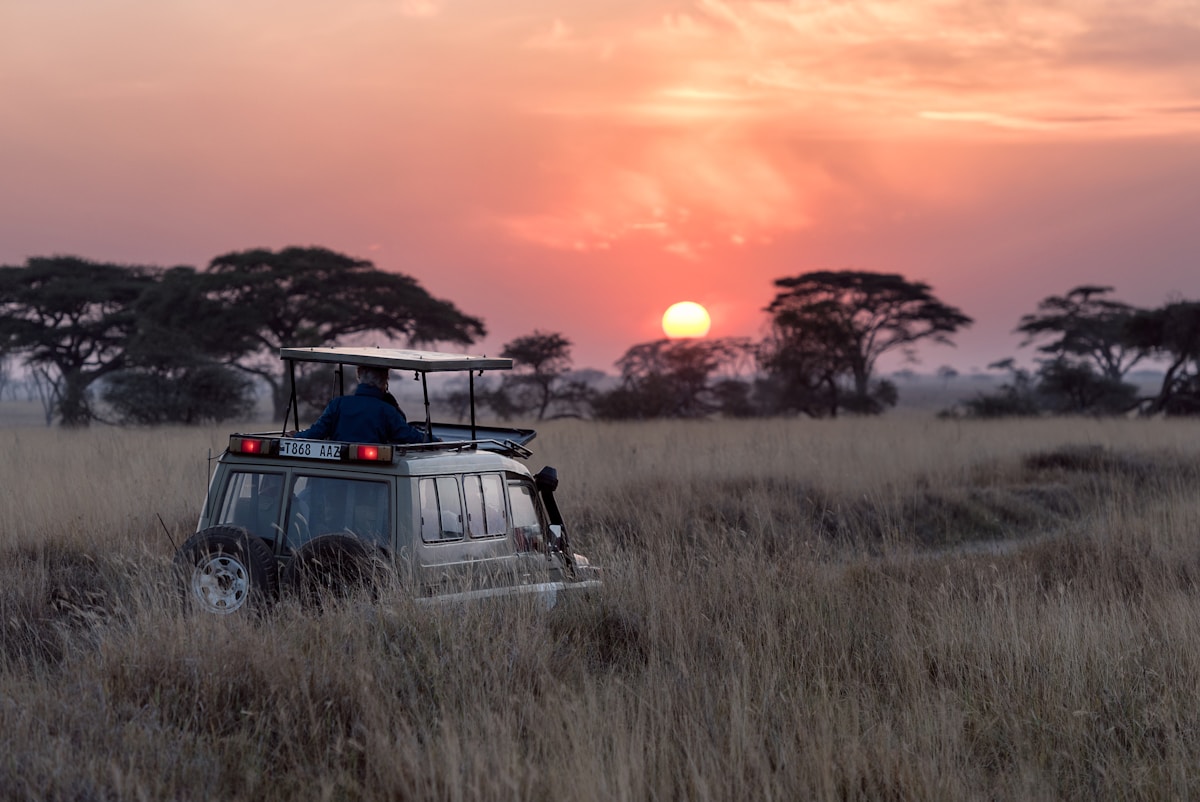
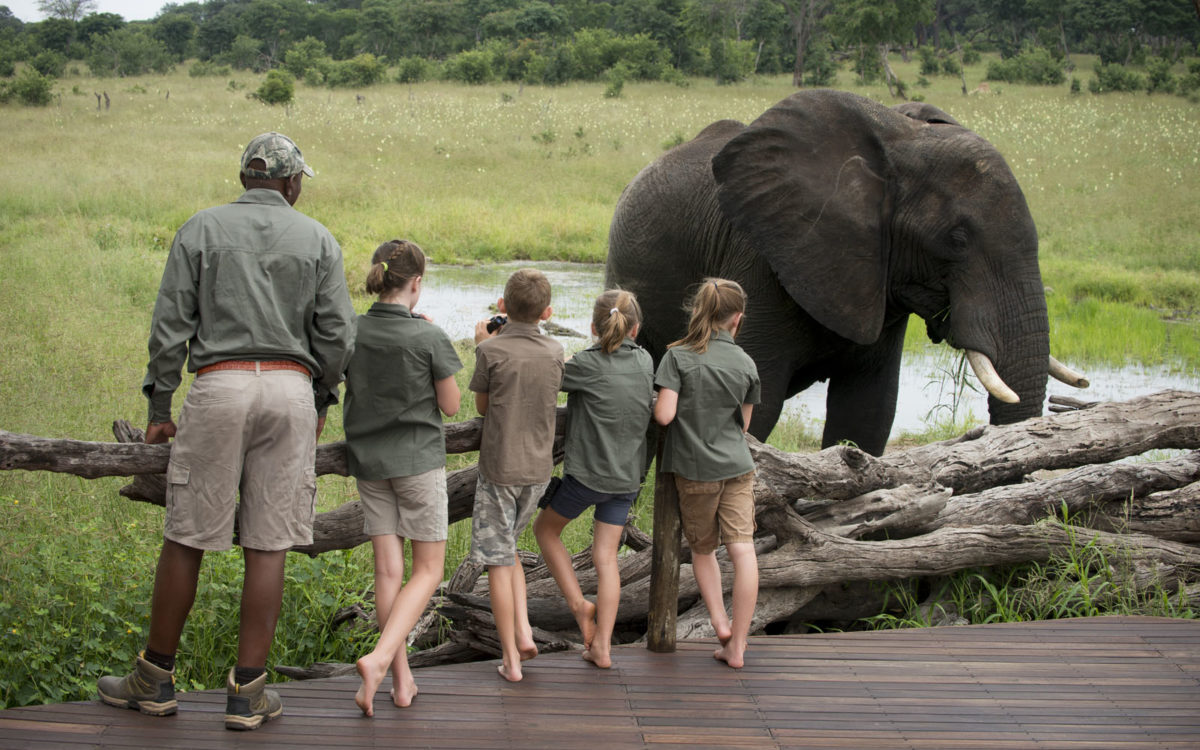
Few wildlife destinations on earth can match the raw, unhurried grandeur of Hwange National Park. Stretching across 14,651 square kilometres of northwestern Zimbabwe, this is Africa's wilderness at its most elemental , vast teak and mopane forests interrupted by golden grasslands, ancient pans shimmering in the heat haze, and an elephant population so vast it must be seen to be believed. Whether you arrive on a self-drive adventure from Victoria Falls or settle into a guided safari at one of the park's legendary bush camps, Hwange delivers the kind of encounters , a breeding herd of 300 elephants crowding a waterhole at dusk, a pride of lions draped across a termite mound at dawn , that redefine what wildlife watching means. This guide covers everything: the best camps, the essential waterholes, the seasonal rhythms, the fees, the logistics, and the insider knowledge that separates a good Hwange safari from an unforgettable one.
Hwange National Park: An Overview
Hwange National Park is Zimbabwe's largest game reserve and one of the greatest wildlife sanctuaries in all of Africa. Established in 1929 and formally gazetted in 1949, the park sits in Matabeleland North province, sharing a border with Botswana's Chobe National Park to the west , together forming one of the continent's most significant transfrontier wildlife corridors. The park's 14,651 km² encompass an extraordinary diversity of habitats: dense Kalahari sandveld, open grassland pans, mopane woodland, teak forest, and scrub thornbush, each supporting its own cast of species.
What makes Hwange ecologically unique is its artificial waterhole system. Much of the park sits atop a fossil river system with no permanent natural surface water. From the 1960s onwards, Zimbabwe National Parks developed a network of over 60 solar- and diesel-powered pumped waterholes, transforming the landscape into a year-round wildlife magnet. These engineered pans are the beating heart of the Hwange safari experience , every waterhole a theatre, every visit a new performance.
The park is divided into three broad management zones. The Main Camp area in the east is the most accessible and heavily visited, offering excellent infrastructure and reliable game viewing. The Sinamatella area to the northwest sits on a dramatic escarpment with sweeping views and a wilder character. The Robins and Nantwich areas in the far north are the most remote, rewarding visitors willing to make the longer journey with near-exclusive wilderness access.
Key Facts: Hwange National Park covers 14,651 km² , roughly the size of Connecticut or Northern Ireland. It protects over 100 mammal species, more than 400 bird species, and hosts the world's largest population of African elephants in a single protected area, currently estimated at 45,000 to 50,000 individuals.
For those combining Hwange with broader regional exploration, it sits perfectly on the route described in our guide to The Great Western Zimbabwe Road Trip: Victoria Falls to Bulawayo via Hwange and Matobo , making it an ideal centrepiece for a multi-destination itinerary that also takes in Matobo Hills and Bulawayo.
The Big Five and Iconic Wildlife of Hwange
Hwange is one of Zimbabwe's best destinations for Big Five sightings , lion, leopard, elephant, buffalo, and white rhino are all present, though rhino require a dedicated visit to specific conservancy areas. The park's wildlife density, particularly during the dry season, is among the highest on the continent.
African elephants are the undisputed stars. The Hwange population , estimated at 45,000 to 50,000 elephants , is the largest concentration in any single protected area in the world. During the dry season (June to October), herds of hundreds converge on pumped waterholes, creating scenes of extraordinary spectacle. Bulls, breeding herds, playful calves, and ancient matriarchs all share the same muddy stage. For a deeper look at elephant behaviour and the best spots to observe them, see our dedicated Safari Guide to Hwange National Park: Tracking the Big Five in Zimbabwe's Largest Game Reserve. You can also book dedicated Elephant Experiences through licensed operators in the Dete area.
Lions are regularly seen throughout the park, with the Main Camp and Sinamatella areas offering particularly reliable sightings. The Hwange lion population benefits from the same waterhole system , prey animals concentrate at pans, and predators follow. Dawn and dusk drives frequently yield lion encounters, especially near Nyamandhlovu Pan and Kennedy Pans.
African wild dogs (painted wolves) are arguably Hwange's most celebrated predator after elephants. The park holds one of Africa's healthiest wild dog populations, and sightings , particularly of packs with pups near den sites between June and August , are genuinely world-class. Cheetah, spotted hyena, side-striped jackal, honey badger, and African civet round out a remarkable predator assemblage.
Buffalo herds of several hundred are common in the dry season, often sharing waterholes with elephants in dramatic scenes. Sable antelope , Zimbabwe's national animal , are a Hwange speciality, their sweeping horns and chestnut coats unmistakeable against the teak woodland. Giraffe, zebra, wildebeest, impala, kudu, eland, roan antelope, tsessebe, and waterbuck complete a herbivore list that keeps game drives endlessly varied.
"I've done safaris across East and Southern Africa for twenty years. Nothing prepared me for the elephants at Nyamandhlovu Pan at sunset , there must have been four hundred of them. It was the most overwhelming wildlife experience of my life."
Pro Tip: Book guided game drives in Hwange at least 48 hours in advance during peak season (July–October). Demand for qualified guides and vehicles is high, and last-minute availability is limited, especially at popular camps near the Main Camp area.
Camp-by-Camp Breakdown: Where to Stay in Hwange
Accommodation in Hwange ranges from Zimbabwe National Parks Authority (ZimParks) self-catering camps to world-class private lodges. Choosing where to base yourself shapes the entire character of your safari , proximity to waterholes, access to different park zones, and the level of guiding available all vary significantly between camps.
Main Camp (ZimParks)
Main Camp is the park's administrative hub, located near the eastern entrance off the Bulawayo–Victoria Falls road. It offers the widest range of budget accommodation: chalets, lodges, caravan/camping sites, and a basic restaurant. The camp's own waterhole , Nyamandhlovu Pan, reached via a 12 km drive , is arguably the most famous elephant waterhole in Africa, complete with an elevated viewing platform. Main Camp is the natural base for self-drive visitors and those on tighter budgets. Chalets range from USD $40–$90 per night for ZimParks accommodation.
Sinamatella Camp (ZimParks)
Perched on a rocky escarpment in the park's northwest, Sinamatella offers dramatic elevated views over the surrounding bush and its own productive waterhole visible from the camp. It has a wilder, more remote feel than Main Camp and is a superb base for exploring the Masuma Dam area , one of the park's most reliable lion and elephant locations. Accommodation includes chalets and camping. Distance from Main Camp: approximately 115 km on park roads.
Robins Camp (ZimParks)
The most remote of the ZimParks camps, Robins Camp sits in the far north near the Deka River area. Visitor numbers are low, wildlife encounters are intimate, and the sense of genuine wilderness is unmatched. Night drives and walking safaris can be arranged from Robins. The trade-off is the long drive on rough tracks , allow 3–4 hours from Main Camp on internal park roads.
Dete Area Private Lodges
The Dete corridor along the park's eastern boundary hosts several of Zimbabwe's most acclaimed private safari lodges, including Linkwasha Camp, Little Makalolo, Somalisa, and Davison's Camp (all within Wilderness Safaris' concessions). These all-inclusive operations offer expert guiding, night drives, walking safaris, and extraordinary waterhole access on private concessions within the park. Rates typically range from USD $500–$1,200 per person per night, all-inclusive. For visitors combining Hwange with Victoria Falls, see our guide to Where to Stay and Eat in Victoria Falls Town for pre- and post-safari accommodation options.
Important: ZimParks accommodation must be booked in advance through the Zimbabwe Parks and Wildlife Management Authority online portal or their Harare office. Walk-in availability during peak season (July–October) is extremely limited. Private lodge bookings require a specialist safari agent or direct contact with the lodge.
How to Get to Hwange from Victoria Falls and Bulawayo
Hwange is well positioned for visitors arriving from either of Zimbabwe's two main tourist gateways. The park's Main Camp entrance is located just off the A8 highway (the main Victoria Falls–Bulawayo road), making it straightforward to incorporate into a road journey between the two cities.
From Victoria Falls (approximately 180 km)
The drive from Victoria Falls to Hwange Main Camp takes approximately 2.5 to 3 hours on tarred road, passing through the small town of Dete , the closest service point to the park's eastern lodges. The road is generally in good condition, and a standard saloon car can reach Main Camp without difficulty. Those planning to explore internal park roads should use a 4WD vehicle, particularly after rain or in the Sinamatella and Robins areas.
Alternatively, transfer vehicles from Victoria Falls are offered by most lodges and tour operators, and the Hwange Airport (IATA: WKS), located 20 km south of Main Camp, receives light aircraft charter flights from Victoria Falls and Harare , the preferred arrival method for private lodge guests. Scheduled road transfers from Victoria Falls typically cost USD $60–$120 per person each way.
From Bulawayo (approximately 335 km)
The drive from Bulawayo follows the A8 northward through Lupane, taking approximately 4 to 4.5 hours. Bulawayo's Joshua Mqabuko Nkomo International Airport also offers charter connections to Hwange Airport. Visitors combining Hwange with Matobo Hills should consult our guide to Matobo Hills: Exploring Zimbabwe's UNESCO World Heritage Wilderness for routing advice. For comprehensive pre-trip planning, our Planning Your Trip to Western Zimbabwe guide covers visas, flights, and budgeting in detail.
| Origin | Distance to Main Camp | Approx. Drive Time | Road Condition | Vehicle Required | Transfer Cost (USD) |
|---|---|---|---|---|---|
| Victoria Falls (town) | 180 km | 2.5–3 hrs | Tarred (A8) | 2WD suitable | $60–$120 pp |
| Bulawayo (city centre) | 335 km | 4–4.5 hrs | Tarred (A8) | 2WD suitable | $100–$180 pp |
| Hwange Airport (WKS) | 20 km | 20–25 mins | Tarred/gravel | 2WD suitable | Included (lodges) |
| Main Camp to Sinamatella | 115 km | 2.5–3 hrs | Gravel park roads | 4WD recommended | N/A (self-drive) |
| Main Camp to Robins Camp | 165 km | 3.5–4 hrs | Gravel/bush tracks | 4WD essential | N/A (self-drive) |
Seasonal Wildlife Viewing Calendar
Understanding Hwange's seasons is essential to planning the right safari at the right time. The park has two primary seasons , wet (November to April) and dry (May to October) , each offering a fundamentally different experience. The best overall wildlife viewing coincides with the late dry season, but every month has something to recommend it.
For a broader seasonal context across the region, our Best Time to Visit Victoria Falls: A Month-by-Month Seasonal Guide provides complementary detail on how seasonal patterns affect the entire western Zimbabwe circuit.
| Month | Season | Rainfall | Temp Range (°C) | Wildlife Viewing | Highlights | Crowds |
|---|---|---|---|---|---|---|
| January | Wet | High | 22–35 | Good | Newborn antelope, lush scenery, birding peak | Low |
| February | Wet | High | 22–35 | Good | Migratory birds, green landscape photography | Low |
| March | Wet | Moderate–High | 21–34 | Good | Birding, fewer vehicles, lower rates | Very Low |
| April | Transitional | Low | 18–32 | Very Good | Vegetation thinning, animals returning to pans | Low |
| May | Dry | Negligible | 12–29 | Excellent | Dry season begins, predator activity increases | Moderate |
| June | Dry | None | 8–26 | Excellent | Wild dog denning, lion activity, cool mornings | Moderate–High |
| July | Dry | None | 7–25 | Outstanding | Peak elephant concentrations, peak season begins | High |
| August | Dry | None | 10–28 | Outstanding | Massive elephant herds, all Big Five active | High |
| September | Dry | None | 15–33 | Outstanding | Peak wildlife density at waterholes, hot afternoons | Very High |
| October | Late Dry | Negligible | 20–38 | Outstanding | Extreme heat, dramatic waterhole scenes, first rains | High |
| November | Transitional | Low–Moderate | 20–36 | Very Good | First rains, migratory birds arrive, elephants disperse | Low–Moderate |
| December | Wet | Moderate | 20–34 | Good | Lush green bush, excellent birding, lower lodge rates | Low |
Best Overall Months: July, August, and September offer the most reliable and dramatic wildlife viewing, with elephant concentrations at waterholes reaching their peak. June and October are excellent alternatives with slightly fewer visitors. The green season (December to March) suits birders, photographers seeking lush backdrops, and budget-conscious travellers , lodge rates can drop by 30–40% compared to peak season.
"October is brutal , 38 degrees in the shade , but the waterholes are extraordinary. You sit at Kennedy Pan and the elephants just keep coming. It's relentless. I wouldn't trade it for anything."
Best Waterholes in Hwange: Where the Wildlife Gathers
Hwange's waterholes are the beating heart of the park's wildlife experience. Because the national park sits atop a largely fossil-water system, Zimbabwe National Parks maintains an extensive network of solar- and diesel-powered pumps to keep waterholes filled year-round , a lifeline for the 45,000+ elephants and countless other species that depend on them. Knowing which waterholes to visit, and when, is the difference between a good game drive and an extraordinary one.
Dom Pan (approximately 19°00'S, 26°30'E), located near Main Camp, is arguably the most reliably productive waterhole in the park. During the dry season, it is not unusual to witness 200–300 elephants arriving in successive waves throughout the afternoon, with lions, buffalo, and zebra waiting nervously at the periphery. Arrive by 3:30 PM and stay until dusk for the best sightings.
Nyamandhlovu Pan, accessible via a raised wooden platform near Main Camp, offers an elevated vantage point that keeps you safely above the action while providing near-cinematic photography angles. The platform can accommodate around 20 visitors and is open during daylight hours , no booking required for self-drive visitors.
Masuma Dam near Sinamatella is a larger body of water that attracts hippos and crocodiles in addition to the usual elephant and antelope traffic. The hide overlooking the dam is one of the finest in Zimbabwe. Mandavu Dam, also in the Sinamatella area, is another large pan well worth the drive.
In the Robins Camp area, Deteema Dam is a remote but rewarding waterhole that sees far fewer visitors and frequently delivers sightings of wild dog, sable antelope, and roan antelope alongside the more common species.
For those planning an extended visit, our dedicated guide on tracking the Big Five in Hwange National Park provides waterhole-by-waterhole strategies for each of the five iconic species.
Birdwatching in Hwange: A Guide to 400+ Species
Hwange National Park is one of southern Africa's premier birdwatching destinations, with over 400 recorded species making it a genuine tick-list treasure trove. The park's varied habitats , from teak and mopane woodland to open grasslands, seasonal pans, and permanent dams , support an extraordinary diversity of avian life that rewards both casual observers and dedicated listers.
The dry season (June–October) is generally considered the best time for birding because vegetation is sparse, making birds easier to spot. However, the wet season (November–April) brings an explosion of migratory species from the Palearctic and intra-African migrants, including European rollers, carmine bee-eaters, and a host of warblers and flycatchers. The trade-off is denser vegetation and muddier tracks.
Hwange's headline species include the Pel's fishing owl, best sought along the Deteema and Masuma dams, and the African skimmer, occasionally seen on larger water bodies. The park holds strong populations of southern ground hornbill, martial eagle, bateleur, and Verreaux's eagle owl. Raptors are particularly well represented, with lappet-faced, white-backed, and hooded vultures all present.
Woodland birding around Main Camp and Sinamatella can yield racket-tailed roller, broad-billed roller, African hoopoe, and multiple species of hornbill, including the striking southern yellow-billed hornbill. The camp grounds themselves are productive , birding from your chalet veranda before breakfast is a Hwange tradition.
For the full birding picture in the wider region, the Great Western Zimbabwe Road Trip from Victoria Falls to Bulawayo includes birding hotspots along the entire route, from the Zambezi riparian forest to the granite kopjes of Matobo Hills.
Night Drives, Walking Safaris & Other Activities
Hwange's daytime game drives are exceptional, but the park's activity portfolio extends well beyond the standard sunrise-to-sunset circuit. Diversifying your activity mix is the key to a truly immersive safari experience.
Night Drives
Night drives are operated exclusively by licensed camps and lodges , self-drive visitors are not permitted to drive within the park after dark. A typical night drive lasts two to three hours, departing around 7:00 PM, and uses a powerful spotlight to reveal the park's nocturnal residents. Expect sightings of African civets, genets, honey badgers, porcupines, spring hares, and , if fortune smiles , leopards on the move. Night drives cost approximately USD $45–$65 per person when booked through camp operators.
Walking Safaris
Walking safaris are available from Sinamatella Camp (booked through Zimbabwe National Parks) and from most private lodges. A qualified armed ranger leads groups of no more than eight guests on foot through the bush, interpreting tracks, dung, plant life, and insect behaviour in a way that no game drive can replicate. Half-day walks typically cost USD $50–$80 per person through private operators; ZPWMA-guided walks from Sinamatella are considerably cheaper at around USD $20–$30. Walking safaris are not recommended for children under 12.
Game Drives with Specialist Guides
Booking a guided game drive in Hwange with a specialist guide transforms the experience. Top guides carry field identification books, maintain radio contact with other vehicles to share sightings, and possess an encyclopaedic knowledge of individual animal behaviour. Many lodges in the Dete area employ guides with 10–20 years of Hwange-specific experience , an asset that simply cannot be replicated by self-driving.
Cultural & Community Visits
Several lodges facilitate village tours to communities on the park boundary, offering insight into the lives of the Ndebele and Kalanga peoples who have coexisted with Hwange's wildlife for generations. These visits are best arranged in advance through your lodge and typically include a small community contribution fee. For deeper cultural context, the guide to Ndebele culture and heritage in western Zimbabwe is essential reading before your visit.
Park Fees, Permits & Budget Breakdown
Understanding Hwange's fee structure before you arrive avoids surprises at the gate. Zimbabwe National Parks (ZPWMA) publishes fee schedules in USD, and all park fees must be paid in cash or via the ZPWMA online portal. Credit card facilities at park gates are unreliable, so carry sufficient US dollars.
| Item | Cost (USD) | Notes |
|---|---|---|
| Park Entry Fee (International Adult) | $20 per day | Per person, per day. SADC nationals pay $5. |
| Vehicle Entry Fee | $10 per day | Foreign-registered vehicles. Zimbabwean vehicles $5. |
| Main Camp Chalet (2-bed, self-catering) | $80–$120 per night | Book via ZPWMA website. Advance booking essential. |
| Sinamatella Camp Chalet | $70–$110 per night | Stunning elevated views. Limited availability. |
| Robins Camp Chalet | $60–$90 per night | Remote; 4x4 access recommended. |
| Mid-Range Lodge (Dete area, all-inclusive) | $250–$450 per person per night | Includes meals, game drives, and park fees. |
| Luxury Lodge (all-inclusive) | $600–$1,200+ per person per night | Linkwasha, Somalisa, Davison's Camp, etc. |
| Guided Game Drive (lodge-operated) | $45–$80 per person | Often included in lodge packages. |
| Night Drive | $45–$65 per person | Operated by lodges only; not available to self-drivers. |
| Walking Safari (half-day) | $20–$80 per person | Lower end via ZPWMA; higher via private lodges. |
| Birding Guide (half-day) | $45–$70 per person | Arrange through Dete-area lodges. |
| Camping (ZPWMA sites) | $15–$25 per person per night | Basic facilities. Bring all supplies. |
For broader budget planning across the region , including visa costs, internal flights, and currency tips , the guide to planning your trip to western Zimbabwe covers everything in practical detail. If you are combining Hwange with a visit to Victoria Falls, be sure to read where to stay and eat in Victoria Falls Town for accommodation options at every price point.
Hwange Safari Packing Checklist
Packing correctly for a Hwange safari is about balancing practicality with comfort across wildly different conditions , scorching midday heat, chilly pre-dawn game drives, and the ever-present red Kalahari dust that infiltrates everything. The table below covers the essentials for a 4–7 day visit.
| Category | Item | Notes |
|---|---|---|
| Clothing | Neutral-coloured shirts & trousers (khaki, olive, beige) | Avoid white, black, and bright colours. Lightweight, breathable fabrics. |
| Warm fleece or jacket | Essential for early morning drives, especially June–August. | |
| Wide-brimmed hat | Sun protection is critical in open game-drive vehicles. | |
| Sturdy walking shoes or boots | Closed-toe essential for walking safaris. Ankle support recommended. | |
| Light rain jacket | Necessary November–March. Doubles as wind protection. | |
| Optics & Electronics | Binoculars (8x42 or 10x42 recommended) | Non-negotiable. Swarovski, Nikon, or Zeiss are popular choices. |
| Camera with telephoto lens (200mm minimum) | 400mm+ ideal for birds and distant wildlife. | |
| Spare batteries & memory cards | Power outlets in ZPWMA camps are limited. | |
| Portable power bank | Essential for self-drive visitors and bush camps. | |
| Health & Safety | High-SPF sunscreen (SPF 50+) | Reapply frequently. UV levels are extreme at altitude. |
| DEET-based insect repellent | Malaria prophylaxis also required , consult your GP 4–6 weeks before travel. | |
| First aid kit | Include antihistamines, blister plasters, rehydration sachets, and antiseptic. | |
| Personal medication supply (plus extra) | Pharmacies are not available inside the park. Hwange Town is the nearest option. | |
| Safari Essentials | Dust-proof bag or dry bag for camera gear | Kalahari dust is pervasive and damaging to electronics. |
| Field guides (birds & mammals) | Newman's Birds of Southern Africa; Estes' Behaviour Guide to African Mammals. | |
| Headtorch with red-light setting | Essential for moving around camp after dark. Red light preserves night vision. | |
| Practical Supplies | US dollars in small denominations | $1, $5, and $10 notes for park fees, tips, and small purchases. |
| Water bottle (2-litre minimum) | Stay hydrated. Carry water on every game drive. | |
| Snacks for game drives | Energy bars, nuts, and dried fruit for long drives between sightings. |
Final Thoughts
Hwange National Park is, quite simply, one of Africa's great safari destinations , and one of its most underrated. While the crowds flock to the Serengeti and Kruger, Hwange delivers comparable, and in many cases superior, wildlife experiences in an atmosphere of genuine wilderness. The sheer scale of the elephant herds alone is worth the journey; watching 300 elephants converge on a waterhole as the Kalahari sun dips below the teak canopy is the kind of moment that reorders your sense of what is possible in the natural world.
Whether you arrive as a budget self-driver rattling along the main loop roads in a hired 4x4, or as a guest of one of the Dete area's extraordinary luxury lodges, Hwange will reward you generously. The key is preparation: understand the seasons, choose your camp wisely, know your waterholes, and give yourself enough time. Three nights is a minimum; five to seven nights is ideal for a truly comprehensive experience.
Hwange pairs beautifully with Victoria Falls, just two hours to the north, where the full spectrum of adventure activities , from white water rafting on the Zambezi to helicopter flights over the falls , awaits. Read our complete guide to Victoria Falls and the month-by-month seasonal guide to plan the perfect combination itinerary. Alternatively, extend your journey south to the extraordinary granite wilderness of Matobo Hills, explored in depth in our guide to Zimbabwe's UNESCO World Heritage wilderness.
Ready to start planning? Visit our Trip Planner to build your personalised Hwange itinerary, browse the Business Directory for vetted local operators and lodges, or check the latest entry requirements and safety information on our Travel Advice page. If you have specific questions, our team is always happy to help , just get in touch.
Hwange is waiting. Go.
Frequently Asked Questions
When is the best time to visit Hwange National Park?
The best time to visit Hwange is during the dry season, from June to October. Water sources are scarce, so wildlife concentrates around waterholes, making sightings exceptionally reliable. August and September offer the most dramatic elephant gatherings. The wet season (November–April) brings lush scenery and migratory birds but denser vegetation makes wildlife harder to spot.
How do I get to Hwange National Park from Victoria Falls?
Hwange is approximately 180 km south of Victoria Falls along the A8 highway , roughly a two-hour drive. Self-drivers should use a 4x4 vehicle inside the park. Scheduled transfers are available through most lodges. The nearest airstrip, Hwange National Park Airstrip (near Main Camp), accepts charter flights from Victoria Falls Airport, taking around 30 minutes.
How many elephants live in Hwange National Park?
Hwange is home to an estimated 45,000 elephants , one of the largest elephant populations in the world and significantly more than the park's estimated carrying capacity of around 15,000. The population has grown substantially since the 1980s, creating complex conservation challenges around habitat pressure, water management, and human-wildlife conflict along the park's boundaries.
Is Hwange National Park safe for self-drive safaris?
Yes, Hwange is generally safe for self-drive visitors, provided you follow park rules: remain in your vehicle at all times except at designated areas, never approach animals too closely, and return to camp before the gate closes at dusk. A 4x4 vehicle is strongly recommended, especially in the Sinamatella and Robins areas. Carry sufficient fuel, water, and a spare tyre.
Do I need a visa to visit Zimbabwe and Hwange National Park?
Most nationalities require a visa to enter Zimbabwe. A single-entry visa costs USD $30 for most passport holders and can be obtained on arrival at Beitbridge, Victoria Falls, and Harare International Airport, or in advance via the eVisa portal. The KAZA UniVisa (USD $50) allows multiple entries into both Zimbabwe and Zambia and is ideal for visitors combining Hwange with Victoria Falls. Always verify current requirements before travel.
Can I see the Big Five in Hwange National Park?
Yes. Hwange is one of Zimbabwe's Big Five parks, with elephant, buffalo, lion, leopard, and white rhino all present. Elephants and buffalo are seen on virtually every visit. Lions are frequently encountered, particularly near waterholes at dawn and dusk. Leopards are more elusive but regularly sighted on night drives. White rhino numbers are small and sightings are less predictable but possible, particularly in the Sinamatella area.