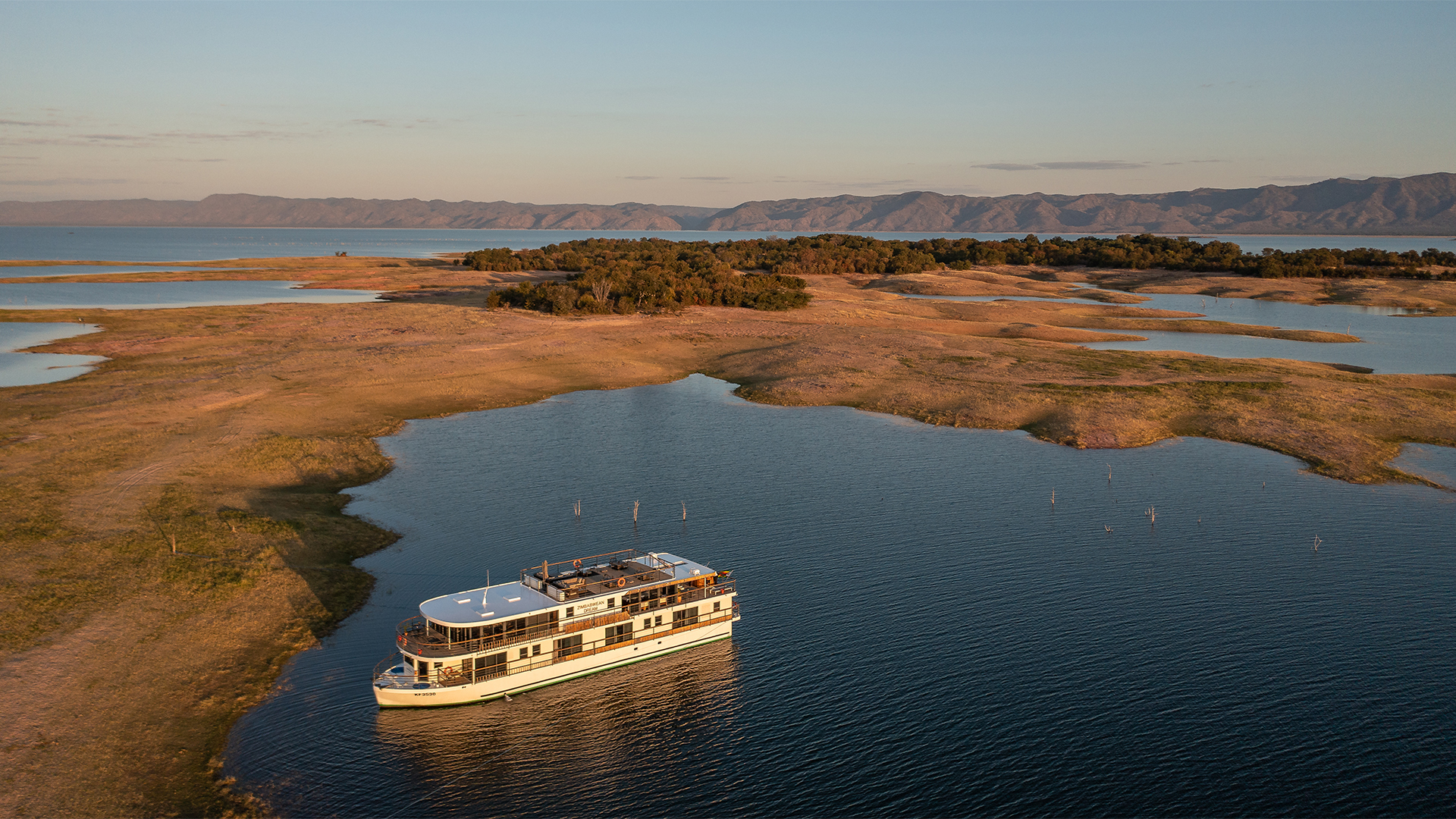
Stretching across 5,580 square kilometres of the Zambezi Valley, Lake Kariba is one of the largest man-made lakes in the world by surface area , and one of Africa's most spectacular, least-crowded destinations. Straddling the border between Zimbabwe and Zambia, this inland sea rewards travellers with extraordinary wildlife, legendary tiger fish, glassy sunset cruises, and the singular romance of sleeping on a houseboat as elephants wade along the shoreline. Whether you're a hardcore angler chasing Africa's most ferocious freshwater fish, a wildlife enthusiast wanting a front-row seat to Matusadona National Park, or simply someone who wants to drift in golden light with a cold drink in hand, Lake Kariba delivers an experience unlike anywhere else on the continent. It also makes a superb stop on a western Zimbabwe road trip , if you're already planning a circuit through the region, be sure to read our guide to The Best Road Trips in Western Zimbabwe: Routes, Distances & Hidden Gems to see how Kariba fits into a broader itinerary.
A Lake Born from Engineering: The History of Kariba Dam
Lake Kariba was created by the construction of Kariba Dam, completed in 1959 , one of the largest hydroelectric projects ever undertaken in Africa. The dam wall, which stands 128 metres high and spans 617 metres across the Kariba Gorge, was built by an Italian construction firm and took five years to complete at a cost of approximately USD $135 million in 1950s money. The resulting reservoir took several years to fill fully, eventually displacing around 57,000 BaTonga people , a displacement that remains one of the most painful legacies of the project and one that continues to shape the cultural landscape of the region today.
The dam was built to supply hydroelectric power to what was then the Federation of Rhodesia and Nyasaland. Today it provides electricity to both Zimbabwe and Zambia, with a total installed capacity of 1,626 megawatts split between the two countries. The Zimbabwe Power Company operates the southern (Zimbabwean) side, while the Zambia Electricity Supply Corporation manages the northern bank.
The flooding of the valley also prompted Operation Noah, a remarkable wildlife rescue mission led by Rupert Fothergill between 1958 and 1964. As the waters rose, Fothergill and his team rescued over 6,000 animals of 35 species from drowning islands , an operation that captured global attention and helped establish Kariba as a name synonymous with conservation as much as engineering. The skeletal trunks of drowned trees still protrude from the water in many areas, creating an eerie, beautiful landscape and providing ideal habitat for fish and birds alike.
Fast Fact: At full capacity, Lake Kariba holds approximately 180 cubic kilometres of water, making it the world's largest reservoir by volume. Its surface area of 5,580 km² is larger than the entire country of Trinidad and Tobago.
For visitors, understanding this history adds a profound layer to the experience. The submerged trees, the displaced Tonga communities in Binga, and the thriving wildlife corridors that now line the shores are all chapters in a story that began with a concrete wall in a remote Zambezi gorge.
Houseboat Adventures: Operators, Options & What to Expect
Staying on a houseboat is the defining Lake Kariba experience, and it's more accessible than many travellers expect. Houseboats range from basic self-catered vessels to fully crewed, luxury floating lodges with en-suite cabins, gourmet chefs, and tender boats for fishing and game viewing. Most houseboats depart from Kariba town or the Andora Harbour, and trips typically run for two to five nights.
A typical houseboat day follows a loose rhythm: early morning game viewing from the tender boat along the shoreline, fishing during the cooler hours, a lazy midday on the sundeck, afternoon wildlife spotting, and sundowners as the sky turns amber and violet over the Zambian hills. It is an extraordinarily unhurried form of safari , one where the animals come to you as much as you go to them.
"We watched a herd of thirty elephants swim across the lake at dusk, just fifty metres from the boat. Nobody said a word. I've been on safari a dozen times, and nothing has come close to that moment." , James R., UK traveller, 2023
| Operator | Category | Cabins | Catering | Price Per Person Per Night (USD) | Best For |
|---|---|---|---|---|---|
| Kariba Houseboat Co. | Budget–Mid | 4–6 | Self-catered or catered | $80–$130 | Anglers, small groups |
| Sanyati Houseboat Safaris | Mid-range | 5–8 | Fully catered | $150–$220 | Wildlife enthusiasts, families |
| Musango Safari Camp (floating) | Luxury | 3–5 | All-inclusive | $350–$500 | Couples, honeymoons |
| Bumi Hills Floating Lodge | Ultra-luxury | 4 | All-inclusive + guide | $500–$700 | Premium safari travellers |
| Raft Ekulo Houseboat | Mid-range | 6 | Fully catered | $160–$240 | Mixed groups, fishing |
Booking Tip: The peak houseboat season runs from August to October. Book at least 3–4 months in advance for these months, particularly for luxury operators. Shoulder season (May–July) offers the same wildlife quality at 15–25% lower rates. Before you pack, check our Zimbabwe Safari Packing List: The Complete What-to-Bring Guide , houseboat trips have specific gear requirements including polarised sunglasses and lightweight long-sleeve shirts for sun protection on the water.
Most operators include a tender boat (a small motorised dinghy) for excursions to the shore, fishing trips, and game viewing along the Matusadona shoreline. Confirm this is included before booking, as some budget operators charge separately. A crew typically consists of a captain, a deckhand, and a cook , on fully catered vessels, meals are freshly prepared and often include the day's catch.
Fishing on Lake Kariba: Tiger Fish Seasons & Tactics
Lake Kariba is Africa's premier tiger fish destination, and anglers travel from across the world to test themselves against Hydrocynus vittatus , a fish of extraordinary aggression, speed, and razor-sharp teeth. Tiger fish are pound-for-pound one of the most powerful freshwater fish on earth, and hooking one on light tackle in the shallows of Kariba is an experience that converts even reluctant anglers into obsessives.
The best tiger fish season runs from September to December, when the lake's water temperature rises and the fish move into the shallows to feed aggressively ahead of the rains. October is widely considered the single best month , the heat is intense, but the fishing is exceptional. The annual Tiger Fish Tournament, held at Kariba each October, draws hundreds of competitors and is one of Zimbabwe's most celebrated sporting events.
| Month | Tiger Fish | Bream (Tilapia) | Vundu Catfish | Conditions |
|---|---|---|---|---|
| January–March | Poor | Fair | Good | Rainy season, murky water |
| April–May | Fair | Good | Good | Clearing, pleasant temperatures |
| June–August | Good | Excellent | Fair | Cool, clear water, ideal conditions |
| September–October | Excellent | Good | Good | Hot, peak tiger fish season |
| November–December | Very Good | Fair | Excellent | Pre-rains, building heat |
Popular fishing techniques include casting surface lures around the submerged trees in the early morning, trolling with spoons and spinners along the drop-offs, and fly fishing , a growing pursuit that demands skill but delivers extraordinary results. Most houseboat operators can arrange a dedicated fishing guide, and rods, reels, and lures are typically available for hire at around $15–$25 per day.
Angler's Tip: Bring a wire leader of at least 30lb , tiger fish have teeth that will sever monofilament in an instant. Polarised sunglasses are essential for spotting fish in the shallows. If you're combining a fishing trip with a broader Zimbabwe itinerary, our guide to Canoe Safari on the Zambezi: A Paddler's Guide to Wildlife from the Water covers another outstanding water-based fishing and wildlife experience just upstream.
Beyond tiger fish, Kariba supports healthy populations of bream (Tilapia), vundu catfish (which can exceed 50kg), and bottlenose. Catch-and-release is strongly encouraged by responsible operators, and some sections of the lake operate under strict conservation guidelines. Fishing licences are required and cost approximately $10–$15 per day, available through your houseboat operator or at the Kariba Fisheries office.
Matusadona National Park: Wildlife from the Water's Edge
Matusadona National Park forms the southern shoreline of Lake Kariba and is one of Zimbabwe's most important , and most scenically dramatic , protected areas. Covering 1,470 square kilometres of escarpment, floodplain, and lakeshore, Matusadona is home to elephant, buffalo, lion, leopard, and a recovering population of black and white rhino. Critically, it is one of the few places in Africa where you can view big game from a boat, watching animals wade into the lake to drink or swim between islands.
Access to Matusadona is primarily by boat from Kariba or by light aircraft to the park's airstrip , there are no tar roads into the park, which keeps visitor numbers low and the experience genuinely wild. Most houseboat itineraries include game-viewing excursions along the Matusadona shoreline, where elephant sightings are virtually guaranteed in the dry season as herds descend to the water's edge each morning and evening.
"Matusadona is what Kariba is really about. The lake is the stage, but the park is the performance. We counted over 200 buffalo in a single herd on the shoreline , it was like something from a wildlife documentary." , Sarah M., Zimbabwe safari guide, 2024
The park's rhino population has been bolstered by reintroduction programmes, and guided walking safaris with armed rangers offer the chance to track both black and white rhino on foot , an experience comparable to the renowned rhino tracking in Matobo Hills. Matusadona also supports exceptional birdlife, with fish eagles, goliath herons, African skimmers, and dozens of kingfisher species along the shoreline. The park recorded over 240 bird species in the most recent ornithological survey.
Park Entry Fees (2025): Matusadona National Park charges $20 per person per day for international visitors, plus a vehicle fee of $5 per day if entering by road. Boat-based visits are typically arranged through your houseboat operator, with park fees included in guided excursion costs. Check the Travel Advice section of our site for the latest ZIMPARKS fee updates.
For families considering a Kariba and Matusadona combination, the boat-based game viewing removes many of the logistical challenges of traditional game drives , there's no dust, no uncomfortable roads, and animals can be observed at close range without disturbing them. Our Family Safari in Zimbabwe: A Parent's Guide to Travelling with Kids has a dedicated section on Kariba with children, including age recommendations for houseboat stays.
Binga and the Tonga People: Culture at the Lake's Edge
Binga is the most significant town on Zimbabwe's stretch of the Kariba shoreline, sitting approximately 180 kilometres west of Kariba town along the lake's southern edge. It is the heartland of the BaTonga people , one of Zimbabwe's most distinct ethnic groups, whose ancestral homeland was flooded by the creation of the reservoir in the late 1950s. Understanding Tonga history and culture is an essential part of any meaningful Lake Kariba visit, and Binga provides the best access point.
The BaTonga were forcibly relocated from the fertile Zambezi Valley to the dry, rocky escarpment above the rising waters, with little compensation and inadequate resources. The displacement , affecting an estimated 57,000 people across both Zimbabwe and Zambia , remains a source of deep community trauma and ongoing advocacy. Today, Binga is a town of approximately 15,000 people, and while infrastructure remains limited, it has a quiet, authentic character rarely found in more tourist-developed destinations.
The Tonga are renowned for their distinctive basket weaving, using ilala palm to create intricately patterned baskets that have become collectable works of art. The Binga Craft Centre is the best place to purchase authentic pieces directly from the weavers, with prices ranging from $5 for small decorative baskets to $80+ for large ceremonial pieces. The Tonga are also known for their ngoma buntibe , a traditional drum music and dance tradition that was inscribed on Zimbabwe's national intangible cultural heritage list.
Cultural Tip: If you're visiting Binga, consider booking a Village Tour with a community-based guide rather than a commercial operator , the money goes directly to local families, and the experience is far more authentic. Ask your accommodation to arrange this in advance.
"Binga doesn't try to be anything it isn't. It's raw, honest, and genuinely moving. Sitting with a Tonga elder who remembered the flooding , who was a child when the water came , put the whole lake into a completely different perspective." , Dr. Nomsa Dube, cultural heritage researcher, 2022
Binga also serves as a gateway to some of the lake's most remote and least-visited waters, with several small lodges and fishing camps operating along this western stretch. The Binga Rest Camp, operated by Zimbabwe Parks and Wildlife, offers basic but well-located chalets overlooking the lake from $40–$60 per night. Binga is best reached by road from Victoria Falls (approximately 310 kilometres via Hwange) or from Bulawayo (approximately 430 kilometres via Lupane). The roads are largely unpaved for the final stretch and require a 4x4 vehicle , consult our Driving in Zimbabwe: Road Rules, Fuel Tips & Safety Guide for Self-Drivers before attempting this route independently.
Important: Fuel availability in Binga is unreliable. Always depart with a full tank and carry a minimum 20-litre jerry can as a reserve. The nearest reliable fuel station is in Hwange town, approximately 220 kilometres to the south-west.
Continue reading in Part 2, where we cover sunset cruises and shoreline wildlife, how to get to Lake Kariba, the best accommodation options, the ideal time to visit, and essential safety advice for the lake...
Matusadona National Park: Wildlife on the Shoreline
Stretching along the southern shore of Lake Kariba, Matusadona National Park is one of Zimbabwe's most rewarding yet least-visited wilderness areas. Covering roughly 1,400 square kilometres of rugged terrain , from the lake's edge up through the steep Zambezi Escarpment , it offers a genuinely remote safari experience that feels a world away from the crowds at Victoria Falls. For houseboat travellers, Matusadona is the jewel in the crown: you can anchor offshore and watch elephants wade into the shallows at dawn, or spot buffalo herds silhouetted against the escarpment at dusk.
The park is particularly famous for its large elephant population, many of which were relocated here during Operation Noah in the 1950s when the dam was filling. Buffalo, lion, leopard, and a recovering population of black rhino also call Matusadona home. The flooded jesse bush along the shoreline creates a unique microhabitat where hippo, crocodile, and waterbirds thrive in extraordinary numbers. Keep your binoculars trained on the dead trees rising from the shallows , fish eagles, open-billed storks, and darters use them as perches throughout the day.
Most houseboat operators offer game drives into Matusadona as part of their packages, typically using a tender boat to reach the shore before transferring to a 4x4. Alternatively, guided walking safaris in Zimbabwe are available through the park's registered operators, and walking along the lake's edge at first light , with the water still as glass and elephant tracks fresh in the mud , is an experience that stays with you for years. Expect to pay around USD $60–$90 per person for a half-day guided walk, or USD $45–$70 for a game drive, depending on group size.
For those keen on combining Matusadona with a broader Zimbabwe itinerary, it pairs beautifully with a visit to Hwange National Park , Zimbabwe's largest game reserve , for a contrast between open savannah and lakeside wilderness. Our guide to walking safaris in Hwange covers what to expect on foot in that very different landscape.
Binga and Tonga Culture: The Human Story of Kariba
No visit to Lake Kariba is truly complete without acknowledging , and engaging with , the BaTonga people, the indigenous community whose ancestral homeland was permanently submerged when the dam was built. Approximately 57,000 Tonga people were forcibly displaced between 1956 and 1958, relocated to dry, infertile land far from the river they had depended upon for centuries. It remains one of the most significant forced displacements in African colonial history, and the cultural wounds run deep.
Today, the town of Binga , located on the southwestern shore of the lake , serves as the cultural heartland of the BaTonga in Zimbabwe. It's a fascinating, unhurried destination that sees relatively few tourists, which makes it all the more rewarding to visit. The Binga Craft Centre is the best place to find authentic Tonga basketry, carved wooden stools, and the distinctive ngoma drums used in traditional ceremonies. Prices are genuinely local , a beautifully woven basket might cost USD $8–$25 depending on size and complexity , and buying directly from artisans ensures the money stays in the community.
Village tours around Binga offer an opportunity to learn about Tonga fishing traditions, oral history, and the lwiindi ceremony , a rain-making ritual that has adapted over generations. Several community-run tourism initiatives now operate guided cultural experiences, with proceeds supporting local schools and healthcare. If you're travelling independently to Binga, our guide to driving in Zimbabwe will help you navigate the long but scenic road from Bulawayo, which takes approximately four to five hours on a mix of tar and gravel roads.
Binga also connects travellers to the broader cultural riches of Matabeleland. From here, a road trip south leads eventually to Bulawayo, where you can explore Bulawayo and the Matobo Hills , a region layered with history, rock art, and some of Africa's most dramatic granite landscapes.
Getting There, Accommodation Options and Budget Breakdown
Reaching Lake Kariba requires a little planning, but the journey is straightforward once you know your options. The most common entry point is Kariba town, which has a small regional airport (IATA: KAB) with scheduled flights from Harare operated by Fastjet and charter services. The flight takes approximately 45 minutes and costs around USD $80–$150 one way. Alternatively, the drive from Harare takes roughly four to five hours along the A1 highway , a manageable self-drive on good tar road. From Victoria Falls, the drive is considerably longer (around seven to eight hours via Hwange), so most travellers from that direction fly.
Once at Kariba, your accommodation choices broadly fall into four categories: houseboat charters, lakeshore lodges, self-catering chalets, and budget guesthouses in Kariba town. The table below breaks down typical costs and what each option includes:
| Accommodation Type | Price Range (per person/night) | Best For | Meals Included? | Book Via |
|---|---|---|---|---|
| Luxury Houseboat Charter | USD $250–$450 | Couples, honeymooners, groups | Yes (full board + drinks) | Operator direct or safari agent |
| Mid-Range Houseboat | USD $120–$220 | Families, small groups | Yes (full board) | Operator direct |
| Lakeshore Lodge | USD $90–$180 | Couples, wildlife enthusiasts | Bed & breakfast | Lodge website or agent |
| Self-Catering Chalets | USD $40–$80 | Families, budget travellers | No (self-catering) | Zimbabwe Parks & Wildlife |
| Budget Guesthouses (Kariba town) | USD $20–$45 | Solo travellers, backpackers | Breakfast sometimes | Booking.com, local agents |
For those travelling on a tighter budget, Zimbabwe Parks and Wildlife Management Authority (Zimparks) operates affordable chalets at Charara Safari Area, just outside Kariba town. These are basic but clean, with kitchen facilities and stunning lake views. Book well in advance for peak season (July–October). For a broader look at stretching your Zimbabwe travel budget, our guide to Zimbabwe on a budget is essential reading.
What to Pack, Safety on the Lake and Best Time to Visit
The best time to visit Lake Kariba is during the dry season, running from May through October. This period offers cooler temperatures (though October can be brutally hot, reaching 40°C+), minimal rainfall, and the best wildlife viewing as animals congregate near the water. Fishing for tigerfish peaks between September and November, making late dry season the sweet spot for anglers. The wet season (November–April) brings dramatic thunderstorms and lush green scenery, but mosquitoes are more prevalent and some houseboat operators reduce their schedules.
Safety on the lake deserves serious attention. Lake Kariba is home to one of Africa's largest crocodile and hippo populations, and both are genuinely dangerous. Never swim in the lake , not even for a quick dip from the houseboat's lower deck. Reputable operators enforce strict no-swimming policies and ensure all tender boats are equipped with life jackets. Always check that your chosen operator holds a current Zimbabwe Tourism Authority (ZTA) licence and that their vessels are insured and safety-certified.
Packing appropriately makes a significant difference to your comfort on the water. The table below outlines a practical packing list specifically for a Lake Kariba houseboat trip:
| Category | Essential Items | Notes |
|---|---|---|
| Sun Protection | SPF 50+ sunscreen, wide-brim hat, UV-protective shirt | Reflection off water intensifies UV exposure significantly |
| Clothing | Lightweight long sleeves, neutral-coloured layers, fleece for evenings | May–August evenings can be surprisingly cold on the water |
| Footwear | Non-slip deck shoes or sandals, closed shoes for game drives | Flip-flops are dangerous on wet decks |
| Health & Hygiene | Malaria prophylaxis, insect repellent (DEET 50%+), hand sanitiser | Consult your GP at least 4 weeks before travel |
| Optics & Electronics | Binoculars, camera with zoom lens, waterproof bag/case | Humidity and spray can damage electronics , protect accordingly |
| Fishing Gear | Rod, reel, wire traces (for tigerfish), lures | Most operators provide basic gear; serious anglers should bring their own |
| Documents | Passport, visa, travel insurance documents, Zimbabwe KAZA visa if applicable | Keep copies in a waterproof pouch |
For a more comprehensive packing guide covering all Zimbabwe destinations, see our detailed Zimbabwe safari packing list, which covers everything from clothing choices to camera equipment and medical essentials. If you're combining your Kariba trip with a stop at Victoria Falls, our Zambezi sunset cruise guide covers what to expect on the river's most iconic experience , a lovely complement to the more remote atmosphere of Kariba's lake sunsets.
Malaria is present at Lake Kariba year-round, with risk highest during and immediately after the wet season. Consult a travel health clinic before departure and take prescribed prophylaxis consistently. Long-sleeved clothing and DEET-based repellent after dusk are non-negotiable. For broader travel health and safety advice specific to Zimbabwe, visit our Travel Advice page, which is updated regularly with current entry requirements, health advisories, and safety information.
If you're planning a multi-destination Zimbabwe itinerary that includes Kariba, our comprehensive guide to planning a trip to Zimbabwe covers visas, internal flights, budgeting, and how to sequence your destinations for maximum efficiency. Kariba pairs particularly well with a few days in Bulawayo and the Matobo Hills , and if you're curious about what lies beneath those ancient granite domes, our piece on Matobo Hills rock art tells the extraordinary 13,000-year story painted on the stone.
Finally, use our Trip Planner to build a personalised itinerary that incorporates Lake Kariba alongside Zimbabwe's other highlights, or browse our Business Directory for vetted houseboat operators, fishing guides, and Kariba-based tour companies.
Final Thoughts
Lake Kariba is one of those rare destinations that rewards travellers willing to venture beyond the obvious. While Victoria Falls rightfully dominates Zimbabwe's tourism narrative, Kariba offers something subtler and, in many ways, more profound: the sensation of drifting through a vast inland sea as the African sun melts into the horizon, a fish eagle calling from a dead acacia, and an elephant silently wading into the shallows fifty metres from your deck. It is unhurried, immersive, and genuinely wild.
Whether you come for the tigerfish, the wildlife of Matusadona, the cultural depth of Binga, or simply to disconnect entirely from the modern world for a few days, the lake delivers in ways that are difficult to articulate until you've experienced them yourself. The houseboat model , where your accommodation, transport, and game-viewing platform are one and the same , is uniquely suited to this environment, and it remains one of Africa's most distinctive safari formats.
Plan carefully, choose a reputable operator, respect the lake's genuine dangers, and engage thoughtfully with the BaTonga communities whose history is woven into every kilometre of shoreline. Do those things, and Lake Kariba will almost certainly find its way onto your list of Africa's greatest travel experiences , alongside, perhaps, a canoe safari on the Zambezi, which our guide to canoe safaris on the Zambezi covers in equally practical detail.
Frequently Asked Questions
What is the best time of year to visit Lake Kariba on a houseboat?
The best time to visit Lake Kariba on a houseboat is between May and October, during Zimbabwe's dry season. Wildlife viewing is excellent as animals gather near the water, and the weather is generally settled. September and October offer the best tigerfish action, though October temperatures can exceed 40°C. July and August offer a cooler, more comfortable experience ideal for first-time visitors.
How much does a Lake Kariba houseboat trip cost?
Houseboat costs vary significantly by operator and vessel standard. Budget options start at around USD $120 per person per night on a full-board basis, while luxury charters can reach USD $450 per person per night. Most operators require a minimum booking of two to three nights. Additional costs to budget for include park fees for Matusadona (USD $15 per person per day), fishing licences (approximately USD $10–$20), and gratuities for crew.
Is it safe to swim in Lake Kariba?
No , swimming in Lake Kariba is strongly discouraged and prohibited by all reputable houseboat operators. The lake has one of Africa's highest concentrations of Nile crocodiles and hippopotamuses, both of which pose serious danger to swimmers. Even brief dips from the houseboat's lower deck carry significant risk. All legitimate operators enforce a strict no-swimming policy and provide life jackets for all tender boat excursions.
What fish can I catch at Lake Kariba?
Lake Kariba is most famous for tigerfish (Hydrocynus vittatus), one of Africa's most prized sport fish, known for its aggressive strikes and acrobatic fighting style. Tigerfish are best targeted between September and November. The lake also holds excellent populations of bream (tilapia), vundu catfish, and kapenta , a small sardine-like species that forms the basis of the local commercial fishing industry and is delicious eaten fresh.
How do I get to Lake Kariba from Victoria Falls?
From Victoria Falls, the most practical option is to fly to Kariba via Harare, as the direct road journey takes seven to eight hours. Fastjet operates scheduled services between Victoria Falls and Harare, from where you can connect to Kariba on a regional flight or charter. Alternatively, some travellers self-drive via Hwange , a scenic but long route. Our driving in Zimbabwe guide covers road conditions in detail.
Can families with children enjoy a Lake Kariba houseboat holiday?
Yes , Lake Kariba is a wonderful family destination, provided you choose an operator experienced with children and take appropriate safety precautions. The slow pace of houseboat life suits families well, and children typically love fishing, spotting wildlife, and exploring by tender boat. Ensure all children wear life jackets at all times on deck and near the water. For broader family travel advice in Zimbabwe, see our family safari in Zimbabwe guide.